 by
by The global veterinary urinalysis market is entering a strong growth phase as veterinary clinics, hospitals, and research institutions increasingly prioritize early disease detection and preventive care for companion animals and livestock. The market size stood at USD 1.10 billion in 2025 and is expected to rise from USD 1.17 billion in 2026 to nearly USD 2.05 billion by 2035, registering a CAGR of 6.40% during the forecast period.
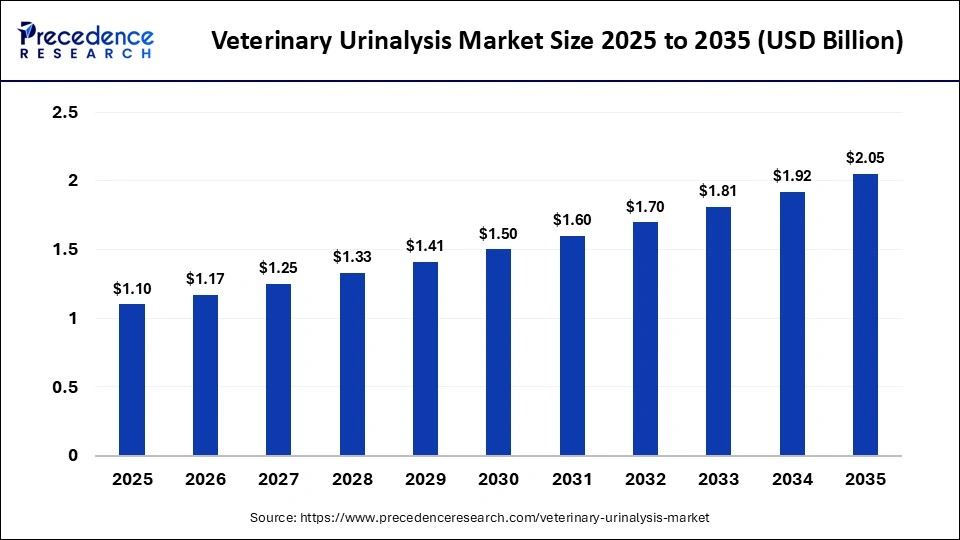
The growing prevalence of kidney disease, urinary tract infections, diabetes, and liver disorders among animals is encouraging veterinarians to adopt faster and more accurate diagnostic tools. Increasing pet ownership, expanding veterinary infrastructure, and rising spending on animal wellness are further supporting market growth.
Read Also: AI in Omics Studies Market
Quick Insights
- The global veterinary urinalysis market was valued at USD 1.10 billion in 2025 and is projected to reach USD 2.05 billion by 2035.
- North America dominated the market with a 40% share in 2025 due to high pet ownership and strong adoption of advanced diagnostic systems.
- Asia Pacific is expected to witness the fastest growth, expanding at a CAGR of 8.5% through 2035.
- The analyzers segment led the market with a 45% share in 2025, reflecting growing demand for automated testing systems.
- Pets remained the leading animal segment, accounting for 60% of the market in 2025.
- Veterinary clinics represented the largest end-use segment with a 55% market share in 2025.
- Major companies operating in the market include Zoetis Inc., IDEXX Laboratories, Inc., Thermo Fisher Scientific Inc., Virbac, and Elanco Animal Health Incorporated.
Why is Veterinary Urinalysis Becoming Essential in Modern Animal Care?
Veterinary urinalysis is becoming a standard diagnostic tool for identifying kidney disorders, urinary tract infections, diabetes mellitus, liver disease, and other metabolic conditions in animals. The increasing focus on preventive healthcare means that veterinarians are recommending routine urine testing during annual and biannual checkups.
For pets, especially aging dogs and cats, urinalysis is often the first step in detecting chronic kidney disease or early-stage diabetes before symptoms become severe. In livestock, urine testing is increasingly used to improve herd health management, reproductive performance, and disease prevention.
As animal owners become more aware of preventive care, demand for convenient, rapid, and affordable testing solutions is growing across clinics, hospitals, and farm settings.
How is Artificial Intelligence Transforming the Veterinary Urinalysis Market?
Artificial intelligence is beginning to reshape veterinary diagnostics by improving the speed, consistency, and accuracy of urinalysis testing. AI-enabled analyzers can automatically interpret urine chemistry results, sediment images, and biomarker patterns with a high degree of precision.
This reduces the risk of human error and helps veterinarians make faster clinical decisions. AI also enables cloud-based storage of patient records, allowing clinics to track disease progression over time and deliver more personalized treatment plans. Companies such as Zoetis Inc. and IDEXX Laboratories, Inc. are increasingly integrating AI capabilities into veterinary diagnostic systems to improve workflow efficiency and support predictive health monitoring.
What Are the Key Growth Drivers in the Veterinary Urinalysis Market?
Increasing Preventive Healthcare for Animals
Veterinary professionals are increasingly emphasizing preventive health management for both pets and livestock. Routine screening programs now often include urinalysis to detect diseases at an earlier stage, helping improve outcomes and reduce long-term treatment costs.
Growing Pet Ownership Worldwide
The number of pet owners continues to rise globally, particularly in urban areas where companion animals are treated as family members. This has led to greater spending on veterinary care, including advanced diagnostics and wellness testing. North America remains the leading market due to high pet ownership rates and strong demand for comprehensive animal healthcare services.
Rising Demand for Point-of-Care Testing
Veterinarians increasingly prefer point-of-care testing devices that allow urine testing directly in clinics, hospitals, and farms. Portable analyzers and rapid test strips provide immediate results, helping reduce delays associated with external laboratory testing.
What Opportunities Are Emerging in the Market?
Can Portable and Compact Devices Unlock New Growth?
Yes. Portable urinalysis analyzers are opening new opportunities for clinics, mobile veterinary units, and livestock facilities. Compact devices improve convenience, reduce turnaround time, and support real-time decision-making in remote settings. This trend is expected to accelerate demand for user-friendly and integrated diagnostic platforms.
Why Are Multi-Test Diagnostic Platforms Gaining Popularity?
Multi-test diagnostic platforms that combine urinalysis with blood chemistry, immunology, and molecular testing are becoming more attractive because they streamline workflows and provide a more comprehensive picture of animal health. This helps clinics improve diagnostic accuracy while reducing operational complexity.
Which Animal Segment Dominates the Market?
Pets represented the largest animal type segment, accounting for 60% of the market in 2025. Rising adoption of dogs and cats, increasing awareness about preventive healthcare, and the growing popularity of pet insurance are major factors driving this segment.
Livestock also remains an important segment as producers increasingly use urinalysis to monitor animal health, productivity, and reproductive performance.
Why Does Kidney Disease Remain the Leading Application Area?
Kidney disease accounted for 40% of the veterinary urinalysis market in 2025. Aging pets are especially vulnerable to chronic kidney disease, making urine screening a crucial diagnostic tool. Studies indicate that a significant share of older cats develop kidney dysfunction, leading veterinarians to recommend routine testing as part of preventive care.
Diabetes mellitus is expected to be the fastest-growing application segment, supported by rising obesity rates in companion animals and the increasing need for ongoing disease monitoring.
Why Are Veterinary Clinics Leading the Market?
Veterinary clinics held the largest end-use share at 55% in 2025 because they serve as the primary point of care for most pets and livestock. Many clinics now include urinalysis in wellness packages and annual checkups, increasing the volume of routine testing.
Animal hospitals are also seeing rising demand for advanced urinalysis, particularly for critical and complex cases that require more detailed diagnostic assessment.
Regional Analysis
Why Does North America Dominate the Veterinary Urinalysis Market?
North America dominated the market in 2025 with a 40% share, driven by high pet ownership, advanced veterinary infrastructure, and strong demand for early disease detection. The region also benefits from high spending on animal wellness and strong adoption of AI-powered diagnostic tools.
Why is Asia Pacific the Fastest-Growing Region?
Asia Pacific is expected to grow at the fastest CAGR of 8.5% through 2035. Rapid urbanization, rising disposable incomes, expanding veterinary services, and growing awareness of animal healthcare are fueling demand across countries such as China, India, and Japan.
How is Europe Strengthening Its Position?
Europe held a 25% market share in 2025 and continues to grow due to strong veterinary care standards, increasing pet ownership, and greater investment in diagnostic technologies. Countries such as Germany and United Kingdom remain key contributors to regional growth.
What Challenges Are Limiting Market Expansion?
Despite strong growth prospects, the veterinary urinalysis market faces several challenges. High costs associated with advanced analyzers, maintenance, and reagent kits can limit adoption, especially among smaller veterinary practices and clinics in price-sensitive regions.
Additionally, recurring expenses for consumables and the need for staff training may create financial pressure for independent clinics. These cost-related barriers are likely to remain a concern in developing markets where veterinary infrastructure is still evolving.
Recent Industry Developments
Several leading companies are introducing advanced solutions to improve testing speed and diagnostic accuracy:
- In April 2026, Sysmex Europe launched the UC-1100 semi-automated urine chemistry analyzer, designed to support routine urinalysis in clinics and laboratories.
- In February 2026, Bionote USA introduced the Vcheck U urinalysis analyzer, which combines urine chemistry and sediment analysis in a single platform.
- In 2025, Zoetis Inc. unveiled its AI Masses feature for the Vetscan Imagyst platform, enabling improved cytologic analysis and clinical decision-making.
Get Sample Copy: https://www.precedenceresearch.com/sample/8299
For inquiries regarding discounts, bulk purchases, or customization requests, please contact us at [email protected]
