
 by
by The global nursing homes and long-term care facilities market size accounted for USD 532.18 billion in 2025 and is projected to increase from USD 568.37 billion in 2026 to approximately USD 1,027.47 billion by 2035, expanding at a CAGR of 6.80% during the forecast period.
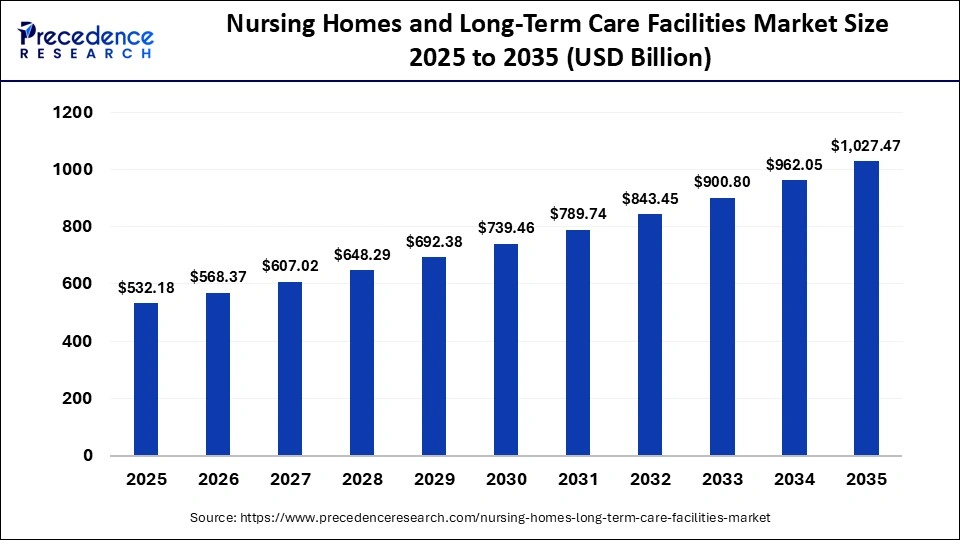
The market is witnessing strong momentum due to the rapidly aging global population, rising prevalence of chronic diseases, and increasing demand for post-acute care, rehabilitation, assisted living, and memory care services. Long-term care providers are also benefiting from expanding government healthcare funding, increasing insurance coverage, and growing private investment in senior care infrastructure.
Read Also: Preventive Medicine Market
Quick Insights
- North America dominated the market with a 40% share in 2025.
- Asia Pacific is expected to grow at the fastest CAGR of 8.5% between 2026 and 2035.
- Nursing homes accounted for 35% of the market by facility type in 2025.
- Assisted living facilities held a 25% share in 2025 and are projected to witness the fastest growth among facility types.
- Long-term care services dominated with a 45% market share in 2025.
- Private ownership led the market with a 50% share in 2025.
- Public insurance was the leading payer segment, accounting for 45% of the market in 2025.
- Private insurance is expected to grow at the fastest CAGR during the forecast period.
Market Revenue Overview
| Metric | Value |
|---|---|
| Market Size in 2025 | USD 532.18 Billion |
| Market Size in 2026 | USD 568.37 Billion |
| Forecast Market Size by 2035 | USD 1,027.47 Billion |
| CAGR (2026–2035) | 6.80% |
| Largest Region | North America |
| Fastest Growing Region | Asia Pacific |
How is AI Improving Nursing Homes and Long-Term Care Facilities?
Artificial intelligence is becoming increasingly important in nursing homes and long-term care settings by helping providers improve patient monitoring, staffing, and operational efficiency. AI-powered predictive analytics can identify early warning signs of health decline, falls, infections, or medication-related complications, enabling care teams to intervene earlier and improve patient outcomes.
In addition, AI is helping long-term care facilities optimize staff scheduling, reduce caregiver burden, and automate administrative tasks. Robotics are also being introduced for medication delivery, mobility support, and elderly companionship, helping facilities address persistent staffing shortages while improving quality of care.
What are the Major Growth Drivers of the Market?
Growing Elderly Population
The aging global population is the most significant factor driving demand for long-term care services. Older adults often require ongoing medical supervision, assistance with daily activities, and rehabilitation support.
Increasing Chronic Disease Burden
The rising prevalence of conditions such as diabetes, cardiovascular diseases, dementia, and mobility disorders is creating sustained demand for nursing homes and long-term care facilities.
Expansion of Assisted Living and Memory Care
Demand for assisted living facilities and dementia-focused care units is increasing as families seek more specialized and flexible care options for aging relatives.
Government Support and Insurance Coverage
Public insurance schemes and healthcare funding initiatives are improving access to long-term care services across developed and emerging economies.
What Opportunities Are Emerging in the Nursing Homes Market?
Why are assisted living facilities growing rapidly?
Assisted living facilities are gaining popularity because they provide a balance between independent living and medical support. Elderly residents can maintain a higher quality of life while still receiving help with medication, mobility, meals, and health monitoring.
How are memory care services becoming a major opportunity?
The increasing prevalence of Alzheimer’s disease and dementia is driving demand for dedicated memory care units. These facilities provide specialized care environments, trained staff, and tailored therapies for patients with cognitive decline.
Can technology improve long-term care quality?
Yes. Robotics, telehealth, AI-based patient monitoring, and smart facility management systems are helping providers improve care quality, reduce costs, and address labor shortages.
Segment Analysis
Why did nursing homes dominate the market in 2025?
Nursing homes held the largest market share of 35% in 2025 because they provide 24/7 medical supervision and long-term support for elderly individuals with complex healthcare needs. Growth in specialized nursing homes offering dementia care and high-dependency services is further strengthening the segment.
Why are assisted living facilities growing faster?
Assisted living facilities are projected to grow at the fastest CAGR of 7.5% because they offer a more flexible care model that supports independence while still providing healthcare assistance.
Why does long-term care remain the largest service segment?
Long-term care services accounted for 45% of the market in 2025 because of the increasing number of patients requiring ongoing support for chronic diseases, disability, and age-related conditions.
Why is private ownership leading the market?
Private long-term care facilities dominated with a 50% share because they often provide premium amenities, advanced infrastructure, personalized care, and technology-driven services.
Regional Insights
North America
North America dominated the global market with a 40% share in 2025 due to advanced healthcare infrastructure, high life expectancy, and strong demand for nursing homes, skilled nursing facilities, and assisted living services. The U.S. remains the largest contributor in the region, supported by growing Medicare enrollment and rising long-term care spending.
Europe
Europe held the second-largest market share of 30% in 2025, driven by its aging population and strong government support for elder care. Countries such as Germany and the UK are investing heavily in nursing homes, community care, and integrated elderly support systems.
Asia Pacific
Asia Pacific is projected to grow at the fastest CAGR of 8.5% between 2026 and 2035 due to rising life expectancy, declining family-based caregiving, urbanization, and increasing healthcare spending. Japan, China, and India are expected to be major growth markets.
Latest Industry Trends and Developments
- Robotics are increasingly being used for mobility support, medication delivery, and caregiving assistance.
- Demand for post-acute rehabilitation services is increasing as hospitals seek to reduce readmission rates.
- Memory care facilities are expanding rapidly due to growing dementia prevalence.
- Private insurers are offering more specialized long-term care plans for extended stays and complex medical needs.
Leading Companies in the Nursing Homes and Long-Term Care Facilities Market
- Brookdale Senior Living
- Sunrise Senior Living
- Sienna Senior Living
- Extendicare
- Genesis HealthCare
- Diversicare Healthcare Services
- Amedisys
- Kindred Healthcare
- LHC Group
- The Ensign Group
Challenges and Cost Pressures
Despite strong market growth, the industry faces challenges such as labor shortages, rising operating costs, staff burnout, reimbursement limitations, and increasing pressure to maintain quality care standards. Facilities are also facing higher costs related to infrastructure modernization, digital transformation, and regulatory compliance. Additionally, many families continue to struggle with out-of-pocket long-term care expenses.
Case Study: Growing Demand for Memory Care
The rising prevalence of dementia and Alzheimer’s disease has created significant demand for memory care facilities. Providers are increasingly investing in dedicated memory care units that offer specialized therapies, secure environments, and trained staff to support patients with cognitive decline. This trend is expected to remain one of the strongest long-term growth opportunities within the market.
Conclusion
The nursing homes and long-term care facilities market is entering a period of sustained expansion as global populations age and healthcare systems prioritize long-term care delivery. Providers that focus on assisted living, memory care, rehabilitation, and AI-enabled care solutions are expected to lead the next wave of growth.
Get Sample copy: https://www.precedenceresearch.com/sample/8309
For inquiries regarding discounts, bulk purchases, or customization requests, please contact us at [email protected]

