by
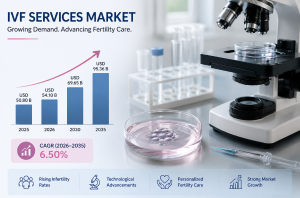
by The global IVF services market was valued at USD 50.80 billion in 2025 and is projected to grow from USD 54.10 billion in 2026 to approximately USD 95.36 billion by 2035, registering a CAGR of 6.50% during the forecast period. The market is experiencing steady growth due to rising infertility rates, delayed parenthood, increasing awareness about reproductive health, and continuous advancements in assisted reproductive technologies (ART).
As healthcare providers increasingly adopt personalized fertility treatments and cutting-edge reproductive technologies, IVF services have become a vital component of modern reproductive medicine. Innovations in embryo selection, genetic testing, artificial intelligence (AI), cryopreservation, and laboratory automation are improving treatment outcomes while expanding access to fertility care worldwide.
IVF Services Market Overview
The IVF services market is transforming reproductive healthcare by providing advanced fertility treatments for individuals and couples facing infertility. In vitro fertilization (IVF) involves retrieving mature eggs, fertilizing them with sperm in a specialized laboratory, and transferring healthy embryos into the uterus to achieve pregnancy.
Growing infertility rates, changing lifestyles, increasing maternal age, rising prevalence of reproductive disorders, and expanding fertility clinic networks continue to fuel market growth. Continuous improvements in embryology laboratories, embryo freezing techniques, intracytoplasmic sperm injection (ICSI), preimplantation genetic testing (PGT), and AI-powered embryo assessment are significantly improving pregnancy success rates worldwide. Government support for fertility treatments, expanding insurance coverage in developed countries, and growing awareness regarding reproductive health are further contributing to the increasing adoption of IVF services.
IVF Services Market Size and Forecast
| Year | Market Size (USD Billion) |
|---|---|
| 2025 | 50.80 |
| 2026 | 54.10 |
| 2030 | 69.65 |
| 2035 | 95.36 |
Market CAGR (2026–2035): 6.50%
The market is expected to witness sustained expansion throughout the forecast period as fertility treatments become increasingly accessible, technologically advanced, and accepted across both developed and emerging economies.
Download the Sample : https://www.precedenceresearch.com/sample/8300
What are IVF Services?
In vitro fertilization (IVF) is one of the most widely used assisted reproductive technologies designed to help individuals and couples conceive when natural conception is difficult or unsuccessful.
The IVF process typically includes ovarian stimulation, egg retrieval, laboratory fertilization, embryo culture, embryo selection, and embryo transfer into the uterus. Modern IVF services often incorporate advanced reproductive technologies to improve clinical outcomes and minimize treatment risks.
Today’s IVF clinics utilize:
- In Vitro Fertilization (IVF)
- Intracytoplasmic Sperm Injection (ICSI)
- Embryo Cryopreservation
- Egg and Sperm Freezing
- Preimplantation Genetic Testing (PGT)
- Time-Lapse Embryo Imaging
- AI-Based Embryo Selection
- Donor Egg and Donor Sperm Programs
How is AI Transforming the IVF Services Market?
AI-powered software analyzes embryo morphology, developmental patterns, genetic information, and historical treatment data to identify embryos with the highest implantation potential. These technologies reduce subjective assessment, improve clinical consistency, and support fertility specialists in making data-driven treatment decisions. Artificial intelligence is revolutionizing fertility treatment by improving embryo selection, increasing IVF success rates, and enhancing laboratory efficiency.
AI is supporting the IVF services market through:
- Automated embryo grading
- Predictive pregnancy success analysis
- Personalized fertility treatment planning
- AI-assisted laboratory workflow optimization
- Time-lapse embryo monitoring
- Improved patient counseling
- Digital fertility management systems
- Enhanced quality control in embryology laboratories
Benefits of IVF Services
- Higher Pregnancy Success Rates: Modern IVF technologies significantly improve the chances of successful conception, particularly for patients experiencing infertility due to age, hormonal disorders, or male infertility.
- Personalized Fertility Treatment: Advanced diagnostic tools enable physicians to develop individualized treatment protocols based on each patient’s reproductive health and medical history.
- Fertility Preservation: Egg freezing, sperm banking, and embryo cryopreservation allow individuals to preserve fertility for future family planning.
- Advanced Genetic Screening: Preimplantation genetic testing (PGT) helps identify healthy embryos while reducing the risk of inherited genetic disorders.
- Better Clinical Outcomes: Innovations such as ICSI, AI-assisted embryo selection, and improved laboratory environments continue to increase implantation and live birth rates.
- Improved Access to Family Building: IVF services support diverse family structures, including single parents, same-sex couples, cancer survivors, and individuals requiring donor-assisted reproduction.
IVF Services Market Growth Drivers
Rising Global Infertility Rates
- One of the primary factors driving the IVF services market is the increasing prevalence of infertility worldwide. According to the World Health Organization (WHO), approximately one in six adults experiences infertility during their lifetime. Lifestyle changes, obesity, stress, environmental pollution, reproductive disorders, and delayed pregnancies are contributing to growing demand for assisted reproductive technologies.
Delayed Parenthood
- Individuals are increasingly postponing parenthood due to career advancement, education, financial planning, and lifestyle preferences. Female fertility naturally declines with age, making IVF an increasingly important reproductive solution for older patients seeking pregnancy.
Technological Advancements in Assisted Reproductive Technologies
- Continuous innovations in embryology laboratories, embryo freezing, AI-assisted embryo assessment, genetic testing, cryopreservation, and minimally invasive fertility procedures are improving treatment success while reducing complications.
Growing Awareness of Reproductive Healthcare
- Public awareness regarding infertility treatment has increased significantly through educational campaigns, digital healthcare platforms, fertility awareness programs, and social media. Couples are seeking earlier diagnosis and fertility consultations, contributing to rising treatment volumes globally.
Expansion of Fertility Clinics
- The rapid expansion of specialized fertility centers across Asia-Pacific, Latin America, and the Middle East is improving accessibility to advanced IVF treatments while reducing geographical barriers.
Rising Investments in Precision Reproductive Medicine
- Governments, healthcare providers, biotechnology companies, and private investors continue investing heavily in reproductive medicine, fertility research, AI-powered diagnostics, and advanced embryology technologies, creating long-term opportunities for market growth.
Key Trends Shaping the IVF Services Market
- Growing Adoption of AI-Based Embryo Selection: AI-driven embryo grading systems are becoming standard in fertility clinics by improving embryo selection accuracy and increasing implantation success rates.
- Expansion of Fertility Preservation Services: Egg freezing and sperm preservation are becoming increasingly popular among young professionals, cancer patients, and individuals planning delayed parenthood.
- Rising Demand for Genetic Testing: Preimplantation genetic testing (PGT) is increasingly integrated into IVF procedures to improve embryo selection and reduce hereditary disease transmission.
- Growth of International Fertility Tourism: Patients are increasingly traveling internationally for affordable, high-quality fertility treatments, driving demand across countries with advanced IVF infrastructure.
- Increasing Male Infertility Treatments: Growing awareness and improved diagnostics for male infertility are expanding the adoption of ICSI and other specialized reproductive procedures.
- Digital Fertility Care: Telemedicine, mobile fertility applications, remote patient monitoring, and digital treatment planning are enhancing patient engagement and improving treatment experiences.
Segment Insights
By Cycle Type
- Fresh IVF Cycles: Fresh IVF cycles dominated the market with a 49% share in 2025, driven by strong clinical preference for immediate embryo transfer following ovarian stimulation and favorable outcomes in suitable patients.
- Thawed IVF Cycles: The thawed IVF cycles segment accounted for 35% of the market in 2025 and is projected to grow at the fastest pace due to improved cryopreservation technologies and increasing use of frozen embryo transfers.
- Donor Egg Cycles: Growing acceptance among older women, LGBTQ+ families, and patients with diminished ovarian reserve continues to support demand for donor egg IVF services.
By Procedure
- IVF with ICSI: IVF with Intracytoplasmic Sperm Injection (ICSI) dominated the market due to its high success rates in treating male infertility and complex reproductive disorders.
- IVF with Donor Eggs: The IVF with donor eggs segment is expected to experience significant growth owing to increasing maternal age, poor ovarian reserve, and expanding donor egg programs worldwide.
By End User
- Fertility Clinics: Fertility clinics held 65% of the market share in 2025, supported by specialized reproductive expertise, advanced embryology laboratories, and higher patient volumes.
- Hospitals: Hospitals are expected to register the fastest growth due to integrated reproductive healthcare services and expanding investments in fertility departments.
- Surgical Centers: Surgical centers continue supporting IVF treatments through minimally invasive procedures used to diagnose and treat infertility-related conditions.
Regional Insights
Europe IVF Services Market
- Europe dominated the global IVF services market with a 39% share in 2025, supported by favorable reimbursement policies, publicly funded fertility programs, and advanced reproductive healthcare infrastructure.
- Countries including Germany, France, Spain, and Denmark continue to lead regional growth through high treatment volumes and standardized fertility care.
North America
- North America accounted for the second-largest market share in 2025 due to rapid adoption of AI-powered fertility technologies, strong private fertility clinic networks, and increasing investment in reproductive healthcare.
- The United States remains the largest regional market owing to technological innovation and high IVF procedure volumes.
Asia Pacific
- Asia Pacific is expected to witness the fastest growth throughout the forecast period.
- Rapid urbanization, increasing infertility awareness, improving healthcare infrastructure, expanding fertility clinic networks, and rising disposable income continue driving strong market expansion across China, India, Japan, South Korea, and Southeast Asia.
Recent Developments in IVF Services Market
- March 2026: IVF Academy USA launched a hybrid Fertility Services Accelerator Program to help OBGYNs integrate fertility services into clinical practice.
- March 2026: Aksigen IVF inaugurated an Advanced Embryology Laboratory featuring digital reproductive technologies under its ROOTS 360 framework.
- September 2025: Conceivable Life Sciences secured USD 50 million to accelerate commercialization of its AI-powered automated IVF laboratory platform, AURA.
- 2025: Fertility clinics increasingly adopted AI-based embryo selection and time-lapse imaging systems to improve implantation success rates and clinical efficiency.
Leading Companies of IVF Services Market
- Cook Medical
- Esco Medical
- Ferring Pharmaceuticals
- FUJIFILM Irvine Scientific, Inc.
- Genea Limited
- Hamilton Thorne Ltd.
- Indira IVF Hospital Pvt. Ltd.
- IVI RMA Global
- Merck KGaA
- Nidacon International AB
- Progyny, Inc.
- The Cooper Companies, Inc. (CooperSurgical)
- Thermo Fisher Scientific Inc.
- Virtus Health Ltd.
- Vitrolife Group
Read More: Non-Invasive Prenatal Testing Market
Segments Covered in the Report
By Cycle Type
- Fresh IVF Cycles (Non-Donor)
- Thawed IVF Cycles (Non-Donor)
- Fresh Donor IVF Cycles
- Thawed Donor IVF Cycles
By Procedure
- Conventional IVF
- IVF with ICSI (Intracytoplasmic Sperm Injection)
- IVF with Donor Eggs
- Others (PGT, Assisted Hatching)
By End User
- Fertility Clinics
- Hospitals
- Surgical Centers
- Clinical Research Institutes
By Geography
- North America
- Europe
- Asia-Pacific
- Latin America
- Middle East & Africa
Future Outlook
The future of the IVF services market remains highly promising as technological innovation continues to transform fertility treatment worldwide. Artificial intelligence, advanced embryo selection, next-generation genetic testing, reproductive genomics, and automated laboratory systems are expected to significantly improve pregnancy success rates while enhancing patient experiences.
Growing infertility prevalence, delayed parenthood, expanding fertility preservation services, and increasing acceptance of assisted reproductive technologies will continue driving global demand for IVF treatments. Emerging markets are expected to create significant growth opportunities as governments invest in healthcare infrastructure, fertility awareness initiatives, and specialized reproductive medicine centers.
With expanding fertility clinic networks, broader insurance coverage, ongoing innovations in precision reproductive medicine, and increasing adoption of AI-enabled fertility solutions, the IVF services market is well-positioned for sustained growth through 2035, making assisted reproductive technologies an essential pillar of modern healthcare.