
 by
by The global preventive medicine market size is projected to grow from USD 420.00 billion in 2025 to USD 454.02 billion in 2026, and is expected to reach approximately USD 915.18 billion by 2035, expanding at a CAGR of 8.10% (2026–2035).
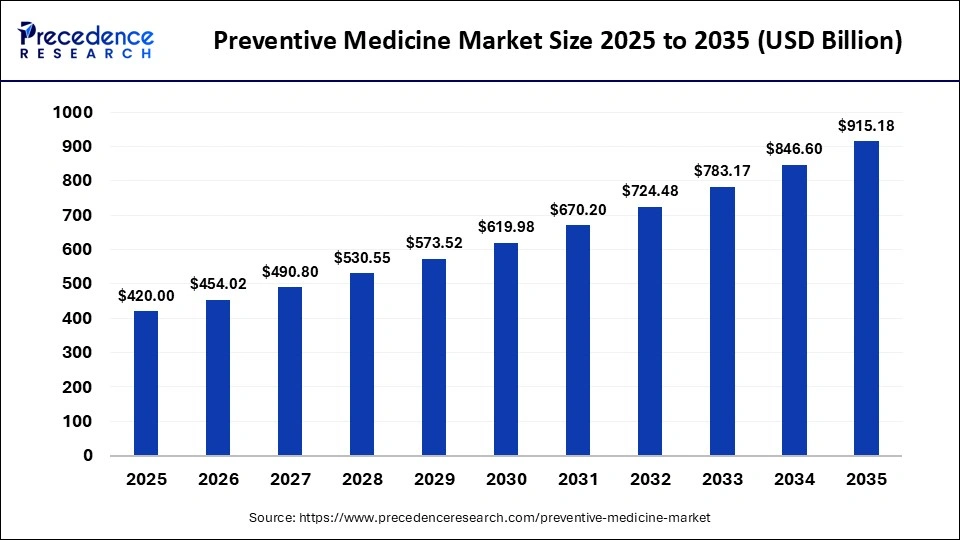
This strong expansion is driven by the rising prevalence of chronic diseases, increasing global awareness of early intervention, and a structural shift in healthcare systems toward prevention rather than treatment. The adoption of digital health technologies, predictive analytics, and wearable monitoring devices is further strengthening the market landscape.
Read Also: Nanomechanical Testing Market
Quick Insights (2025–2026 Market Snapshot)
- The market is valued at USD 454.02 billion in 2026, continuing strong expansion toward 2035.
- North America leads globally, holding around 38% share in 2025 due to advanced healthcare infrastructure and high preventive care adoption.
- Asia Pacific is the fastest-growing region, expected to expand at a 9.5% CAGR, supported by large population base and rising healthcare awareness.
- Vaccines dominate the type segment, accounting for nearly 35% market share in 2025, driven by global immunization programs.
- Hospitals & clinics remain the largest end-use segment, holding around 40% share in 2025.
- Digital preventive healthcare is emerging as the fastest-growing segment, with a CAGR of over 12%+, fueled by AI and wearable technologies.
Market Revenue Structure Overview
Preventive Medicine Market Size (2025–2035)
| Year | Market Size (USD Billion) |
|---|---|
| 2025 | 420.00 |
| 2026 | 454.02 |
| 2035 | 915.18 |
The market is nearly expected to double over the forecast period, driven by increasing healthcare digitization and preventive care adoption globally.
How Is AI Transforming the Preventive Medicine Market?
Artificial intelligence is fundamentally reshaping preventive healthcare by enabling early detection, predictive diagnosis, and personalized health interventions. AI systems analyze massive datasets from electronic health records, wearable devices, and diagnostic tools to identify disease risk patterns before symptoms appear.
Machine learning algorithms are also improving risk stratification and patient monitoring, allowing healthcare providers to implement targeted preventive strategies. This significantly reduces long-term treatment costs while improving patient outcomes.
In addition, AI-powered virtual assistants and chatbots are enhancing patient engagement by offering real-time health guidance, lifestyle recommendations, and medication reminders, making preventive care more accessible and continuous.
What Is Driving the Growth of Preventive Medicine Market?
Rising Burden of Chronic Diseases
The global surge in diabetes, cardiovascular diseases, cancer, and obesity is pushing healthcare systems to prioritize early intervention and risk prevention strategies.
Expansion of Digital Health Ecosystem
Wearables, telehealth platforms, and AI-based diagnostics are enabling continuous monitoring and personalized preventive care.
Government-Led Health Initiatives
National immunization programs, screening campaigns, and public health awareness drives are increasing adoption rates worldwide.
Shift Toward Value-Based Healthcare
Healthcare providers are increasingly incentivized to focus on prevention rather than expensive late-stage treatment.
Where Are the Biggest Opportunities in Preventive Medicine?
How is personalized healthcare shaping the future of prevention?
Personalized healthcare is revolutionizing preventive medicine by tailoring interventions based on genetic, lifestyle, and behavioral data. This approach enables early identification of risk factors and customized wellness plans.
Why is digital preventive healthcare gaining traction?
Digital platforms and wearable technologies are enabling continuous health tracking, making early detection of diseases more accurate and accessible than ever before.
Can preventive medicine reduce global healthcare costs?
Yes. Preventive strategies significantly reduce hospitalization rates and long-term treatment costs by addressing diseases at early stages.
Regional Analysis: Who Is Leading the Preventive Medicine Market?
North America: Why does it dominate the global market?
North America holds the largest share due to advanced healthcare infrastructure, strong insurance coverage, and high awareness of preventive care. The U.S. leads with widespread adoption of screenings, vaccinations, and digital health platforms.
Europe: How is it maintaining strong growth?
Europe benefits from public healthcare systems and national screening programs, particularly in countries like Germany, the UK, and France, focusing on early disease detection.
Asia Pacific: Why is it the fastest-growing region?
Asia Pacific is expanding rapidly due to rising chronic disease burden, increasing healthcare investments, and growing adoption of digital health technologies across China, India, and Japan.
Segment Analysis
Which type segment dominates the preventive medicine market?
Vaccines remain the leading segment, supported by global immunization efforts and government-backed disease prevention programs.
Why is screening & early detection gaining importance?
Early diagnostic technologies, AI-based imaging, and biomarker testing are driving strong growth in this segment.
What is driving digital preventive healthcare growth?
Wearables, remote monitoring systems, and AI-enabled health platforms are enabling real-time preventive care delivery.
Latest Innovations & Industry Developments
- Launch of advanced preventive health clinics using data-driven personalized care models
- AI-enabled cardiovascular risk detection programs across major healthcare networks
- Expansion of wearable-integrated preventive care ecosystems in emerging markets
- Collaboration between telehealth providers and digital health startups for remote monitoring solutions
Key Challenges in the Preventive Medicine Market
Despite strong growth, the market faces several challenges:
- Uneven healthcare infrastructure in developing regions
- High cost of preventive healthcare technologies
- Limited insurance coverage for preventive services
- Low awareness in rural and underserved populations
- Cultural resistance to preventive healthcare adoption
Case Study: Digital Preventive Care Integration
A recent preventive healthcare initiative integrated wearable devices with AI-powered analytics platforms to monitor cardiovascular risk in high-risk populations. The program successfully enabled early detection of hypertension cases, reducing hospital admissions by improving timely intervention and lifestyle modification support.
Competitive Landscape: Key Market Players
- Pfizer Inc.
- Johnson & Johnson
- Merck & Co., Inc.
- Sanofi S.A.
- Abbott Laboratories
- Roche Holding AG
- Siemens Healthineers AG
- Thermo Fisher Scientific Inc.
- Quest Diagnostics Incorporated
- CVS Health Corporation
- UnitedHealth Group Incorporated
These companies are actively investing in vaccines, diagnostics, digital health platforms, and AI-driven preventive solutions.
Conclusion
The preventive medicine market is entering a transformative phase, shifting global healthcare from reactive treatment to proactive and predictive care models. With strong growth expected through 2035, the integration of AI, digital health technologies, and personalized medicine will define the future of preventive healthcare.
Get Sample Copy: https://www.precedenceresearch.com/sample/8308
For inquiries regarding discounts, bulk purchases, or customization requests, please contact us at [email protected]
