 by
by The global hemophilia market is witnessing remarkable transformation driven by breakthroughs in gene therapy, precision medicine, recombinant biologics, and digital healthcare technologies. Increasing awareness regarding rare bleeding disorders, expanding access to advanced therapies, and rising investments in next-generation treatment platforms are significantly accelerating the evolution of hemophilia management worldwide.
According to Precedence Research, the global hemophilia market size was valued at USD 12.50 billion in 2025 and is projected to reach approximately USD 23.46 billion by 2035, growing at a CAGR of 6.50% from 2026 to 2035.
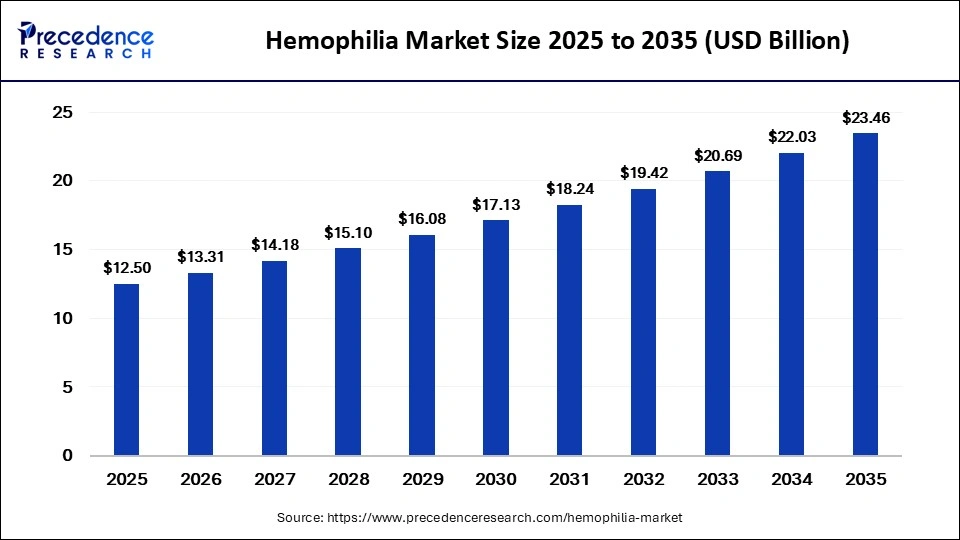
The increasing prevalence of inherited bleeding disorders, rapid adoption of prophylactic therapies, growing focus on personalized healthcare, and advancements in gene editing technologies are among the primary factors driving market expansion globally.
Read Also: Non-Hodgkin’s Lymphoma Market
Quick Insights: What is Driving Growth in the Hemophilia Market?
- The global hemophilia market was valued at USD 12.50 billion in 2025 and is expected to surpass USD 23.46 billion by 2035, expanding at a CAGR of 6.50% during the forecast period.
- North America dominated the market in 2025 due to advanced healthcare infrastructure, high adoption of biologic therapies, and strong rare disease reimbursement support.
- Asia Pacific is projected to witness the fastest growth owing to improving diagnostic capabilities, expanding healthcare access, and increasing awareness regarding rare bleeding disorders.
- Recombinant coagulation factor concentrates continue to dominate the market due to their high efficacy and reduced infection risks.
- Gene therapy is expected to emerge as one of the fastest-growing treatment segments due to its potential to deliver long-term therapeutic outcomes with fewer interventions.
- Homecare treatment models and digital patient monitoring solutions are increasingly improving treatment accessibility and patient compliance worldwide.
How is Artificial Intelligence Transforming the Hemophilia Market?
Artificial intelligence is rapidly improving the diagnosis, monitoring, and treatment planning processes within the hemophilia market. AI-powered diagnostic systems are helping physicians detect bleeding disorders earlier by analyzing genetic patterns, laboratory results, and patient histories with greater precision.
Advanced predictive analytics platforms are also enabling healthcare providers to monitor bleeding risks, optimize prophylactic dosing schedules, and improve personalized treatment planning for hemophilia patients.
AI integration is further supporting pharmaceutical companies in accelerating drug discovery, optimizing clinical trials, and identifying novel therapeutic targets for rare bleeding disorders. Machine learning algorithms are increasingly being utilized to improve gene therapy development and biologic manufacturing efficiency.
The growing adoption of AI-powered digital health tools, wearable monitoring systems, and telemedicine platforms is expected to significantly enhance patient outcomes and long-term disease management over the coming decade.
What are the Major Growth Drivers of the Hemophilia Market?
Increasing Adoption of Gene Therapy
Gene therapy is emerging as one of the most transformative innovations in hemophilia treatment. Unlike traditional therapies requiring lifelong clotting factor infusions, gene therapy aims to address the root genetic cause of hemophilia by enabling the body to naturally produce clotting factors.
The growing clinical success of gene-based therapies is expected to:
- Reduce treatment frequency
- Improve patient quality of life
- Lower long-term healthcare costs
- Minimize spontaneous bleeding episodes
Biotechnology and pharmaceutical companies are heavily investing in advanced gene editing platforms and viral vector technologies to develop durable and potentially curative hemophilia treatments.
Rising Demand for Prophylactic Therapies
Preventive treatment strategies are becoming increasingly common in hemophilia care. Prophylactic therapies help reduce bleeding episodes before they occur, significantly improving long-term joint health and reducing disease complications.
The growing shift toward preventive care is being driven by:
- Better patient awareness
- Improved healthcare access
- Availability of long-acting biologics
- Enhanced reimbursement policies
- Advancements in self-administration technologies
Long-acting recombinant therapies are also improving treatment convenience and patient adherence globally.
Growing Rare Disease Awareness and Early Diagnosis
Governments, healthcare organizations, and patient advocacy groups are increasingly investing in awareness programs focused on rare bleeding disorders.
Earlier diagnosis enables:
- Faster treatment initiation
- Improved clinical outcomes
- Better disease management
- Reduced long-term complications
The expansion of genetic screening programs and specialized hematology centers is expected to strengthen global diagnosis rates significantly.
What Opportunities are Emerging in the Hemophilia Industry?
Can Precision Medicine Redefine Hemophilia Treatment?
Yes. Precision medicine is rapidly transforming the hemophilia treatment landscape by enabling personalized therapeutic strategies based on individual genetic profiles and bleeding patterns.
Advanced biomarker testing and genomic sequencing technologies are helping clinicians:
- Customize treatment plans
- Improve therapy effectiveness
- Reduce adverse reactions
- Optimize dosing strategies
This personalized healthcare approach is expected to become increasingly central to future hemophilia management models.
Will Homecare and Digital Monitoring Expand Market Opportunities?
Absolutely. Home-based treatment and remote patient monitoring solutions are emerging as major opportunities within the global hemophilia market.
Modern healthcare platforms now support:
- Self-infusion therapies
- Telemedicine consultations
- Digital adherence tracking
- Wearable monitoring devices
- AI-powered medication reminders
These innovations are improving treatment accessibility while reducing hospital dependency and healthcare costs.
Which Regions are Leading the Global Hemophilia Market?
Why Does North America Continue to Dominate the Market?
North America held the dominant position in the global hemophilia market in 2025 due to:
- Advanced healthcare infrastructure
- Strong biotechnology ecosystem
- High healthcare expenditure
- Early adoption of advanced biologics
- Favorable reimbursement policies
The United States remains a leading hub for rare disease research, clinical trials, and gene therapy innovation.
Why is Asia Pacific Emerging as the Fastest-Growing Region?
Asia Pacific is projected to witness the fastest market growth during the forecast period driven by:
- Rising healthcare investments
- Improving diagnostic capabilities
- Expanding access to advanced therapies
- Growing awareness regarding rare diseases
- Increasing patient population
Countries such as China, India, and Japan are significantly strengthening healthcare infrastructure and hematology treatment ecosystems.
Segmentation Analysis of the Hemophilia Market
By Disease Type
- Hemophilia A
- Hemophilia B
- Other Bleeding Disorders
Hemophilia A continues to dominate the market due to its higher prevalence globally and increasing adoption of recombinant factor VIII therapies.
By Treatment Type
- Recombinant Coagulation Factor Concentrates
- Plasma-Derived Coagulation Factors
- Gene Therapy
- Antifibrinolytics
- Desmopressin
Recombinant therapies continue to hold the largest market share owing to improved safety profiles and lower infection transmission risks.
By Therapy Approach
- On-Demand Treatment
- Prophylactic Treatment
The prophylactic treatment segment is expected to witness strong growth due to rising awareness regarding preventive care and long-term disease management benefits.
By Distribution Channel
- Hospital Pharmacies
- Retail Pharmacies
- Online Pharmacies
Hospital pharmacies continue dominating due to the specialized administration requirements associated with biologics and advanced therapies.
Which Companies are Leading Innovation in the Hemophilia Market?
Several major pharmaceutical and biotechnology companies are aggressively investing in advanced hemophilia therapeutics, gene editing technologies, and precision biologics.
Leading Companies in the Hemophilia Market
- Roche
- Pfizer Inc.
- Novo Nordisk
- CSL Behring
- Bayer AG
- Takeda Pharmaceutical Company
- BioMarin Pharmaceutical
- Sanofi
- Octapharma
- Grifols
These companies are heavily focused on:
- Gene therapy development
- Long-acting recombinant biologics
- Precision medicine platforms
- AI-driven drug discovery
- Rare disease pipeline expansion
Recent Breakthroughs and Industry Developments
The hemophilia market is witnessing rapid innovation across:
- Gene editing technologies
- Viral vector engineering
- Long-acting clotting factors
- Subcutaneous biologics
- Personalized treatment platforms
Several pharmaceutical companies are advancing clinical trials focused on next-generation gene therapies capable of delivering sustained clotting factor expression for extended periods.
Biotechnology firms are also exploring AI-assisted biologic development and digital patient monitoring systems to enhance treatment efficiency and long-term patient outcomes.
What Challenges are Affecting the Hemophilia Market?
High Cost of Advanced Therapies
One of the major challenges facing the market is the high cost associated with recombinant biologics and gene therapies. Advanced treatments often require complex manufacturing processes and specialized healthcare infrastructure, limiting accessibility in low-income regions.
Limited Diagnosis in Emerging Economies
A significant number of hemophilia cases remain undiagnosed globally due to:
- Limited healthcare access
- Lack of awareness
- Inadequate diagnostic infrastructure
- Shortage of hematology specialists
Improving early diagnosis and treatment accessibility remains critical for long-term market expansion.
Case Study: How Long-Acting Recombinant Therapies Improved Patient Outcomes
Several clinical studies have demonstrated that long-acting recombinant factor therapies significantly reduce bleeding frequency and improve treatment adherence among hemophilia patients.
Patients using extended half-life biologics reported:
- Fewer weekly infusions
- Improved mobility
- Better joint health
- Enhanced quality of life
The success of these therapies is accelerating adoption of advanced biologics across both developed and emerging healthcare markets.
Future Outlook: What’s Next for the Hemophilia Industry?
The future of the hemophilia market will likely be shaped by:
- Curative gene therapies
- AI-powered diagnostics
- Precision medicine
- Digital healthcare integration
- Long-acting biologics
- Wearable patient monitoring systems
As biotechnology innovation accelerates, the industry is expected to transition further toward personalized, preventive, and minimally invasive treatment models.
Companies investing in scalable gene therapy manufacturing, AI-driven rare disease research, and patient-centric care platforms are expected to gain strong competitive advantages over the coming decade.
Download a Sample Report: https://www.precedenceresearch.com/sample/8416
For inquiries regarding discounts, bulk purchases, or customization requests, please contact us at [email protected]
