 by
by Gene and cell therapy is moving from an experimental field into an increasingly important part of modern medicine. Instead of simply managing symptoms, these therapies aim to address disease at the cellular or genetic level, opening new possibilities for patients with cancer, rare genetic disorders, and other serious conditions.
The companies leading this space are taking different approaches. Some are advancing CAR-T therapies, while others are developing gene-editing platforms, viral-vector therapies, TIL therapies, and next-generation cell therapies.
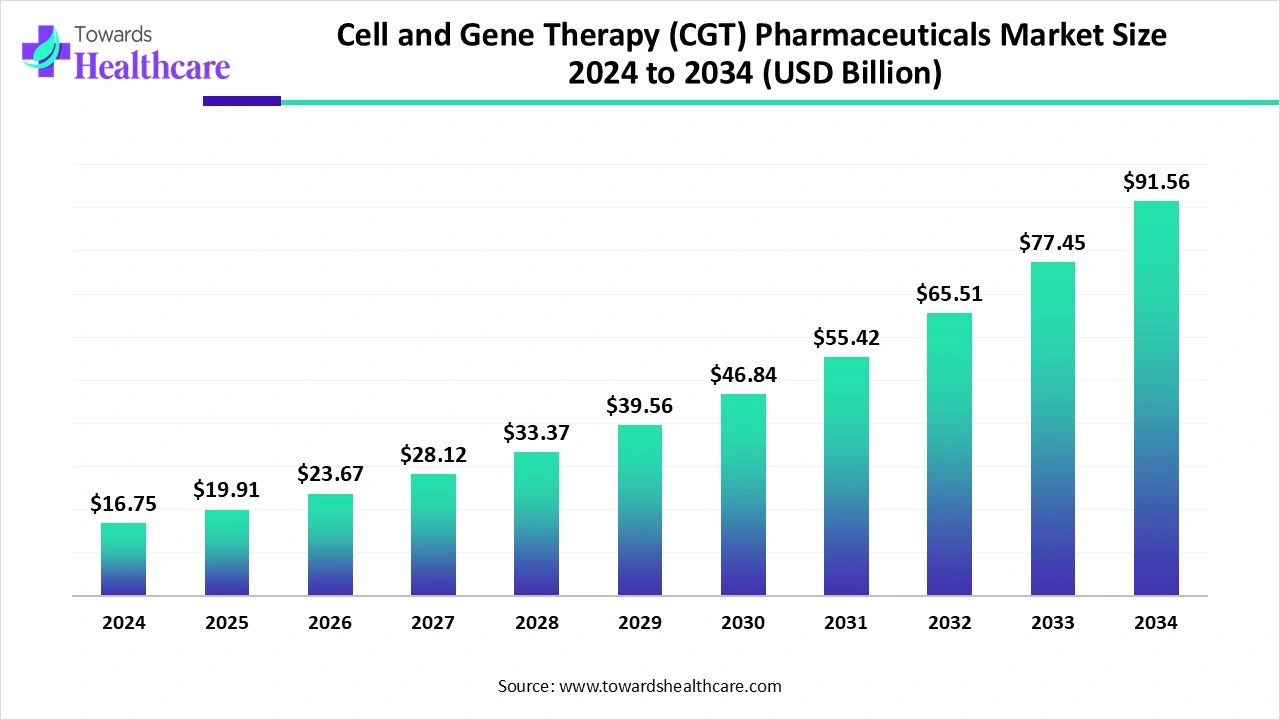
According to Towards Healthcare, the global cell and gene therapy pharmaceuticals sector was valued at USD 19.91 billion in 2025 and is projected to reach USD 91.56 billion by 2034, representing an 18.93% CAGR from 2025 to 2034. North America accounted for approximately 45% of the sector.
So, who are the frontrunners shaping the next generation of gene and cell therapies?
Request Exclusive Report Preview https://www.towardshealthcare.com/download-sample/6099
The Leading Companies to Watch
Towards Healthcare identifies companies including Novartis, Gilead Sciences/Kite Pharma, Bristol Myers Squibb, Johnson & Johnson/Legend Biotech, Sarepta Therapeutics, Vertex Pharmaceuticals/CRISPR Therapeutics, bluebird bio, Krystal Biotech, Iovance Biotherapeutics, Beam Therapeutics, Intellia Therapeutics, Editas Medicine, and REGENXBIO among important participants in the evolving field.
1. Novartis
Novartis has established a strong position in both gene therapy and CAR-T cell therapy.
Its portfolio includes Kymriah, a CAR-T therapy, and Zolgensma, a gene therapy for spinal muscular atrophy. Towards Healthcare identifies Novartis as one of the leading companies in the global cell and gene therapy landscape.
The company’s broader strategy also includes platforms spanning xRNA, radioligand therapy, gene therapy, and cell therapy, giving it exposure to several next-generation treatment approaches.
2. Gilead Sciences / Kite Pharma
Gilead Sciences, through Kite Pharma, is one of the strongest names in CAR-T therapy.
Its key therapies include Yescarta and Tecartus, and the company continues to invest in manufacturing efficiency, patient access, and next-generation CAR-T approaches. Towards Healthcare reports Kite revenue of approximately USD 1.8 billion in 2025 in its 2026 company assessment.
The company’s focus on improving the manufacturing and delivery of these “living medicines” is particularly important because cell therapies involve much more complex supply chains than conventional drugs.
3. Bristol Myers Squibb
Bristol Myers Squibb (BMS) has become a major cell therapy player through its CAR-T portfolio.
The company offers Breyanzi and Abecma, while continuing to explore next-generation cellular therapies and other advanced oncology platforms. Towards Healthcare estimates BMS revenue at approximately USD 48.2 billion in 2025 in its 2026 industry assessment.
Its development strategy extends beyond CAR-T into areas such as targeted protein degradation, antibody-drug conjugates, radiopharmaceuticals, and AI-supported R&D.
4. Johnson & Johnson / Legend Biotech
The collaboration between Johnson & Johnson and Legend Biotech has created another major force in cell therapy through CARVYKTI, a BCMA-directed CAR-T therapy for multiple myeloma.
Towards Healthcare reports approximately USD 1.03 billion in total 2025 revenue for the collaboration/company context and highlights continued capacity expansion as an important factor for its future growth.
5. Sarepta Therapeutics
Sarepta Therapeutics is particularly notable for its work in genetic diseases.
Its development strategy includes RNA-targeted exon-skipping technologies and AAV-based gene therapies, while the company is also exploring tissue-penetrating and permanent genomic-editing approaches.
Towards Healthcare reports USD 2.20 billion in 2025 revenue for Sarepta in its 2026 assessment.
6. Vertex Pharmaceuticals / CRISPR Therapeutics
The Vertex Pharmaceuticals and CRISPR Therapeutics collaboration is an important example of how gene-editing technology is moving toward clinical application.
The companies are working with CRISPR-based gene editing, with CRISPR Therapeutics providing the gene-editing platform while Vertex leads global clinical development, manufacturing, and commercialization for the collaboration.
Their Casgevy program represents an important step in applying CRISPR technology to diseases such as sickle cell disease and beta-thalassemia.
Clinical Development Is Expanding Too
The clinical trial ecosystem is also growing alongside therapeutic development.
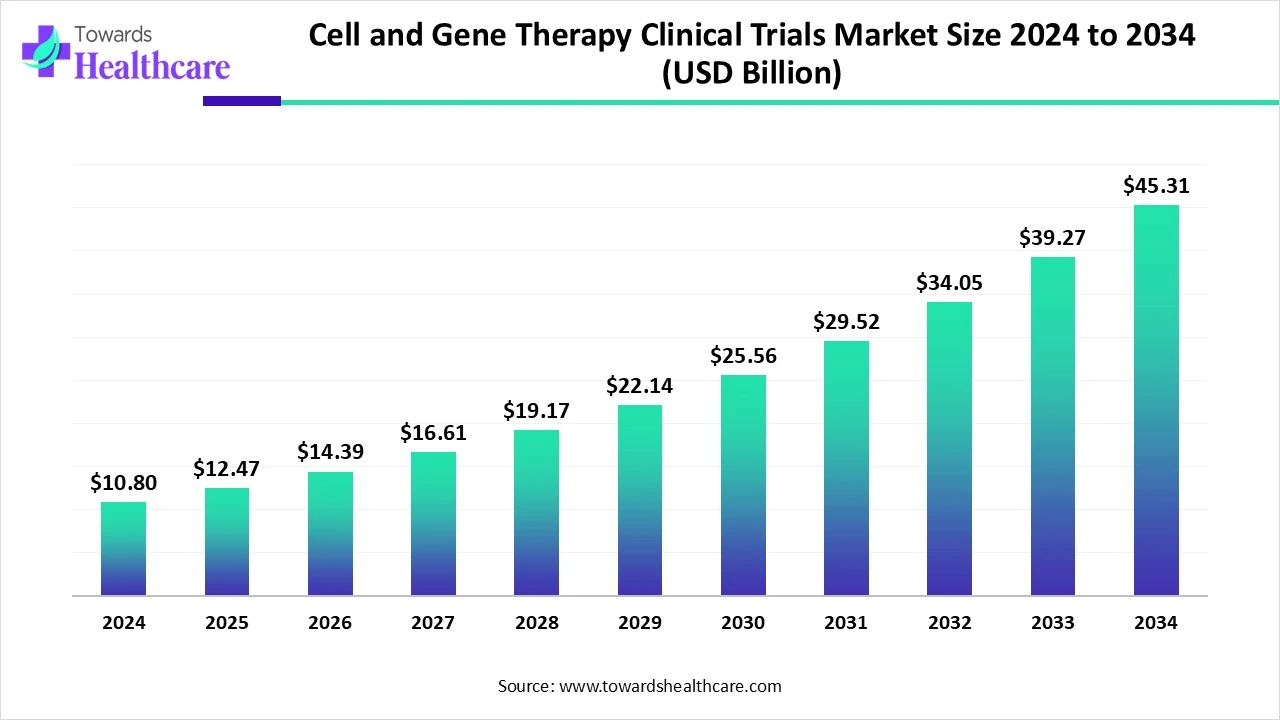
Towards Healthcare estimates the cell and gene therapy clinical trials sector at USD 12.47 billion in 2025, with the figure projected to reach USD 45.31 billion by 2034, representing a 15.43% CAGR.
Biotechnology companies accounted for approximately 58% of sponsorship activity in 2024, while oncology represented around 56% of clinical-trial activity.
Explore Our Research Sample : https://www.towardshealthcare.com/download-sample/5967
Emerging Companies Are Expanding the Competitive Landscape
The field is not being shaped only by established pharmaceutical companies.
Krystal Biotech
Krystal Biotech has developed an engineered HSV-1 vector platform designed for targeted and potentially repeatable local gene delivery. Towards Healthcare highlights the company’s position as an important gene therapy innovator.
Iovance Biotherapeutics
Iovance is taking a different approach through tumor-infiltrating lymphocyte (TIL) therapy.
Its focus is on developing personalized T-cell therapies for solid tumors, expanding cell therapy beyond the blood cancers where CAR-T has historically been strongest.
Beam Therapeutics
Beam Therapeutics is focused on base editing, an approach designed to make precise changes to DNA without creating double-strand DNA breaks in the same way as conventional CRISPR-Cas9 approaches.
Towards Healthcare identifies Beam among the important emerging players in the cell and gene therapy landscape.
Intellia Therapeutics
Intellia is advancing in vivo gene-editing approaches, with programs designed to edit genes directly inside the patient’s body.
Towards Healthcare’s 2026 assessment includes multiple clinical-stage Intellia programs, demonstrating the company’s continued activity in the field.
The Numbers Show How Quickly the Field Is Moving
The growth of the sector is reflected in several important indicators.
According to Towards Healthcare:
- The global cell and gene therapy pharmaceuticals sector is projected to grow from USD 19.91 billion in 2025 to USD 91.56 billion by 2034.
- The sector is expected to expand at an 18.93% CAGR during 2025–2034.
- North America represented approximately 45% of the global sector.
- In North America, the cell and gene therapy sector is projected to increase from USD 5.17 billion in 2026 to USD 21.7 billion by 2035, representing a 17.1% CAGR.
- In the U.S., the sector was estimated at USD 4.09 billion in 2025 and is projected to reach approximately USD 20 billion by 2035.
These figures point to a rapidly developing ecosystem rather than a niche biotechnology segment.
Oncology Remains a Major Driver
Cancer is one of the biggest areas where cell therapy has demonstrated clinical and commercial momentum.
Towards Healthcare reports that oncology accounted for approximately 56% of cell and gene therapy clinical-trial activity by indication in 2024.
CAR-T therapies have been particularly important in hematologic malignancies, while newer approaches such as TIL therapy are expanding the possibilities for solid tumors.
This is why companies such as Gilead/Kite, Novartis, Bristol Myers Squibb, Johnson & Johnson/Legend Biotech, and Iovance remain important companies to watch.
Gene Editing Could Change the Development Model
Gene editing is opening a different path from traditional gene replacement.
Rather than delivering an entirely new functional gene, editing technologies can potentially modify, remove, or correct specific genetic sequences.
Towards Healthcare identifies CRISPR/Cas9 and other gene-editing platforms as one of the fastest-growing vector/platform areas in cell and gene therapy clinical trials.
Companies such as CRISPR Therapeutics, Intellia Therapeutics, Editas Medicine, Beam Therapeutics, and Vertex Pharmaceuticals are therefore becoming increasingly important in the development landscape.
Manufacturing Is Becoming Just as Important as Discovery
One of the biggest challenges for gene and cell therapy developers is that these treatments are difficult to manufacture and deliver.
A CAR-T therapy, for example, can involve:
Patient collection – cell processing – genetic modification – expansion – quality testing – transportation – patient administration
That makes manufacturing, cold-chain logistics, quality control, and specialized treatment centers essential parts of the therapy ecosystem.
Towards Healthcare estimates that outsourced and CDMO manufacturing is expected to expand rapidly within the cell and gene therapy pharmaceuticals sector.
Important manufacturing and service providers include Lonza, Catalent, Charles River Laboratories, Thermo Fisher Scientific, and WuXi Advanced Therapies.
This shows how emerging biotechnology companies are playing a significant role alongside established pharmaceutical organizations.
What Could Define the Next Generation?
The next stage of gene and cell therapy is likely to focus on making these treatments more scalable, precise, accessible, and easier to administer.
Some of the key areas to watch include:
- In-vivo gene editing
- Next-generation CAR-T
- Allogeneic or off-the-shelf cell therapies
- Base and prime editing
- AAV and non-viral delivery
- TIL therapies
- Gene therapies for rare diseases
- Automated cell manufacturing
- Decentralized manufacturing
- AI-supported therapy development
Towards Healthcare’s 2026 industry analysis shows companies increasingly working across these areas, with next-generation platforms becoming an important part of the competitive landscape.
Expert Perspective by Payal Rabde – uncovering key trends and opportunities across the healthcare industry.
Stay ahead with our Healthcare Ecosystem Dashboard and the latest industry insights.
https://www.towardshealthcare.com/access-dashboard
About Us
Pharma Geek is a part of Towards Healthcare Research & Consulting which is a global healthcare market research and consulting firm dedicated to helping businesses make informed decisions through reliable market intelligence and strategic insights. We serve pharmaceutical, biotechnology, medical device, AI in healthcare, cell and gene therapy, digital health, and life sciences organizations with in-depth market research, custom consulting, competitive analysis, and growth forecasts. Our team combines industry expertise with rigorous research to deliver clear, actionable insights that support market expansion, product strategy, investment decisions, and long-term business growth. From emerging innovations to established healthcare markets, we help organizations understand where the industry is today and where it’s headed tomorrow.
You can place an order or ask any questions, please feel free to contact us at [email protected]
Europe Region – +44 778 256 0738
North America Region – +1 8044 4193 44
APAC Region: +91 9356 9282 04
Visit Our Website: Towards Healthcare Research & Consulting – Expert Consulting Solutions & Research Reports
Find us on social platforms: LinkedIn | Twitter | Instagram | Medium
