
 by
by The global healthcare cybersecurity market size is valued at USD 31.90 billion in 2025 and is predicted to increase from USD 37.32 billion in 2026 to approximately USD 142.45 billion by 2035, expanding at a CAGR of 16.12% from 2026 to 2035. The healthcare cybersecurity market is experiencing rapid growth due to strict regulatory compliance mandates and the rapid expansion of the Internet of Medical Things (IoMT) and cloud.
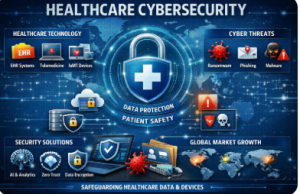
Healthcare Cybersecurity Market Overview
The healthcare industry is undergoing a profound digital transformation driven by electronic health records (EHRs), telemedicine, connected medical devices, cloud computing, artificial intelligence, and data-driven patient care. While these technologies enhance healthcare delivery and operational efficiency, they also create new vulnerabilities that cybercriminals actively exploit. As a result, healthcare cybersecurity has become a strategic priority for hospitals, healthcare providers, insurers, pharmaceutical companies, and government agencies worldwide.
Get Sample Link: https://www.precedenceresearch.com/sample/1739
Healthcare Cybersecurity Market Trends
- AI-Powered Threat Detection and Response: Artificial intelligence and machine learning are increasingly being deployed to identify unusual network behavior, detect threats in real time, and automate incident response activities. AI-powered systems help healthcare organizations reduce detection times and improve security efficiency.
- Adoption of Zero Trust Security Architecture: Healthcare providers are moving toward Zero Trust models where every user, device, and application must continuously verify identity before gaining access to sensitive systems. This approach minimizes insider threats and limits unauthorized access.
- Increased Focus on Medical Device Security: Connected medical devices such as infusion pumps, patient monitors, imaging systems, and wearable devices are becoming common attack targets. Healthcare organizations are investing in specialized IoMT security solutions to secure these vulnerable endpoints.
Digital Healthcare and New Security Challenges
The rapid adoption of digital healthcare technologies has transformed the way medical services are delivered. Electronic health records have replaced paper-based documentation, telehealth platforms enable remote consultations, and wearable devices continuously monitor patient health. While these innovations improve accessibility and efficiency, they also create new cybersecurity challenges.
One of the biggest concerns is the expanding attack surface. Healthcare organizations now operate interconnected ecosystems that include hospitals, laboratories, pharmacies, insurance companies, cloud providers, and third-party vendors. Every connection creates a potential entry point for cyber threats.
How Technology is Improving Healthcare Security
As cyber threats evolve, healthcare organizations are leveraging advanced technologies to strengthen their cybersecurity defenses. Modern security solutions provide real-time visibility into network activities, identify suspicious behavior, and help organizations respond quickly to potential threats.
One of the most important developments is the use of cloud security technologies. As healthcare providers migrate data and applications to cloud environments, cloud security platforms help protect sensitive information through encryption, access controls, and continuous monitoring.
The Role of Artificial Intelligence in Cybersecurity
Artificial intelligence is becoming one of the most powerful tools in modern healthcare cybersecurity. Traditional security systems often struggle to keep pace with rapidly evolving threats, but AI-powered solutions can analyze large volumes of data and detect anomalies in real time.
Machine learning algorithms continuously learn from network activity and user behavior. By identifying patterns associated with normal operations, AI systems can quickly recognize unusual activities that may indicate cyberattacks. This allows organizations to detect threats earlier and reduce response times.
Applications of Healthcare Cybersecurity
Healthcare cybersecurity solutions play a vital role across multiple healthcare environments. Hospitals rely on cybersecurity systems to secure patient records, protect connected medical devices, and ensure continuous clinical operations. Pharmaceutical companies utilize cybersecurity to safeguard intellectual property, clinical trial data, and research information.
Health insurance providers implement cybersecurity frameworks to protect claims processing systems and customer information. Telehealth providers require advanced security measures to secure virtual consultations and patient communications. Meanwhile, healthcare cloud service providers employ cybersecurity solutions to protect large-scale healthcare databases and infrastructure.
Read Also: Medical Device Testing Market
Case Study Lessons from Large Healthcare Cyber Incidents
Recent healthcare cyber incidents have demonstrated the severe consequences of inadequate cybersecurity preparedness. Large-scale healthcare breaches have exposed millions of patient records while disrupting hospital operations and delaying critical care services.
Industry reports indicate that healthcare organizations are increasingly focusing on five critical controls:
- Multi-factor authentication (MFA)
- Immutable backups
- Secure email gateways
- Data governance programs
- Incident response exercises
Organizations implementing these controls have shown stronger resilience against ransomware and data breach incidents.
Regional Analysis
North America
North America dominates the healthcare cybersecurity market due to extensive healthcare digitization, high healthcare spending, strong regulatory frameworks, and growing cybersecurity investments. The region accounted for the largest market share in 2025 and continues to lead innovation and adoption.
Europe
Europe represents a significant market driven by GDPR compliance requirements, increasing healthcare modernization initiatives, and growing investments in healthcare IT security infrastructure.
Asia-Pacific
Asia-Pacific is expected to witness the fastest growth during the forecast period. Rapid healthcare digitalization, expanding telemedicine adoption, increasing cyberattack incidents, and government-led healthcare modernization programs are driving demand for cybersecurity solutions.
Latin America
Healthcare organizations across Latin America are increasingly adopting cybersecurity solutions as digital health services expand and awareness of cyber threats grows.
Middle East & Africa
The region is experiencing growing investments in healthcare infrastructure and digital transformation initiatives, creating opportunities for cybersecurity vendors to expand their presence.
Competitive Landscape
Leading companies operating in the healthcare cybersecurity market focus on advanced threat intelligence, AI-powered security solutions, cloud security, and healthcare-specific compliance offerings. Major industry participants include:
- IBM
- Microsoft
- Cisco
- Palo Alto Networks
- Fortinet
These organizations continue investing in AI-driven cybersecurity, cloud-native security platforms, and healthcare-focused security services.
