 by
by Connected fitness has evolved far beyond basic step counting. Today’s consumers expect fitness platforms to connect wearable devices, smartphones, desktop dashboards, workout programs, health metrics, and personalized insights within a single ecosystem.
For users in the United States, Apple, Garmin, Fitbit, Samsung, Peloton, and Strava are among the most recognized brands in connected fitness. However, the strongest option depends on what users value most—seamless device integration, advanced training analytics, wellness tracking, digital workout content, or cross-platform compatibility.
Connected Fitness Is Becoming a Major Digital-Health Opportunity
The growth of connected fitness is being supported by rising adoption of wearable devices and fitness applications.
According to the U.S. Centers for Disease Control and Prevention (CDC), 31.2% of U.S. adults aged 18–64 used wearable devices such as smartwatches or fitness trackers in 2024. Adoption was particularly strong among adults aged 25–44, reaching 43.6%.
The commercial opportunity is also expanding rapidly. Towards Healthcare estimates that the global fitness app sector will grow from USD 13.81 billion in 2026 to USD 45.45 billion by 2035, representing a 14.15% CAGR.
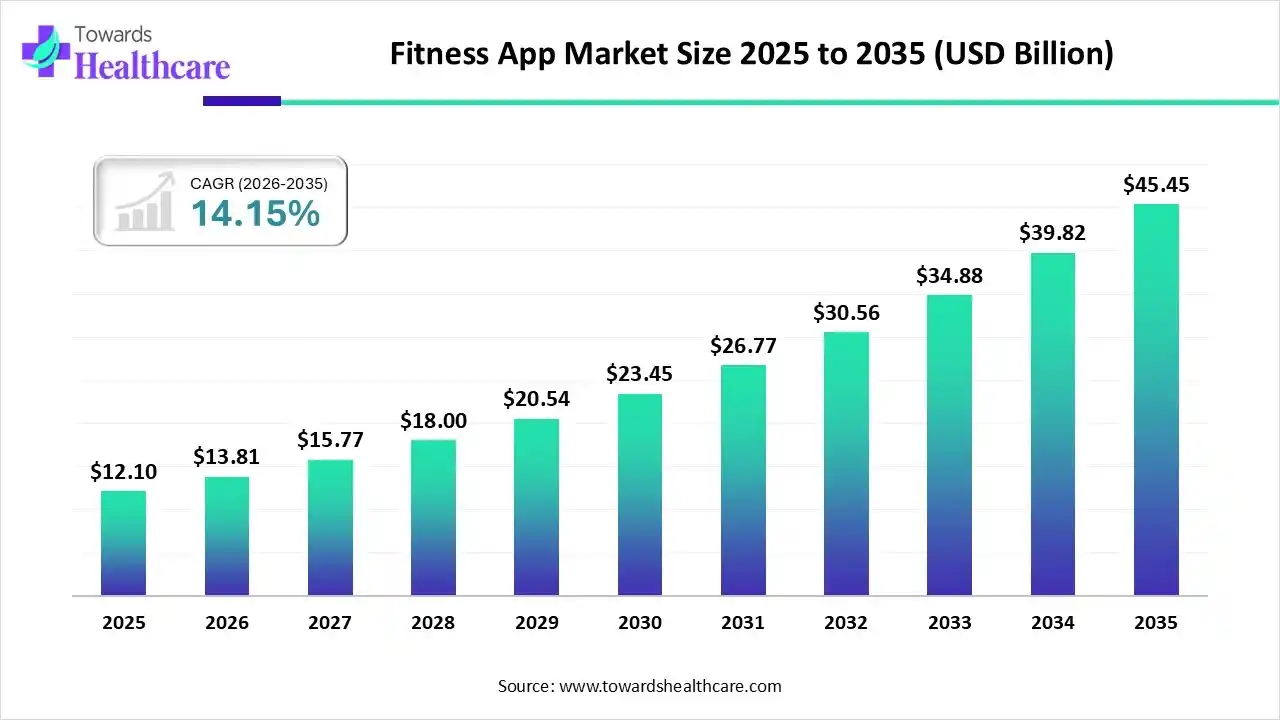
Request a Customized Report Sample: https://www.towardshealthcare.com/download-sample/6469
The connected-device segment is growing even faster. According to Towards Healthcare, the global fitness tracker sector is projected to increase from USD 84.91 billion in 2026 to USD 377.77 billion by 2035, representing an 18.04% CAGR.
These figures indicate that consumers are increasingly moving toward integrated fitness ecosystems rather than standalone devices.
What Makes a Connected Fitness Ecosystem Strong?
A high-quality connected fitness ecosystem should allow information to move efficiently between:
Wearable device → Smartphone → Cloud platform → Desktop dashboard → Analytics → Personalized insights
The best platforms typically provide:
- Cross-device synchronization
- Mobile and desktop accessibility
- Workout and activity tracking
- Long-term performance history
- Health and wellness metrics
- Third-party integrations
- Personalized recommendations
- Secure data management
The ability to access the same information across multiple devices is particularly valuable for users who want both convenient mobile tracking and more detailed analysis on a desktop.
1. Apple: Best for Seamless Ecosystem Integration
Apple has built one of the most integrated consumer technology ecosystems through Apple Watch, iPhone, Apple Health, and Fitness+.
Apple Watch can track a broad range of activity and health-related metrics, while Apple Health brings information from compatible devices and applications together.
The key advantage is integration across Apple’s hardware and software ecosystem.
For users who already own an iPhone, Apple provides a relatively seamless experience between:
Apple Watch → iPhone → Apple Health → Fitness+ → Apple devices
Apple is particularly attractive to consumers who want a combination of smartwatch functionality, fitness tracking, health features, and a polished mobile experience.
Best suited for:
iPhone users, everyday fitness, health and wellness tracking, and users prioritizing ecosystem integration.
Potential limitation:
Users who require highly detailed browser-based athletic analytics may prefer platforms such as Garmin or Strava.
2. Garmin: Best for Mobile and Desktop Training Analytics
Garmin is particularly strong for users who want detailed fitness and training information across both mobile and desktop environments.
Garmin Connect provides a mobile application as well as a web-based experience, allowing users to review activity history, performance information, training metrics, and long-term trends.
This is particularly valuable for:
- Runners
- Cyclists
- Triathletes
- Endurance athletes
- Outdoor enthusiasts
Garmin’s ecosystem connects wearable devices with its broader digital platform, allowing users to move from real-time activity tracking to more detailed analysis.
Best suited for:
Athletes, endurance training, running, cycling, GPS activities, and users who prioritize desktop analytics.
For users whose primary requirement is mobile plus desktop fitness analysis, Garmin is one of the strongest options available.
3. Fitbit and Google: Strong for Everyday Wellness
Fitbit, part of Google, has established a strong position in activity, sleep, and wellness tracking.
Fitbit devices and services focus on making health and fitness information relatively easy to understand. Users can monitor areas such as:
Activity → Steps → Heart rate → Sleep → Exercise → Wellness trends
Fitbit is particularly attractive to people who want consistent health and fitness tracking without necessarily requiring the extensive training analytics associated with performance-focused platforms.
Best suited for:
Everyday wellness, sleep tracking, activity monitoring, and users seeking an accessible fitness experience.
Google’s broader technology ecosystem also provides opportunities for Fitbit to participate in a wider connected-health environment.
4. Samsung: A Strong Android-Based Fitness Ecosystem
Samsung combines Galaxy Watch devices with its Samsung Health platform to create a connected fitness experience for Android users.
Depending on the device, Samsung’s ecosystem can support activity tracking, sleep monitoring, heart-rate measurements, exercise tracking, and other wellness features.
Its strongest advantage is integration with Samsung’s broader Galaxy ecosystem.
For consumers using Samsung smartphones, tablets, and wearables, this can create a convenient connected experience.
Best suited for:
Android users, Samsung Galaxy owners, fitness tracking, and users looking for an integrated smartwatch and wellness platform.
5. Peloton: Best for Connected Workout Content
Peloton approaches connected fitness from a content and community perspective.
Its ecosystem combines connected fitness equipment with digital workout content and instructor-led classes.
Users can access workouts across categories such as:
- Cycling
- Running
- Strength
- Yoga
- Mobility
- Meditation
Peloton’s strength is therefore less about being a comprehensive health-data platform and more about creating an engaging digital fitness environment.
Best suited for:
Home fitness, guided workouts, connected equipment, instructor-led training, and fitness communities.
6. Strava: Best for Cross-Platform Fitness Data
Strava has established a different position within the connected fitness ecosystem.
Rather than depending on one particular hardware manufacturer, Strava can connect with multiple compatible devices and fitness services.
This makes it particularly attractive to users who combine different wearables, smartphones, cycling computers, GPS devices, and fitness applications.
Its platform combines:
Activity tracking + performance analysis + social features + device integrations
The web experience is particularly useful for users who want to review activities and performance data on a larger screen.
Best suited for:
Runners, cyclists, multi-device users, fitness communities, and people seeking cross-platform activity tracking.
Garmin vs. Apple: Which Is Better for Mobile and Desktop?
The answer depends on the user’s priorities.
Apple is particularly strong when seamless integration with an iPhone and the wider Apple ecosystem is the main requirement.
Garmin has a stronger proposition for users who want detailed training analytics across mobile and desktop platforms.
In simple terms:
Apple → Ecosystem integration
Garmin → Training analytics
For athletes who regularly analyze performance data on a laptop or desktop, Garmin can have a meaningful advantage.
Fitbit vs. Garmin: Which Is Better for Everyday Fitness?
The distinction is primarily between simplicity and depth.
Fitbit is well suited to users interested in everyday wellness, activity, and sleep tracking.
Garmin generally targets users who want more detailed training and performance information.
Therefore:
Fitbit → Everyday wellness
Garmin → Performance-focused fitness
The U.S. Wearable Adoption Story
Government data demonstrates that connected fitness technology is already being used by a substantial portion of the U.S. population.
The CDC reported that 31.2% of U.S. adults aged 18–64 used wearable devices in 2024. Usage increased to 43.6% among adults aged 25–44, while 22.6% of adults aged 45–64 reported using these devices.
This adoption creates a large base of consumers generating continuous activity and wellness information.
However, wearable measurements should not automatically be interpreted as medical diagnoses. Consumers should follow device instructions and consult healthcare professionals about concerning symptoms or health readings.
Wearables Are Moving Closer to Healthcare
The growing adoption of connected fitness technology is also creating opportunities at the intersection of consumer technology and healthcare.
Towards Healthcare estimates that the global smart medical devices sector will grow from USD 28.55 billion in 2026 to USD 53.65 billion by 2035, representing a 7.26% CAGR.
According to Towards Healthcare, smart wearables represented approximately 20% of the smart medical-device product mix in 2025, while wireless and IoT-enabled devices accounted for approximately 42%.
The broader wearable medical-device opportunity is also expanding rapidly, with Towards Healthcare projecting the sector to reach approximately USD 523.58 billion by 2035, representing a 25.57% CAGR.
These developments illustrate how wearable technology is increasingly moving from fitness and lifestyle applications toward broader healthcare use cases.
From Fitness Tracking to Digital Health
The value of connected fitness platforms increasingly extends beyond counting steps.
Wearable devices can generate information related to:
Physical activity → Heart rate → Sleep → Exercise → Recovery → Long-term trends
This information can potentially support broader digital-health applications, although consumer-generated wellness data should be used appropriately and with attention to privacy and clinical limitations.
The Centers for Medicare & Medicaid Services (CMS) also tracks telehealth utilization among Medicare beneficiaries, reflecting the broader adoption of technology-enabled healthcare services in the United States.
As digital healthcare expands, connected devices may increasingly become another source of information within broader health and wellness ecosystems.
What Should Consumers Look for in a Connected Fitness Platform?
Before selecting a platform, consumers should consider more than the brand name.
1. Mobile and Desktop Access
If desktop analysis is important, check whether the platform offers a full-featured web experience rather than only a mobile application.
2. Device Compatibility
Consumers using multiple devices should check whether the platform supports third-party integrations.
3. Data Synchronization
Reliable synchronization is essential when information needs to move between wearables, smartphones, cloud services, and desktop platforms.
4. Historical Analytics
Long-term data can be more useful than isolated daily measurements because users can identify trends over time.
5. Fitness and Wellness Features
Consider whether the platform focuses on general wellness, athletic performance, sleep, workout content, or a combination of these areas.
6. Privacy and Security
Fitness and health-related information can be sensitive. Consumers should understand what information is collected, how it is stored, and how it may be shared.
Towards Healthcare’s Perspective
Towards Healthcare’s research highlights the rapid convergence of wearable technology, fitness applications, digital health, and connected healthcare.
The numbers illustrate the scale of this transition:
- 31.2% of U.S. adults aged 18–64 used wearable devices in 2024, according to the CDC.
- The global fitness app sector is projected by Towards Healthcare to reach USD 45.45 billion by 2035, growing at a 14.15% CAGR.
- The global fitness tracker sector is projected to reach USD 377.77 billion by 2035, expanding at an 18.04% CAGR, according to Towards Healthcare.
- The U.S. smart wearables sector is projected by Towards Healthcare to grow from USD 31.76 billion in 2026 to USD 160.47 billion by 2035, representing a 19.72% CAGR.
- Health and fitness monitoring accounted for approximately 52% of U.S. smart-wearable applications in 2024, according to Towards Healthcare.
Together, these trends suggest that connected fitness is becoming a broader technology ecosystem in which hardware, mobile applications, cloud platforms, analytics, AI, and healthcare services increasingly intersect.
Healthcare Insights by Payal Rabde – uncovering emerging trends, innovations, and growth opportunities.
Towards Healthcare continues to track the companies, technologies, applications, and emerging opportunities shaping the intersection of fitness technology and healthcare.
Explore healthcare trends, companies, and data with our Healthcare Ecosystem Dashboard: https://www.towardshealthcare.com/access-dashboard
About Us
Pharma Geek is a part of Towards Healthcare Research & Consulting which is a global healthcare market research and consulting firm dedicated to helping businesses make informed decisions through reliable market intelligence and strategic insights. We serve pharmaceutical, biotechnology, medical device, AI in healthcare, cell and gene therapy, digital health, and life sciences organizations with in-depth market research, custom consulting, competitive analysis, and growth forecasts. Our team combines industry expertise with rigorous research to deliver clear, actionable insights that support market expansion, product strategy, investment decisions, and long-term business growth. From emerging innovations to established healthcare markets, we help organizations understand where the industry is today and where it’s headed tomorrow.
You can place an order or ask any questions, please feel free to contact us at [email protected]
Europe Region – +44 778 256 0738
North America Region – +1 8044 4193 44
APAC Region: +91 9356 9282 04
Visit Our Website: Towards Healthcare Research & Consulting – Expert Consulting Solutions & Research Reports
Find us on social platforms: LinkedIn | Twitter | Instagram | Medium
