 by
by Preoperative Skin Preparation Market Size in 2026
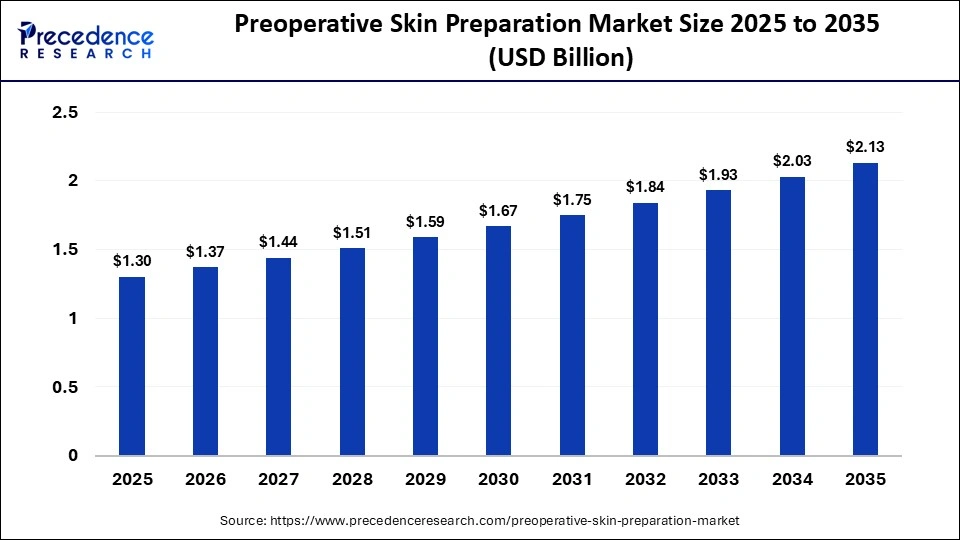
The global preoperative skin preparation market size in 2026 is estimated at USD 1.37 billion, growing from USD 1.30 billion in 2025. The market is projected to reach approximately USD 2.13 billion by 2035, expanding at a CAGR of 5.04% from 2026 to 2035.
Read Also: Oxygen Therapy Equipment Market
Preoperative Skin Preparation Market: In-Depth Expansion (2026–2035)
Market Overview
The preoperative skin preparation market plays a critical role in modern surgical care, focusing on reducing microbial load on the skin prior to surgical procedures. This step is essential in preventing surgical site infections (SSIs)—one of the most common and costly complications in healthcare systems worldwide.
The market includes a wide range of antiseptic products such as:
- Chlorhexidine gluconate solutions
- Povidone-iodine formulations
- Alcohol-based antiseptics
- Pre-soaked wipes, sprays, gels, and foams
With the global increase in both elective and emergency surgeries, preoperative skin preparation has evolved into a standardized, protocol-driven practice across hospitals and surgical centers.
Market Dynamics
Key Growth Drivers
1. Rising Surgical Volume Globally
The increasing number of surgical procedures is a primary growth driver. Factors contributing include:
- Aging population requiring surgeries (e.g., orthopedic, cardiovascular)
- Growth in minimally invasive and outpatient procedures
- Expanding access to healthcare in developing countries
Each surgical procedure requires strict antiseptic preparation, ensuring consistent demand.
2. Growing Focus on Preventing Surgical Site Infections (SSIs)
SSIs lead to:
- Extended hospital stays
- Increased healthcare costs
- Higher patient morbidity
Healthcare providers are prioritizing infection prevention protocols, making preoperative skin preparation products indispensable.
3. Stringent Regulatory Guidelines
Global health organizations and regulatory bodies are enforcing strict infection control standards:
- Standardized antiseptic protocols
- Mandatory compliance in hospitals
- Monitoring of SSI rates
These regulations are significantly boosting product adoption across healthcare facilities.
4. Expansion of Ambulatory Surgical Centers (ASCs)
Outpatient and same-day surgeries are increasing rapidly. ASCs require:
- Fast-acting antiseptics
- Easy-to-use formulations
- Disposable and single-use products
This is driving demand for portable, efficient, and quick-drying skin prep solutions.
5. Increasing Awareness of Patient Safety
Hospitals and healthcare providers are investing more in:
- Infection prevention programs
- Staff training
- Advanced antiseptic products
Patient awareness is also rising, further pushing demand for safer surgical practices.
Role of Artificial Intelligence (AI)
AI is enhancing preoperative skin preparation through data-driven decision-making and compliance monitoring:
- Predictive analytics identify patients at higher risk of infection
- AI tools recommend optimal antiseptic solutions
- Smart systems ensure adherence to preparation protocols
- Hospitals can track infection outcomes and improve processes
This shift is transforming infection control from reactive to proactive.
Key Market Trends
1. Shift Toward Chlorhexidine-Based Solutions
Chlorhexidine remains the gold standard due to:
- Long-lasting antimicrobial action
- Broad-spectrum effectiveness
- Strong clinical validation
2. Rising Demand for Alcohol-Based Combinations
Alcohol-based antiseptics are gaining traction due to:
- Rapid action
- Faster drying time
- Increased use in emergency and outpatient settings
3. Growth of Single-Use and Pre-Filled Applicators
- Reduces cross-contamination risk
- Ensures consistent dosage
- Improves operational efficiency
4. Innovation in Formulations
New product formats are emerging:
- Foams for better skin coverage
- Gels and sprays for controlled application
- Advanced wipes for convenience
5. Digitalization of Healthcare Supply Chains
- Online procurement channels are expanding
- Hospitals are adopting digital inventory systems
- E-commerce platforms are boosting product accessibility
Segmental Insights
Product Type Analysis
Chlorhexidine-Based Products (Dominant)
- Widely recommended in surgical guidelines
- Strong antimicrobial persistence
- Preferred by hospitals globally
Alcohol-Based Preparations (Fastest Growing)
- Quick-acting and efficient
- Ideal for high-turnover surgical environments
End User Analysis
Hospitals (Largest Share)
- High surgical volume
- Strict compliance with infection protocols
- Bulk procurement systems
Ambulatory Surgical Centers (Fastest Growing)
- Growth of outpatient procedures
- Demand for efficient and fast-acting products
Application Area Analysis
General Surgery (Leading Segment)
- Highest procedure volume globally
- Requires strict infection control
Orthopedic Surgery (Fastest Growing)
- Rising joint replacement procedures
- Higher infection risk due to implants
Formulation Type Analysis
Pre-Soaked Wipes (Dominant)
- Convenient and easy to use
- Reduces dosage errors
- Minimizes contamination
Foams (Fastest Growing)
- Better skin coverage
- Improved patient comfort
- Increasing adoption in modern surgical settings
Distribution Channel Analysis
Pharmacies (Largest Share)
- Established procurement networks
- Bulk supply to hospitals
Online Retail (Fastest Growing)
- Increasing digital procurement
- Wider product availability
- Cost efficiency for smaller clinics
Regional Insights
North America (Market Leader)
- Largest share (39% in 2025)
- Advanced healthcare infrastructure
- Strong regulatory frameworks
- High awareness of infection control
Asia Pacific (Fastest Growing)
- Rapid expansion of healthcare infrastructure
- Increasing surgical procedures
- Rising awareness of infection prevention
Countries like India and China are emerging as key growth hubs due to:
- Expanding hospital networks
- Government healthcare initiatives
- Growing medical tourism
Europe
- Strong regulatory compliance
- High adoption of standardized surgical protocols
- Increasing elderly population
Competitive Landscape
Key Companies:
- 3M
- BD (Becton, Dickinson and Company)
- Cardinal Health
- Medline Industries
- Johnson & Johnson
These companies focus on:
- Product innovation
- Expanding antiseptic portfolios
- Strategic collaborations with hospitals
Future Outlook (2026–2035)
The market is expected to grow steadily with:
- Increased surgical volumes globally
- Advancements in antiseptic formulations
- Greater adoption of single-use products
- Integration of AI in infection control
Future innovations may include:
- Smart antiseptic applicators
- Real-time infection monitoring systems
- Personalized preoperative protocols
Conclusion
The preoperative skin preparation market in 2026 highlights a steady yet essential healthcare segment, driven by the universal need to prevent surgical infections. As healthcare systems prioritize patient safety and cost efficiency, the demand for effective, fast-acting, and reliable antiseptic solutions will continue to rise.
Get Sample Link: https://www.precedenceresearch.com/sample/8046
With expanding surgical infrastructure and technological advancements, the market is poised for sustained long-term growth, particularly in emerging economies.
