
 by
by Dental group practices are increasingly using acquisitions to expand their geographic footprint, add new specialties, strengthen patient access, and build larger, more efficient networks. But completing an acquisition is only one part of the growth strategy. The bigger challenge is finding a support partner that can help with operations, finance, human resources, technology, compliance, procurement, and post-acquisition integration.
According to research from Towards Healthcare, Dental Support Organizations (DSOs) are becoming an important part of this ecosystem by providing centralized non-clinical services to affiliated dental practices. Their support can include HR, billing, procurement, IT, marketing, compliance, real estate, and finance.
So, who offers the best acquisition support for dental group practices?
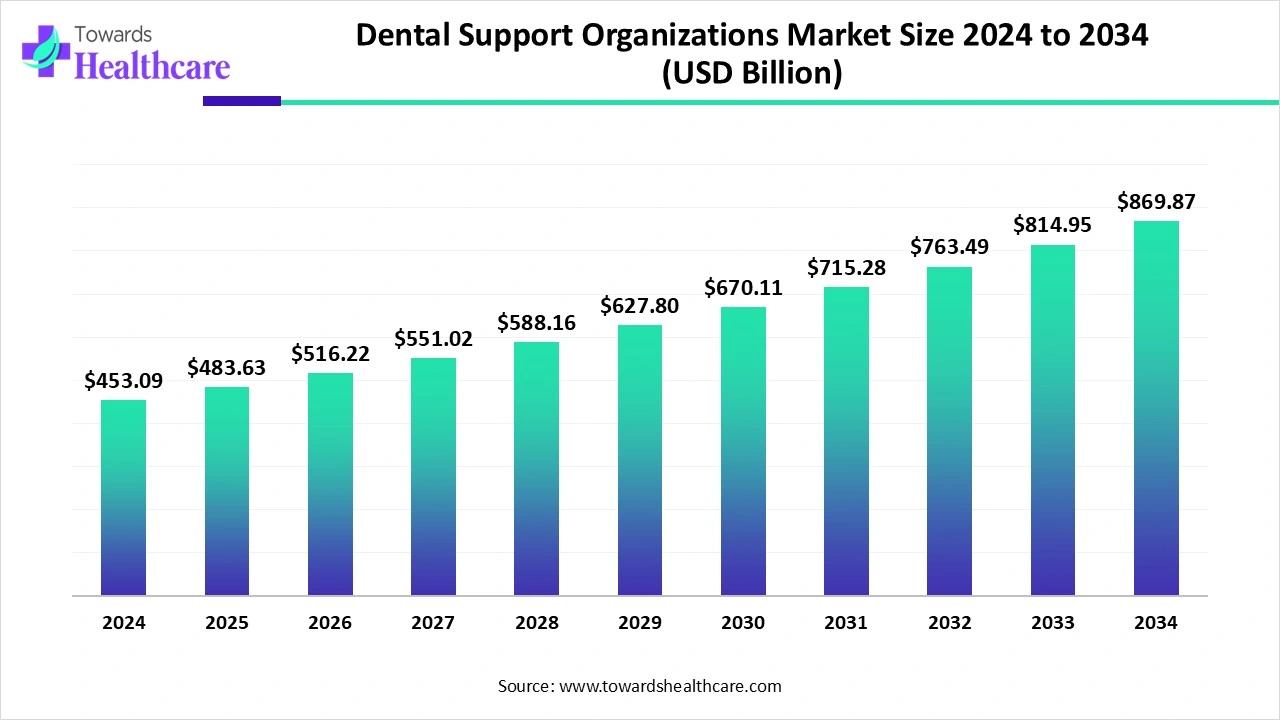
The global dental support organizations market was valued at USD 483.63 billion in 2025 and is projected to reach approximately USD 869.87 billion by 2034, expanding at a 6.74% CAGR from 2025 to 2034, according to Towards Healthcare.
Why Acquisition Support Matters for Dental Groups
Acquiring an independent dental practice can create significant growth opportunities, but integration can also introduce operational complexity.
A growing dental group may need to align:
- Financial and accounting systems
- Billing and revenue cycle management
- Human resources and recruitment
- Practice management software
- Patient records and technology
- Procurement and supplier relationships
- Marketing and patient acquisition
- Regulatory compliance
- Clinical and administrative workflows
Towards Healthcare’s research on mid-sized dental groups highlights that organizations expanding through acquisitions increasingly need centralized administration, standardized workflows, enterprise technology, and stronger operational infrastructure.
This makes acquisition support particularly valuable for groups that want to grow without creating unnecessary administrative burdens for dentists and practice-level teams.
Leading Providers Supporting Dental Group Expansion
Heartland Dental
Heartland Dental is one of the major names identified by Towards Healthcare in the dental support organization landscape. Its model provides administrative support to affiliated dentists, allowing clinicians to focus more heavily on patient care while centralized teams manage important business functions.
For expanding dental groups, this type of centralized infrastructure can be valuable when multiple practices need consistent support and operational processes.
The Aspen Group / Aspen Dental
The Aspen Group and Aspen Dental are also identified among the leading companies in the dental support organization space. Aspen Dental Management provides business support services to independently owned dental practices operating under the Aspen Dental brand.
Its broader support structure demonstrates how centralized business services can help dental practices manage non-clinical responsibilities while maintaining their focus on patient care.
PDS Health / Pacific Dental Services
PDS Health, formerly Pacific Dental Services, is another major player identified by Towards Healthcare. Its presence in the DSO landscape reflects the growing importance of structured support models for dental practices and multi-location organizations.
For dental groups considering expansion, organizations with established administrative and operational infrastructure can offer valuable support as practices scale.
Smile Brands
Smile Brands is another leading DSO identified by Towards Healthcare. The company provides long-term partnerships and business support services to affiliated dental organizations.
This partnership-oriented model can be particularly relevant for dental groups seeking operational support while maintaining a strong relationship with practice-level clinicians.
Dental Care Alliance
Dental Care Alliance is also among the key players identified in Towards Healthcare’s research. Its network covers multiple dental specialties, including general dentistry, orthodontics, pediatric dentistry, periodontics, endodontics, oral surgery, and dental implants.
A multi-specialty structure can create opportunities for acquiring practices that complement an existing network and expand the range of services available to patients.
Acquisition Support Is About More Than Buying a Practice
One of the biggest changes in dental group expansion is the move from simply acquiring practices to building an integrated operating platform.
Towards Healthcare notes that larger dental organizations increasingly focus on M&A integration, data analytics, standardized compliance, enterprise software, centralized credentialing, and clinical governance as they scale.
This means a strong acquisition-support model should address three stages:
1. Before the Acquisition
Before a transaction is completed, dental groups need to evaluate the practice’s financial, operational, technological, and organizational position.
Important considerations include:
- Practice performance
- Revenue and billing processes
- Staffing structure
- Technology infrastructure
- Patient volume
- Specialty mix
- Compliance requirements
- Growth opportunities
2. During the Acquisition
The transaction phase requires coordination between financial, legal, operational, and clinical stakeholders.
Support teams can help establish standardized processes for:
- Financial operations
- HR and onboarding
- Credentialing
- Technology integration
- Vendor management
- Patient communication
- Compliance
3. After the Acquisition
Post-acquisition integration is where the long-term value of support becomes especially important.
A newly acquired practice may need to transition into centralized systems for billing, HR, procurement, IT, scheduling, analytics, and marketing. Towards Healthcare identifies these functions as core components of modern dental support models.
What Should Dental Groups Look for in an Acquisition Partner?
There is no single provider that is automatically the best fit for every dental group. The right choice depends on the group’s size, acquisition strategy, geographic footprint, ownership structure, and desired level of operational control.
However, several capabilities should be prioritized:
Centralized administration: The provider should be capable of supporting multiple practices through coordinated back-office functions.
M&A integration: Acquisition support should extend beyond the transaction and include post-acquisition operational integration.
Technology infrastructure: Practice management systems, analytics, EHR capabilities, cybersecurity, and cloud-based tools are increasingly important for multi-location organizations.
Revenue cycle management: Centralized billing, claims management, denial tracking, and financial reporting can help improve operational visibility.
Human resources: Recruitment, onboarding, payroll, benefits, credentialing, and continuing education become increasingly complex as dental groups expand.
Procurement: Centralized purchasing and vendor management can create economies of scale across multiple locations.
Clinical autonomy: For many dental groups, maintaining appropriate clinical independence while centralizing non-clinical functions remains an important consideration.
Acquisition Activity Is Supporting DSO Expansion
The growing focus on dental acquisitions is visible across the industry.
Towards Healthcare reports several recent examples of acquisition and partnership activity, including Parkview Dental Partners’ acquisition of a periodontist practice in Florida and Straine Dental Management’s collaboration with a dentist to acquire a new practice in Arkansas.
These developments demonstrate how partnership and acquisition models are being used to expand regional dental networks while providing practices with additional operational resources.
What Is the Future of Dental Acquisition Support?
The future of dental group acquisition support is likely to become increasingly technology-driven.
Towards Healthcare highlights the growing role of cloud-based practice management systems, AI-enabled billing, centralized scheduling, automated patient communication, analytics, and integrated operational workflows in supporting expanding dental groups.
As dental groups become larger, the ability to integrate newly acquired practices quickly and consistently could become just as important as the acquisition itself.
About Us
Pharma Geek is a part of Towards Healthcare Research & Consulting which is a global healthcare market research and consulting firm dedicated to helping businesses make informed decisions through reliable market intelligence and strategic insights. We serve pharmaceutical, biotechnology, medical device, AI in healthcare, cell and gene therapy, digital health, and life sciences organizations with in-depth market research, custom consulting, competitive analysis, and growth forecasts. Our team combines industry expertise with rigorous research to deliver clear, actionable insights that support market expansion, product strategy, investment decisions, and long-term business growth. From emerging innovations to established healthcare markets, we help organizations understand where the industry is today and where it’s headed tomorrow.
You can place an order or ask any questions, please feel free to contact us at [email protected]
Europe Region – +44 778 256 0738
North America Region – +1 8044 4193 44
APAC Region: +91 9356 9282 04
Visit Our Website: Towards Healthcare Research & Consulting – Expert Consulting Solutions & Research Reports
Find us on social platforms: LinkedIn | Twitter | Instagram | Medium
