
 by
by The global synthetic biology market size was estimated at USD 24.58 billion in 2025 and is predicted to increase from USD 30.29 billion in 2026 to approximately USD 252.42 billion by 2035, expanding at a CAGR of 26.23% from 2026 to 2035. The market growth is driven by the rising demand for bio-based, sustainable, and advanced DNA sequencing and synthesis technologies.
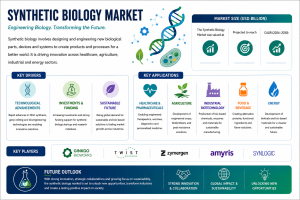
Synthetic Biology Market Overview
The synthetic biology market has emerged as one of the most dynamic segments within the global biotechnology industry. By integrating engineering principles with biological sciences, synthetic biology enables the design, modification, and optimization of living organisms and biological systems for a wide range of applications. The technology is increasingly being used in healthcare, agriculture, industrial manufacturing, environmental management, and food production, creating new opportunities for innovation and sustainable development.
The growing focus on precision medicine, bio-based manufacturing, and advanced genetic engineering has accelerated the adoption of synthetic biology solutions worldwide. Organizations are investing heavily in research and development to create innovative products and processes that improve efficiency, reduce environmental impact, and address complex global challenges. As technological capabilities continue to advance, synthetic biology is expected to play a central role in shaping the future of biotechnology.
Market Growth
The growth of the synthetic biology market is being driven by increasing demand for advanced biological solutions across multiple industries. Healthcare organizations are leveraging synthetic biology for drug discovery, gene therapies, vaccine development, and personalized medicine. The ability to engineer biological systems with greater precision is helping researchers develop targeted treatments and improve patient outcomes, leading to greater adoption of synthetic biology technologies.
Another major contributor to market growth is the increasing demand for sustainable and environmentally friendly production methods. Industries are seeking alternatives to traditional manufacturing processes that rely heavily on fossil fuels and generate significant waste.
Market Trends
- Integration of Artificial Intelligence in Biological Research: Artificial intelligence is becoming an essential tool in synthetic biology. Researchers use AI-powered platforms to analyze complex biological data, predict genetic outcomes, and accelerate the design of biological systems, significantly reducing research timelines.
- Expansion of Precision Medicine: The healthcare sector is increasingly adopting personalized treatment approaches. Synthetic biology is enabling the development of customized therapies based on individual genetic profiles, improving treatment effectiveness and supporting the advancement of precision healthcare.
- Growing Adoption of Sustainable Manufacturing: Companies across industries are embracing synthetic biology to create eco-friendly products and reduce carbon emissions. Bio-based production methods are gaining popularity as businesses strive to meet sustainability goals and regulatory requirements.
- Rise of Alternative Proteins and Precision Fermentation; The food industry is witnessing growing interest in alternative proteins and fermentation-based ingredients. Synthetic biology technologies are enabling the production of sustainable food products that require fewer natural resources than traditional agricultural methods.
Read More: Generic Drugs Market
Market Dynamics
Driver
Rising Demand for Advanced Healthcare Solutions
The increasing prevalence of chronic diseases, genetic disorders, and infectious diseases is driving demand for innovative healthcare technologies. Synthetic biology supports the development of advanced therapeutics, diagnostics, and vaccines, making it a critical component of modern healthcare innovation. The growing emphasis on precision medicine further strengthens market demand.
Opportunity
Expansion of Bio-Based Industries
The global shift toward sustainability presents significant opportunities for synthetic biology companies. Industries are actively exploring bio-based alternatives for chemicals, fuels, materials, and food products. As environmental concerns continue to grow, synthetic biology offers scalable solutions that support sustainable production and resource conservation.
Challenge
Regulatory and Ethical Concerns
Despite its potential, synthetic biology faces regulatory and ethical challenges related to genetic modification, biosafety, and environmental impact. Regulatory approval processes can be lengthy and complex, potentially slowing commercialization efforts. Addressing public concerns and ensuring responsible development remain important priorities for industry stakeholders.
Sustainable Manufacturing Through Synthetic Biology
Industries worldwide are under increasing pressure to reduce carbon emissions and adopt environmentally responsible production methods. Synthetic biology is providing sustainable alternatives to traditional manufacturing processes.
Applications include:
- Bio-based chemicals
- Renewable fuels
- Sustainable textiles
- Biodegradable materials
- Industrial enzymes
Engineered microorganisms can convert renewable resources into valuable products while generating less waste and consuming fewer natural resources than conventional manufacturing methods.
Revolutionizing Agriculture with Bioengineered Solutions
Agriculture faces numerous challenges, including climate change, resource scarcity, soil degradation, and the need to feed a rapidly growing global population. Synthetic biology is helping address these issues through innovative bioengineered solutions that improve agricultural productivity and sustainability.
Scientists are developing crops with enhanced resistance to drought, heat, pests, and diseases. These improvements help farmers maintain stable yields even under challenging environmental conditions. By reducing crop losses and improving resilience, synthetic biology contributes to global food security.
How Artificial Intelligence is Advancing Synthetic Biology
Artificial intelligence (AI) is transforming synthetic biology by enabling researchers to process vast amounts of biological data and make more accurate predictions. The combination of AI and synthetic biology is accelerating research, reducing development costs, and improving the success rate of scientific discoveries.
Biological systems are incredibly complex, involving millions of interactions between genes, proteins, and cells. AI-powered algorithms can analyze these interactions more efficiently than traditional methods, helping scientists identify patterns and optimize biological designs.
Regional Analysis
- North America
North America remains the leading market for synthetic biology due to its strong biotechnology ecosystem, extensive research infrastructure, and substantial investments in innovation. The region benefits from the presence of major biotechnology companies, academic institutions, and government-supported research programs. Continuous advancements in healthcare and genetic engineering technologies further strengthen the region’s market position.
- Europe
Europe has established itself as a major hub for synthetic biology research and sustainable biotechnology development. Government initiatives promoting environmental sustainability and bio-based manufacturing have encouraged the adoption of synthetic biology solutions across various industries. The region continues to invest in research programs focused on healthcare, agriculture, and industrial biotechnology.
- Asia-Pacific
Asia-Pacific is emerging as the fastest-growing market for synthetic biology. Rapid economic development, increasing healthcare expenditure, and expanding biotechnology sectors are driving regional growth. Countries such as China, India, Japan, and South Korea are investing heavily in genomic research, healthcare innovation, and agricultural modernization, creating substantial opportunities for market expansion.
- Latin America
Latin America is gradually increasing its participation in the synthetic biology sector through investments in biotechnology research and agricultural innovation. Growing awareness of sustainable farming practices and bio-based industrial solutions is expected to support future market development.
- Middle East and Africa
The Middle East and Africa region is witnessing growing interest in biotechnology and life sciences. Although still in the early stages of adoption, increasing investments in healthcare infrastructure and scientific research are creating opportunities for synthetic biology applications across the region.
Future Outlook
The future of the synthetic biology market appears highly promising as technological advancements continue to expand the scope of biological engineering. Innovations in gene editing, artificial intelligence, automation, and DNA synthesis are expected to accelerate product development and commercial adoption. Industries are increasingly recognizing the value of synthetic biology in addressing healthcare challenges, improving food security, and supporting environmental sustainability.
Over the coming years, synthetic biology is expected to become a foundational technology for the global bioeconomy. The convergence of biology, engineering, and digital technologies will create new opportunities for innovation, enabling organizations to develop more efficient, sustainable, and scalable solutions.
You can place an order or ask any questions. Please feel free to contact us at [email protected] |+1 804 441 9344
