 by
by What is the Portable Medical Devices Market Size in 2026?
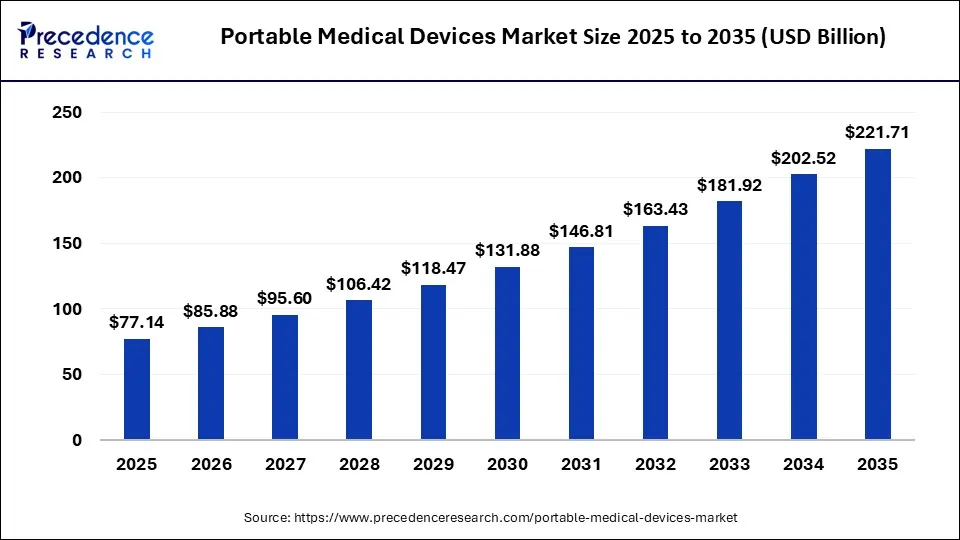
The global portable medical devices market is experiencing robust growth, driven by increasing demand for home healthcare, rapid technological advancements, and the rising prevalence of chronic diseases. According to recent analysis, the market is projected to expand at a strong CAGR over the forecast period, fueled by the shift toward decentralized healthcare and patient monitoring solutions.
Portable medical devices ranging from wearable monitors to compact diagnostic tools are transforming how healthcare is delivered, making it more accessible, efficient, and patient-centric.
What’s Powering the Market?
The market is expected to grow significantly, reaching a multi-billion-dollar valuation by 2034, driven by increased adoption of home healthcare solutions.
North America leads the global market due to advanced healthcare infrastructure and early adoption of digital health technologies.
Asia-Pacific is emerging as the fastest-growing region, supported by rising healthcare investments and large patient populations.
Monitoring devices dominate the product segment owing to increasing chronic disease management needs.
Key players such as Medtronic, Philips Healthcare, and GE HealthCare are actively innovating in portable solutions.
What is Driving the Growth of Portable Medical Devices?
The growing burden of chronic illnesses such as cardiovascular diseases, diabetes, and respiratory disorders is a major catalyst for market expansion. Patients increasingly require continuous monitoring, which portable devices can deliver efficiently without frequent hospital visits.
Additionally, the global aging population is accelerating demand. Elderly patients benefit significantly from portable monitoring tools that allow them to maintain independence while ensuring medical oversight.
Technological advancements—especially in wireless connectivity, miniaturization, and battery efficiency—have made devices more reliable and user-friendly. The integration of IoT and cloud-based platforms further enhances real-time data sharing between patients and healthcare providers.
How is Artificial Intelligence Transforming Portable Medical Devices?
Artificial Intelligence (AI) is playing a transformative role in enhancing the capabilities of portable medical devices. AI-powered algorithms enable real-time data analysis, early disease detection, and predictive insights. These technologies help healthcare providers make faster and more accurate clinical decisions, improving patient outcomes.
Moreover, AI integration supports personalized healthcare by analyzing patient-specific data trends. Wearable devices equipped with AI can detect anomalies such as irregular heart rhythms or glucose fluctuations, triggering alerts before conditions worsen. This proactive approach is redefining preventive care and reducing hospital admissions.
What Opportunities and Trends are Shaping the Future?
Are Wearable Devices Becoming the New Standard in Healthcare?
Yes, wearable medical devices are rapidly becoming mainstream. From smartwatches with ECG capabilities to continuous glucose monitors, these tools are empowering patients to take control of their health.
Will Home Healthcare Replace Traditional Hospital Visits?
Partially. While hospitals remain critical, many routine diagnostics and monitoring tasks are shifting to home settings, reducing healthcare costs and improving convenience.
Is Telemedicine Accelerating Market Adoption?
Absolutely. The rise of telehealth services has significantly boosted demand for portable devices that support remote consultations and real-time patient monitoring.
Where is the Demand Concentrated?
By Product Type
Monitoring devices hold the largest share, particularly due to their role in chronic disease management. Diagnostic devices are also gaining traction as portable imaging and testing solutions become more advanced.
By Application
Cardiology and respiratory care segments dominate, given the high global incidence of related conditions. Diabetes management is another key application area witnessing rapid growth.
By End User
Home healthcare settings are the fastest-growing segment, followed by hospitals and ambulatory care centers. Patients increasingly prefer home-based solutions for convenience and cost-effectiveness.
Regional Insights: Which Markets are Leading the Charge?
North America continues to dominate due to strong healthcare infrastructure, high adoption of advanced technologies, and favorable reimbursement policies.
Asia-Pacific is expected to witness the fastest growth, driven by expanding healthcare access, increasing disposable incomes, and government initiatives to modernize healthcare systems.
Europe also holds a significant share, supported by an aging population and strong emphasis on preventive healthcare.
Latest Innovations and Key Players Driving the Market
Leading companies are focusing on innovation, partnerships, and product launches to strengthen their market position. Notable players include:
Medtronic
Philips Healthcare
GE HealthCare
Siemens Healthineers
Abbott Laboratories
Recent breakthroughs include wearable cardiac monitors, portable imaging devices, and AI-integrated diagnostic tools that enhance real-time decision-making.
What Challenges are Hindering Market Growth?
Despite strong growth prospects, the market faces several challenges. High costs associated with advanced portable devices can limit adoption, especially in developing regions.
Data privacy concerns and regulatory complexities also pose barriers, particularly as devices become more connected and data-driven. Additionally, ensuring accuracy and reliability remains critical, as these devices are often used outside clinical settings.
Market Dynamics
Drivers: Growing Geriatric Population
The global population is aging rapidly, and this trend is expected to continue as life expectancy increases. Older adults are more likely to suffer from chronic conditions such as cardiovascular diseases, diabetes, and mobility issues, which require continuous monitoring and medical attention.
As a result, there is a growing need for convenient and efficient healthcare solutions both in clinical settings and at home. Portable medical devices play a crucial role in meeting this demand, enabling real-time monitoring and reducing hospital visits. This rising dependence on healthcare support among the elderly is expected to significantly drive the growth of the portable medical devices market.
Restraints: Risks Associated with Battery-Powered Devices
Despite their benefits, portable medical devices come with certain risks, particularly those related to battery usage. Device failure due to battery malfunction can pose serious risks to patients, especially when continuous monitoring is required.
Using incompatible batteries may damage the device or lead to inaccurate readings. Additionally, battery replacement often requires proper training, and incorrect handling can result in device failure or safety hazards. Overheating batteries can also cause burns or even fire incidents. These concerns around safety, reliability, and disposal may hinder market growth to some extent.
Opportunities: Rising Health Awareness
Health awareness is increasing globally, especially among younger populations who are becoming more proactive about fitness and preventive care. This shift has led to a surge in demand for wearable medical devices that track vital metrics such as heart rate, physical activity, and sleep patterns.
Athletes and fitness enthusiasts rely on these devices to monitor performance and optimize health outcomes. With ongoing technological advancements and improved user-friendly features, wearable devices are becoming more accessible and appealing. This trend is expected to create strong growth opportunities in the portable medical devices market.
Segment Insights
End-User Insights
Hospitals and clinics currently dominate the portable medical devices market due to their high demand for advanced diagnostic and monitoring equipment. Devices such as portable ECG monitors, pulse oximeters, and blood pressure monitors are widely used to improve workflow efficiency and deliver timely patient care.
At the same time, home healthcare is emerging as the fastest-growing segment. Increasing prevalence of chronic diseases, an aging population, and demand for personalized care are driving the adoption of portable and wearable devices for home use. Integration with telehealth platforms has further enhanced remote monitoring capabilities, allowing patients to manage their health conveniently while reducing healthcare costs.
Technology Insights
Wireless connectivity is a key driver in the evolution of portable medical devices. Devices that connect seamlessly to smartphones and cloud platforms enable real-time data tracking and sharing, improving both patient engagement and clinical decision-making.
Additionally, devices integrated with Artificial Intelligence (AI) represent the fastest-growing segment. These smart systems can analyze health data, provide predictive insights, and offer personalized recommendations. Over time, AI-enabled devices can learn user behavior patterns, helping in early detection of potential health risks and enabling proactive care.
Product Insights
Monitoring devices accounted for the largest market share in 2025, driven by advancements in technology, compact design, and ease of use. Their ability to provide continuous health tracking makes them essential in both clinical and home settings.
Meanwhile, smart wearable devices are expected to witness the fastest growth during the forecast period. Devices such as fitness bands and smartwatches allow users to track daily activities and vital signs. Data collected can be shared with healthcare providers via wireless technologies, enabling remote monitoring and improved healthcare outcomes.
Application Insights
The portable medical devices market spans several applications, including cardiology, orthopedics, gynecology, urology, gastroenterology, and neurology.
Among these, the gynecology segment is projected to grow at a notable rate. Increasing adoption of portable imaging and monitoring systems is enhancing maternal and fetal care. For example, handheld ultrasound devices allow real-time fetal monitoring, improving early detection of complications and reducing the risk of birth defects. Rising birth rates in certain regions further contribute to the demand for portable gynecological devices.
Regional Insights
North America
North America leads the global portable medical devices market, driven by advanced healthcare infrastructure, strong adoption of digital health technologies, and high investment in research and development.
The United States plays a key role in this dominance, supported by favorable regulations, widespread use of remote monitoring systems, and strong adoption of wearable devices. The region’s focus on preventive care and personalized medicine is expected to sustain its leadership.
Asia-Pacific
Asia-Pacific is the fastest-growing region in the market. Growth is fueled by increasing healthcare awareness, rising prevalence of chronic diseases, and rapid urbanization.
Government initiatives promoting digital healthcare, along with growing smartphone penetration and affordable wearable devices, are accelerating adoption. Countries like China, India, and Japan are increasingly embracing remote monitoring and home-based care solutions, positioning the region as a major growth hub.
Top Vendors and their Offerings
- Samsung Group
- General Electric (GE) Company
- Vyaire Medical
- Medtronic plc
Segmnet Covered in the Report
By Product
- Therapeutics
- Nebulizer
- Insulin Pump
- Image-guided Therapy Systems
- Oxygen Concentrator
- Smart Wearable Medical Devices
- Diagnostic Imaging
- X-ray
- CT
- Endoscope
- Ultrasound
- Monitoring Devices
- Neuromonitoring
- Electromyography (EMG) Machines
- Electroencephalography (EEG) Machines
- Intracranial pressure (ICP) Monitors
- Cerebral Oximeters
- Others
- Cardiac Monitoring
- Resting ECG System
- Event Monitoring Systems
- Holter Monitors
- Stress ECG Monitors
- ECG Management Systems
- Respiratory Monitoring
- Spirometers
- Capnographs
- Peak Flow Meters
- Neonatal Monitoring
- Fetal Monitoring
- Vital Sign Monitors
- Hemodynamic Monitoring Systems
By Application
- Cardiology
- Orthopedics
- Gynecology
- Urology
- Gastrointestinal
- Neurology
- Others
By End User
- Hospitals and Clinics
- Physician Offices
- Ambulatory Surgical Centers
- Home Healthcare
By Technology
- Wireless Connectivity
- Artificial Intelligence
- Internet of Medical Things Devices
By Region
- North America
- Europe
- Asia-Pacific
- Latin America
- Middle East & Africa
Get Sample Link: https://www.precedenceresearch.com/sample/1068
Also Read :https://www.pharma-geek.com/ambulatory-services-market/
