 by
by 2026 is emerging as another important year for pharmaceutical innovation, with new therapies addressing obesity, cardiovascular disease, rare neurological disorders, cancer, infectious diseases, kidney disease and metabolic disorders.
The U.S. FDA’s 2026 novel drug list includes medicines that had never previously been approved or marketed in the United States. Importantly, “novel drugs” are only one part of the broader approval landscape because FDA also approves new indications, formulations, biologics, cellular and gene therapies, and other products.
Among the most closely watched therapies are Foundayo (orforglipron), Lipfendra (enlicitide), Baxfendy (baxdrostat), Zanvastro (zilganersen), MIMRYLO (rusfertide), Orzeyful (oveporexton), Trutakna (atacicept) and several new oncology therapies.
The bigger story is not simply the number of approvals. It is the shift toward oral alternatives, precision medicine, rare-disease therapies, next-generation metabolic drugs and treatments designed around specific molecular or genetic mechanisms.
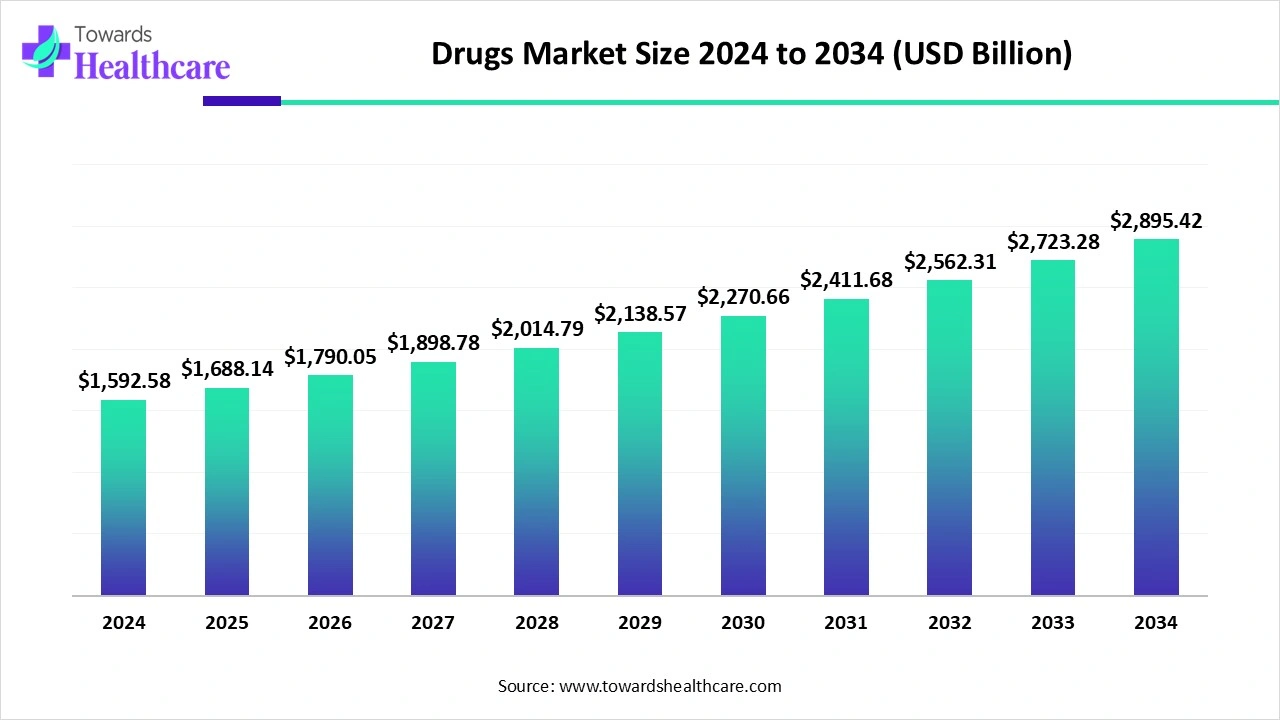
The global drugs market size recorded US$ 1688.14 billion in 2025, set to grow to US$ 1790.05 billion in 2026 and projected to hit nearly US$ 3034.63 billion by 2035, with a CAGR of 6.04% throughout the forecast timeline.
Explore Our Research Sample : https://www.towardshealthcare.com/download-sample/5713
1. Foundayo: The Next Chapter in Oral Obesity Treatment
Drug: Orforglipron
Brand: Foundayo
Company: Eli Lilly
FDA approval: April 1, 2026
Therapeutic area: Obesity and weight management
Foundayo is one of the most commercially significant new medicines of 2026.
The FDA approved orforglipron to reduce excess body weight and maintain long-term weight reduction in adults with obesity, or adults who are overweight with at least one weight-related comorbidity, alongside diet and physical activity.
The significance is its oral, once-daily format.
The obesity-treatment landscape has been dominated by injectable GLP-1 and GLP-1/GIP therapies. An effective oral option could expand the addressable patient population and change how patients perceive long-term obesity treatment.
This creates a new competitive battleground involving:
- Oral vs. injectable administration
- Convenience and adherence
- Out-of-pocket affordability
- Insurance coverage
- Weight-loss efficacy
- Cardiometabolic outcomes
- Manufacturing capacity
- Long-term safety
Why watch it?
Foundayo could become an important challenger in the obesity-drug race, particularly among patients who prefer tablets over injections.
2. Lipfendra: Oral PCSK9 Inhibition Could Reshape Cholesterol Management
Drug: Enlicitide decanoate
Brand: Lipfendra
Company: Merck
FDA approval: July 2026
Therapeutic area: Hypercholesterolemia
FDA describes Lipfendra as the first oral therapy that inhibits PCSK9 to lower LDL cholesterol in adults with high cholesterol.
PCSK9 inhibition has already become an important strategy for patients who require substantial LDL-C reduction. However, injectable administration has been one barrier to broader adoption.
An oral PCSK9 inhibitor potentially changes the commercial equation.
Buyer intelligence
The major potential buyers and stakeholders include:
- Cardiologists
- Primary-care physicians
- Lipid specialists
- Health systems
- Payers
- Specialty pharmacies
- High-risk cardiovascular patients
The opportunity extends beyond drug sales. Manufacturers will compete around patient identification, adherence programs, reimbursement support and cardiovascular-risk management platforms.
3. Baxfendy: A New Approach to Difficult-to-Control Hypertension
Drug: Baxdrostat
Brand: Baxfendy
Company: AstraZeneca
FDA approval: May 2026
Therapeutic area: Hypertension
Baxfendy represents another important shift in cardiovascular pharmacology.
The drug targets aldosterone production and provides a new mechanism for adults whose hypertension remains difficult to control despite existing antihypertensive treatment.
The opportunity is significant because uncontrolled hypertension remains a major global health challenge.
Why it matters
The next phase of hypertension treatment is moving beyond simply adding another conventional antihypertensive.
New mechanisms could help physicians address patients with:
- Resistant hypertension
- Multiple cardiovascular risk factors
- Inadequate control despite combination therapy
- Potentially high aldosterone-driven disease
This makes Baxfendy particularly important for the cardiovascular pharmaceutical pipeline.
4. Zanvastro: Precision Therapy for Alexander Disease
Drug: Zilganersen
Brand: Zanvastro
Company: Ionis Pharmaceuticals
FDA approval: September 3, 2026
Therapeutic area: Rare neurological disease
Zanvastro is among the most notable rare-disease developments of 2026.
FDA’s approval list identifies zilganersen as a novel treatment for Alexander disease, a rare neurological disorder.
Its importance goes beyond the number of patients treated.
Rare-disease drug development increasingly demonstrates how genetic and molecular biology can identify the underlying driver of disease and create therapies aimed directly at that mechanism.
This is becoming an important model for the broader pharmaceutical industry:
Genetic understanding → molecular target → precision therapy → smaller defined patient population → premium-value treatment.
5. MIMRYLO: Targeting Polycythemia Vera Biology
Drug: Rusfertide
Brand: MIMRYLO
Company: Takeda
FDA approval: August 2026
Therapeutic area: Hematology
MIMRYLO is another therapy to watch because it addresses erythrocytosis associated with polycythemia vera.
The FDA’s 2026 novel drug list identifies rusfertide as a new treatment for erythrocytosis in adults with polycythemia vera.
The drug illustrates a broader trend toward disease-specific biological intervention rather than symptom management alone.
For hematology specialists, the value proposition is likely to center on disease control, treatment burden and reducing complications associated with excessive red blood cell production.
6. Orzeyful: A New Pharmacological Approach to Narcolepsy
Drug: Oveporexton
Brand: Orzeyful
Company: Takeda
FDA approval: August 5, 2026
Therapeutic area: Narcolepsy type 1
Narcolepsy has traditionally required treatment approaches focused on controlling symptoms such as excessive daytime sleepiness and cataplexy.
Oveporexton is particularly interesting because it represents a new mechanism for narcolepsy type1.
FDA lists Orzeyful among the novel drugs approved in 2026.
Commercial opportunity
The opportunity goes beyond the medication itself.
Pharmaceutical companies entering sleep medicine can potentially compete through:
- Digital patient identification
- Sleep-clinic partnerships
- Physician education
- Specialty pharmacy networks
- Adherence programs
- Patient-support services
This makes sleep medicine another area worth watching in 2026.
7. Trutakna: A New Option for IgA Nephropathy
Drug: Atacicept-vymj
Brand: Trutakna
FDA approval: July 7, 2026
Therapeutic area: Kidney disease
FDA lists Trutakna as a treatment intended to reduce proteinuria in adults with primary immunoglobulin A nephropathy.
IgA nephropathy is a chronic kidney disease in which immune-system activity contributes to kidney damage.
The approval demonstrates the growing pharmaceutical focus on immunology-driven kidney diseases, where targeted therapies may alter disease progression rather than simply manage downstream complications.
8. Oncology Remains One of the Biggest Innovation Engines
Cancer continues to account for a substantial share of pharmaceutical innovation.
Several 2026 approvals and indication expansions demonstrate a move toward increasingly precise oncology treatment.
FDA’s oncology approval database includes important developments involving:
- Triple-negative breast cancer
- HER2-positive breast cancer
- Renal cell carcinoma
- Prostate cancer
- Cholangiocarcinoma
- Blastic plasmacytoid dendritic cell neoplasm
- Ovarian cancer
- Non-small cell lung cancer
For example, FDA approved Enhertu (trastuzumab deruxtecan) for two indications in HER2-positive early-stage breast cancer in May 2026.
FDA also approved pivekimab sunirine-pvzy (Decnupaz) for adults with BPDCN, an ultra-rare hematologic malignancy.
Meanwhile, FDA approved zenocutuzumab (Bizengri) for advanced cholangiocarcinoma harboring an NRG1 gene fusion, illustrating how biomarker-defined populations are becoming increasingly important in oncology.
The oncology trend
The industry is increasingly moving from:
“One drug for many cancer patients”
toward:
“One targeted therapy for a precisely defined molecular population.”
This has major implications for companion diagnostics, genomic testing, clinical-trial recruitment and precision-medicine platforms.
9. Alzheimer’s Disease: Drug Innovation Meets At-Home Treatment
Drug innovation in 2026 is also extending beyond molecules to how treatments are delivered.
FDA approved an at-home starting dose option for Leqembi (lecanemab) in July 2026, creating another pathway for initiating Alzheimer’s treatment.
This is strategically important because future pharmaceutical competition will increasingly involve the complete treatment experience.
That means companies will compete not only on:
- Clinical efficacy
- Safety
- Biomarkers
but also on:
- Administration time
- Home treatment
- Patient convenience
- Caregiver burden
- Monitoring requirements
- Digital health integration
10. The Bigger 2026 Trend: From New Molecules to New Treatment Models
The most important pharmaceutical developments of 2026 reveal several common themes.
1. Oral medicines are gaining strategic importance
Foundayo and Lipfendra demonstrate how pharmaceutical companies are pursuing oral alternatives in therapeutic categories traditionally associated with injections.
2. Precision medicine is becoming mainstream
Zanvastro and biomarker-selected oncology treatments demonstrate the growing role of molecular diagnosis in drug selection.
3. Rare diseases remain an innovation priority
The FDA continues to approve therapies for diseases affecting relatively small patient populations where unmet medical need can be extremely high. FDA maintains a dedicated rare-disease approval program tracking selected recent approvals.
4. Drug delivery is becoming part of the competitive strategy
At-home administration, oral dosing and simplified treatment schedules can influence adoption as much as the molecule itself.
5. Cardiometabolic disease remains a pharmaceutical battleground
Obesity, diabetes, hypertension and dyslipidemia are attracting significant innovation because of their enormous patient populations and associated cardiovascular risks.
11. 2026 Buyer Intelligence: Who Will Drive Adoption?
The commercial opportunity for new medicines depends on more than FDA approval.
Primary buyers and decision-makers
Physicians:
Specialists and primary-care physicians remain the most important clinical decision-makers.
Payers:
Insurance companies and government programs increasingly evaluate medicines based on outcomes, total healthcare costs and comparative effectiveness.
Health systems:
Hospitals and integrated delivery networks influence formulary decisions and treatment pathways.
Patients:
Convenience, affordability, administration method and perceived effectiveness increasingly influence treatment selection.
Specialty pharmacies:
For complex or high-cost therapies, specialty pharmacies play an important role in distribution and patient support.
12. Pharmaceutical GTM Strategy for 2026
The traditional pharmaceutical launch model is changing.
A successful launch increasingly requires an integrated GTM ecosystem.
Pre-launch
Companies need to build:
- Disease awareness
- Physician education
- KOL engagement
- Patient identification
- Payer evidence
- Diagnostic partnerships
- Real-world evidence programs
Launch
The focus shifts toward:
- Formulary access
- Specialty pharmacy distribution
- Patient-support programs
- Digital acquisition
- Physician targeting
- Medical education
- Reimbursement navigation
Post-launch
Commercial teams increasingly monitor:
- Prescription growth
- Persistence
- Patient adherence
- Switching behaviour
- Competitive launches
- Real-world outcomes
- Safety signals
- New indications
13. Patent and Competitive Intelligence
The next pharmaceutical battle will not necessarily be won by the first company to obtain FDA approval.
Patent position, manufacturing capacity, reimbursement, clinical differentiation and lifecycle management will determine long-term commercial success.
Companies will increasingly compete through:
New molecular entities → new formulations → higher doses → combination therapies → new indications → delivery innovations → companion diagnostics.
For obesity drugs, for example, competition is expanding from injectable GLP-1/GIP therapies toward oral medicines and next-generation multi-pathway treatments.
For oncology, the competitive battlefield is shifting toward biomarkers and targeted mechanisms.
For rare diseases, companies are competing around genetic targets, disease-modifying mechanisms and ultra-specialized patient identification.
14. TAM, SAM and SOM Opportunity
From a market-research perspective, these medicines represent very different commercial opportunities.
TAM — Total Addressable Market
The largest potential TAM opportunities are concentrated in:
- Obesity
- Cardiovascular disease
- Diabetes
- Dyslipidemia
- Oncology
- Neurological disorders
These diseases affect very large populations and therefore provide significant long-term revenue potential.
SAM — Serviceable Available Market
The SAM becomes narrower after considering:
- Approved indications
- Age restrictions
- Disease severity
- Biomarker status
- Insurance coverage
- Contraindications
- Physician prescribing patterns
SOM — Serviceable Obtainable Market
Actual commercial penetration depends on:
- Competitive differentiation
- Pricing
- Reimbursement
- Physician adoption
- Manufacturing capacity
- Patient adherence
- Brand awareness
- Patent protection
Therefore, FDA approval should be viewed as the beginning of the commercial opportunity rather than the end point.
What Should Healthcare Companies Watch Next?
The most important question for 2026 is no longer simply:
“Which drugs were approved?”
It is:
“Which therapies can fundamentally change how patients are diagnosed, treated and managed?”
The strongest candidates are those combining a meaningful clinical benefit with a differentiated mechanism, scalable manufacturing, favorable patient experience and a strong reimbursement strategy.
The 2026 pipeline suggests that the pharmaceutical industry is moving toward a healthcare model built around precision medicine, oral therapies, targeted oncology, cardiometabolic treatment, rare-disease innovation and increasingly patient-centric drug delivery.
For pharmaceutical companies, investors, CROs, CDMOs, healthcare providers and technology companies, these developments create opportunities across the entire value chain—from R&D and clinical trials to manufacturing, commercialization, patient engagement and real-world evidence.
Towards Healthcare Research & Consulting can help pharmaceutical, biotech, medical-device and healthcare organizations evaluate emerging therapies, competitive landscapes, pipeline opportunities, TAM/SAM/SOM, buyer intelligence, GTM strategies and commercialization opportunities.
