
 by
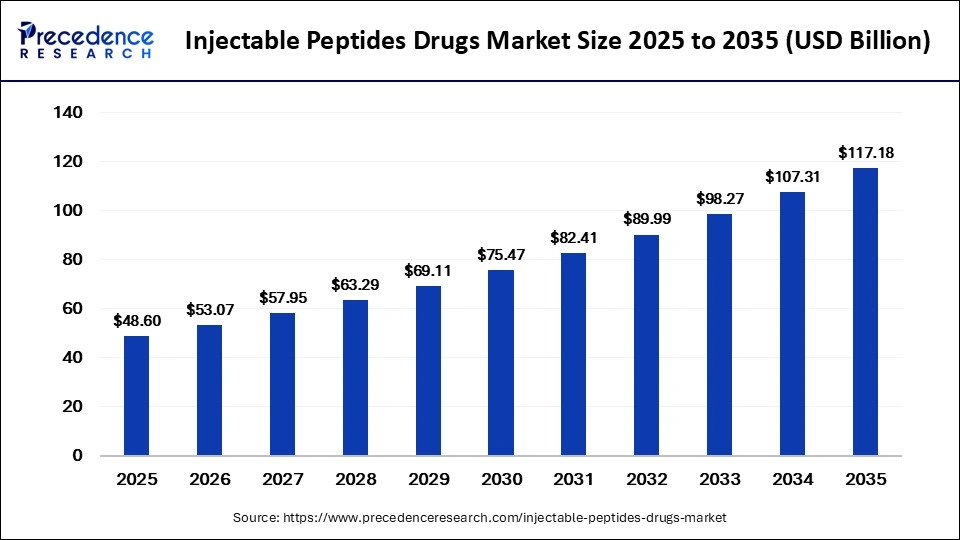
by The injectable peptides drugs market is projected to reach USD 117.18 billion by 2035 at a CAGR of 9.2%. Explore key drivers, trends, segmentation, regional insights, and future outlook.
Read Also: In Vivo CAR-T Therapy Market
Injectable Peptides Drugs Market: Transforming Modern Therapeutics Through Precision Medicine
Introduction: The Rise of Peptide-Based Therapies
Injectable peptide drugs are rapidly emerging as one of the most transformative categories in modern pharmaceuticals. These therapies, composed of short chains of amino acids, are revolutionizing the treatment of chronic diseases by offering high specificity, improved efficacy, and lower toxicity compared to many conventional drugs.
From diabetes and obesity management to oncology and endocrine disorders, peptide-based injectables are increasingly becoming essential tools in precision medicine. The growing demand for targeted therapies, combined with advances in biotechnology and drug delivery systems, is significantly accelerating the expansion of the injectable peptides drugs market.
Market Overview: A Fast-Growing Pharmaceutical Segment
The global injectable peptides drugs market was valued at USD 48.60 billion in 2025 and is projected to grow from USD 53.07 billion in 2026 to approximately USD 117.18 billion by 2035, expanding at a CAGR of 9.20% during the forecast period.
The market is being driven by:
- Rising prevalence of chronic diseases such as diabetes and obesity
- Growing demand for biologics and personalized medicine
- Increasing adoption of GLP-1 receptor agonists
- Technological advancements in peptide synthesis and drug delivery systems
Injectable peptides are gaining popularity because they provide targeted therapeutic effects with fewer side effects, making them highly effective for long-term disease management.
What Are Injectable Peptide Drugs?
Peptides are short amino acid sequences that function as signaling molecules in the body. Injectable peptide drugs are synthetic or naturally derived peptides administered through injections to treat a wide range of conditions.
These therapies are widely used in:
- Diabetes treatment
- Obesity management
- Hormonal disorders
- Cancer therapies
- Cardiovascular diseases
- Gastrointestinal conditions
Unlike many small-molecule drugs, peptide therapies often exhibit:
- High biological activity
- Better receptor specificity
- Reduced toxicity
- Enhanced therapeutic precision
Key Market Trends
1. Rapid Growth of GLP-1 Receptor Agonists
GLP-1 receptor agonists have become one of the most influential segments in the pharmaceutical industry due to their effectiveness in diabetes and obesity management.
The GLP-1 receptor agonists segment accounted for 30% of market share in 2025 and is projected to grow at the fastest CAGR of 14.5% through 2035.
These therapies help:
- Regulate blood sugar levels
- Suppress appetite
- Promote weight loss
- Improve cardiovascular health
The explosive demand for obesity and metabolic disease treatments is significantly driving this segment.
2. Increasing Adoption in Diabetes and Obesity Management
The diabetes & obesity management segment dominated the market with a 45% revenue share in 2025.
Rising obesity rates, sedentary lifestyles, and aging populations worldwide are increasing the need for effective peptide-based therapies.
Peptide drugs are particularly attractive because they:
- Offer sustained therapeutic effects
- Improve patient outcomes
- Reduce complications associated with metabolic diseases
3. Advancements in Peptide Engineering
Technological innovations are improving peptide stability, bioavailability, and half-life.
Recent advancements include:
- Long-acting peptide formulations
- Modified and conjugated peptides
- Sustained-release delivery systems
- Enhanced peptide synthesis technologies
These developments are enabling the creation of more effective and patient-friendly therapies.
4. Expansion of Home-Based Injectable Therapies
Subcutaneous injections accounted for 70% of market share in 2025, making them the dominant route of administration.
Patients increasingly prefer self-administered therapies due to:
- Convenience
- Reduced hospital visits
- Improved treatment adherence
This trend is accelerating the adoption of homecare-based peptide treatments.
5. Growth of Digital Healthcare and Online Pharmacies
Online pharmacies are expected to grow at the fastest CAGR of 13.5% during the forecast period.
The rise of:
- Telemedicine
- E-prescriptions
- Digital healthcare platforms
is making peptide therapies more accessible to patients globally.
Market Dynamics
Key Drivers
1. Rising Prevalence of Chronic Diseases
The increasing global burden of diabetes, obesity, cancer, and endocrine disorders is a major growth driver.
2. Shift Toward Personalized Medicine
Peptide drugs provide targeted therapeutic action, aligning with the growing demand for precision medicine.
3. Increasing Biopharmaceutical Investments
Pharmaceutical companies are heavily investing in peptide-based drug development and biologics research.
4. Growing Awareness of Advanced Therapeutics
Healthcare providers and patients are increasingly adopting peptide therapies due to their clinical effectiveness.
Challenges
1. High Manufacturing Costs
Peptide synthesis and purification involve complex and expensive production processes.
2. Stability and Storage Issues
Some peptide drugs require strict temperature control and specialized storage conditions.
3. Regulatory Challenges
Regulatory approval processes for biologics and peptide therapies can be lengthy and costly.
Emerging Concerns Around Unregulated Peptides
While approved injectable peptide drugs are experiencing rapid growth, medical experts are increasingly warning against the rise of unregulated “research peptides” sold online.
Recent reports highlight concerns over:
- Lack of FDA approval
- Potential contamination
- Unknown long-term health effects
- Unsafe self-administration practices
Healthcare professionals emphasize that clinically approved peptide drugs differ significantly from unregulated products marketed through social media and grey-market channels.
Regional Insights
North America (40% Market Share)
North America dominated the market in 2025 due to:
- High prevalence of obesity and diabetes
- Advanced healthcare infrastructure
- Strong pharmaceutical industry presence
- High biologics adoption rates
Asia Pacific (Fastest Growing Region)
Asia Pacific is projected to grow at the fastest CAGR of 11.5%.
Growth drivers include:
- Expanding healthcare access
- Rising middle-class population
- Increasing chronic disease prevalence
- Government healthcare initiatives
Countries such as China, India, and Japan are witnessing rapid market expansion.
Europe
Europe continues to experience steady growth driven by:
- Strong healthcare systems
- Growing biotechnology investments
- Increasing adoption of advanced therapeutics
Future Outlook: The Next Era of Peptide Therapeutics
The injectable peptides drugs market is entering a transformative phase as pharmaceutical innovation accelerates.
Key Future Trends
- Development of ultra-long-acting peptide drugs
- Expansion of obesity therapeutics
- AI-driven peptide discovery and design
- Advanced biologics manufacturing technologies
- Growth of personalized peptide medicine
Research activity around next-generation metabolic therapies and peptide engineering is expected to reshape the pharmaceutical landscape over the coming decade.
Conclusion
The injectable peptides drugs market is becoming one of the most dynamic segments in the pharmaceutical industry. With rising chronic disease prevalence, growing demand for precision medicine, and rapid advances in biotechnology, peptide-based therapies are set to play an increasingly important role in healthcare.
Projected to reach USD 117.18 billion by 2035, the market presents substantial opportunities for pharmaceutical companies, healthcare providers, and biotechnology innovators.
Get a Sample Copy: https://www.precedenceresearch.com/sample/8384
For inquiries regarding discounts, bulk purchases, or customization requests, please contact us at [email protected]
