
 by
by Market Overview
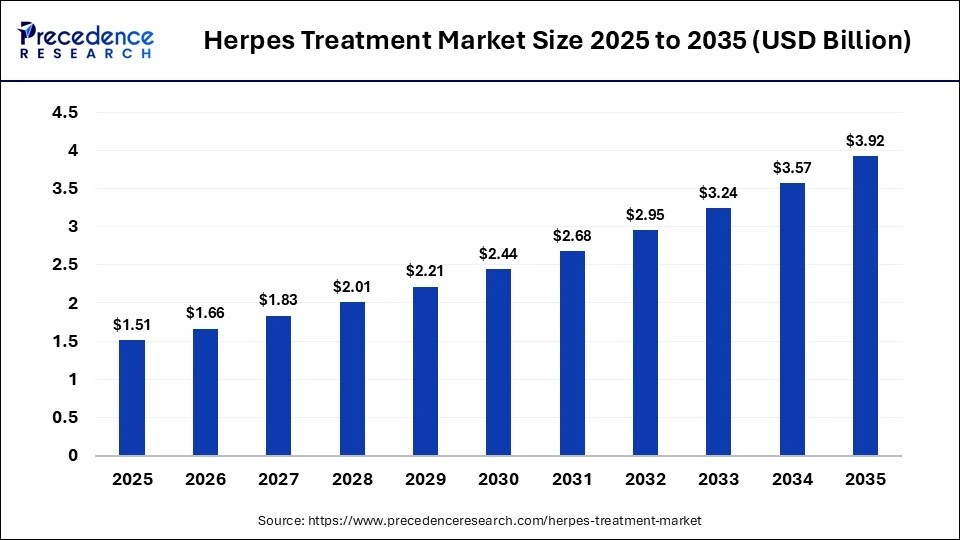
The global herpes treatment market is witnessing steady expansion driven by the increasing prevalence of herpes infections and evolving treatment approaches. The market size was valued at USD 1.51 billion in 2025 and is expected to grow from USD 1.66 billion in 2026 to approximately USD 3.92 billion by 2035, registering a CAGR of 10.00% during the forecast period.
The market is primarily fueled by the rising resistance to conventional antiviral therapies, growing demand for long-acting medications, and increasing awareness and diagnosis rates worldwide.
Read Also: Naloxone Spray Market
Understanding the Herpes Treatment Market
Herpes treatment focuses on managing infections caused by:
- Herpes Simplex Virus Type 1 (HSV-1)
- Herpes Simplex Virus Type 2 (HSV-2)
While there is currently no permanent cure, available treatments help:
- Reduce outbreak severity
- Shorten recovery time
- Prevent recurrence
- Lower transmission risk
Key therapies include oral antivirals, topical agents, biologics, and combination therapies, widely used across hospitals, clinics, and home-based settings.
Key Market Drivers
1. Rising Antiviral Drug Resistance
Increasing resistance to commonly used drugs like acyclovir is pushing demand for next-generation therapies with improved mechanisms of action.
2. Growing Demand for Long-Acting Therapies
Patients are increasingly preferring long-acting antiviral drugs that:
- Reduce dosing frequency
- Improve adherence
- Offer sustained viral suppression
3. Expanding Awareness and Diagnosis
Government initiatives and public health campaigns are:
- Increasing early diagnosis
- Encouraging timely treatment
- Supporting long-term disease management
4. Growth of Telemedicine and Online Pharmacies
Digital healthcare platforms are simplifying access to:
- Prescriptions
- Follow-up consultations
- Medication delivery
This trend is significantly boosting treatment adoption globally.
Impact of Artificial Intelligence on the Market
Artificial Intelligence (AI) is transforming herpes treatment development and delivery by:
- Accelerating drug discovery through predictive analytics
- Identifying potential compounds for clinical trials
- Enhancing patient selection and monitoring during trials
- Reducing development time and costs
AI is enabling a more data-driven, efficient, and precise approach to antiviral therapy innovation.
Key Market Trends
Shift Toward Novel Therapeutics
Pharmaceutical companies are focusing on:
- Biologics
- Immune-based therapies
- Drugs targeting new viral pathways
Increasing Use of Chronic Suppression Therapy
Long-term antiviral use is gaining traction to:
- Prevent frequent outbreaks
- Reduce viral transmission
Adoption of Digital Healthcare
Telemedicine platforms are:
- Improving patient access
- Supporting medication adherence
- Expanding online pharmacy sales
Investment in R&D
Governments and private players are heavily investing in:
- Next-generation antivirals
- Vaccine research
- Long-acting drug formulations
Segment Insights
By Therapeutic Type
- Nucleoside & Nucleotide Antivirals dominated the market (48% share in 2025) due to their proven effectiveness and affordability.
- Emerging Biologics & Novel Agents are expected to grow fastest due to innovative mechanisms targeting viral replication and immunity.
By Route of Administration
- Oral Therapies led the market (67% share in 2025) due to convenience and widespread availability.
- Injectable Therapies are growing rapidly with advantages like faster action and improved bioavailability.
By Treatment Approach
- Episodic Treatment dominated as patients prefer short-term, cost-effective solutions.
- Chronic Suppression Therapy is expected to grow fastest due to its effectiveness in preventing recurrence.
By End User
- Hospitals & Specialty Clinics led the market due to advanced diagnostic capabilities.
- Online Pharmacies & E-commerce are rapidly expanding due to privacy, convenience, and home delivery.
Regional Insights
North America: Market Leader
North America accounted for approximately 38% of the market in 2025, driven by:
- High awareness and diagnosis rates
- Advanced healthcare infrastructure
- Strong adoption of antiviral therapies
The U.S. leads the region with significant investments in clinical trials and innovative treatments.
Asia Pacific: Fastest-Growing Region
Asia Pacific is expected to grow at the highest CAGR (~10.2%) due to:
- Large population base
- Improving healthcare access
- Rising awareness and diagnosis
Countries like India and China are emerging as key growth markets.
Europe: Stable Growth
Europe represents a mature market with:
- Strong reimbursement policies
- High treatment adherence
- Increasing focus on quality of life and prevention
Competitive Landscape
The herpes treatment market features a mix of global pharmaceutical giants and emerging biotech firms. Key players include:
- GSK plc
- Pfizer Inc.
- Teva Pharmaceutical Industries Ltd.
- Viatris Inc.
- Gilead Sciences, Inc.
- BioNTech SE
- Moderna Inc.
- Sanofi
These companies are actively investing in R&D, partnerships, and clinical trials to develop next-generation therapies.
Recent Developments
- 2025: AiCuris reported successful Phase 3 trials of pritelivir, a promising oral antiviral candidate.
- 2025: Assembly Lifesciences advanced ABI-5366 to Phase II trials with significant viral reduction results.
- 2025: Theralase introduced a new HSV-1 treatment showing high preclinical efficacy.
These developments highlight the strong innovation pipeline in the herpes treatment market.
Future Outlook
The herpes treatment market is set for sustained growth driven by:
- Development of long-acting antivirals
- Increasing adoption of chronic suppression therapies
- Expansion of digital healthcare platforms
- Rising investments in biologics and vaccine research
Emerging therapies targeting viral latency and immune response could potentially redefine treatment paradigms in the coming years.
Conclusion
The global herpes treatment market is evolving rapidly with advancements in drug development, increasing awareness, and expanding healthcare access. While traditional antivirals continue to dominate, the shift toward innovative, long-acting, and AI-driven therapies is shaping the future of the market.
As research progresses and new treatments emerge, the market is expected to play a critical role in improving patient outcomes and managing herpes infections more effectively worldwide.
Get Sample Copy: https://www.precedenceresearch.com/sample/7767
For inquiries regarding discounts, bulk purchases, or customization requests, please contact us at sales@precedenceresearch.com

- Herpes Treatment Market Size to Hit USD 3.92 Billion by 2035 - March 27, 2026
- Naloxone Spray Market Size to Hit USD 7,066.49 Billion by 2035 - March 27, 2026
- Endotoxin Testing Market Size to Hit USD 3.78 Billion by 2035 - March 27, 2026
