 by
by Hematologic malignancies-including leukemia, lymphoma, and multiple myeloma are becoming one of the most active areas of oncology innovation. Drug development is moving beyond traditional chemotherapy toward targeted therapies, immunotherapies, antibody-drug conjugates, bispecific antibodies, and personalized cell and gene therapies.
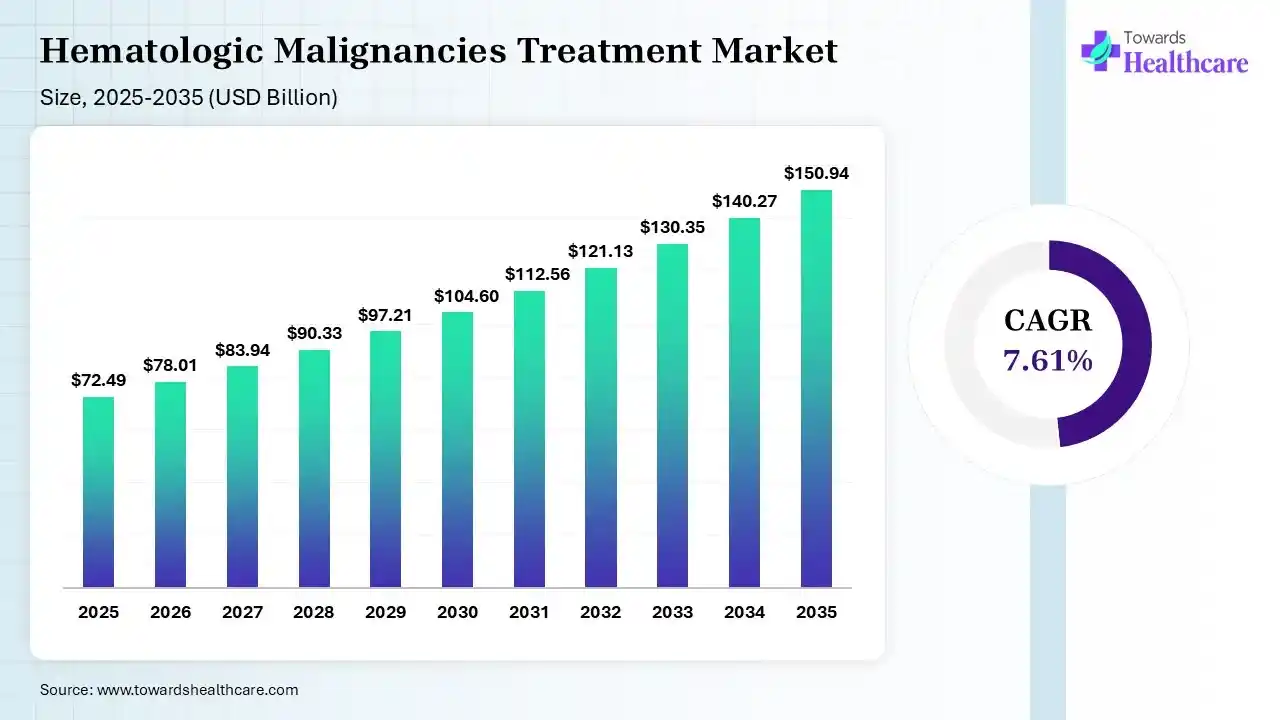
According to Towards Healthcare, the hematologic malignancies treatment landscape includes a broad group of pharmaceutical and biotechnology companies developing therapies across different blood cancers and treatment lines. The sector was valued at USD 72.49 billion in 2025 and is projected to reach USD 139.13 billion by 2034, with North America accounting for about 47% of the sector.
So, which companies are playing the biggest roles in developing the next generation of treatments for blood cancers?
Access Our Research Insights: https://www.towardshealthcare.com/download-sample/5963
Leading Companies in Hematologic Malignancy Drug Development
Towards Healthcare identifies Roche, AbbVie, Johnson & Johnson, Novartis, Bristol Myers Squibb, Amgen, Gilead Sciences/Kite Pharma, BeiGene, AstraZeneca, Pfizer, Takeda, Sanofi, Merck & Co., bluebird bio, Autolus Therapeutics, MorphoSys, Servier, ADC Therapeutics, and Genmab among the key companies in the hematologic malignancies treatment landscape.
1. Roche
Roche remains an important company in blood cancer treatment, with expertise spanning targeted therapies, biologics, and immuno-oncology.
Its position in hematologic malignancies reflects the wider shift toward treatments designed to target specific cancer pathways and immune mechanisms rather than relying solely on conventional chemotherapy. Towards Healthcare lists Roche among the leading companies in hematologic malignancy treatment.
2. AbbVie
AbbVie has developed a significant presence in hematology, particularly in leukemia and lymphoma.
The company is also involved in targeted approaches designed to address specific biological mechanisms involved in blood cancers. Towards Healthcare identifies AbbVie among the major players in hematologic malignancy treatment.
3. Johnson & Johnson
Johnson & Johnson is another major player, particularly through its oncology and hematology portfolio.
The company has also expanded its presence in advanced cell therapy through its collaboration with Legend Biotech, which has brought CAR-T technology into multiple myeloma treatment. Towards Healthcare identifies Johnson & Johnson and Legend Biotech among key companies shaping cell and gene therapy for oncology.
4. Novartis
Novartis has become one of the best-known names in cell therapy for blood cancers.
Its Kymriah CAR-T therapy represents an important example of personalized cellular treatment for certain leukemia and lymphoma patients. Towards Healthcare describes Novartis as a pioneer in CAR-T therapy and identifies the company among leading hematologic malignancy players.
5. Bristol Myers Squibb
Bristol Myers Squibb (BMS) has a broad oncology portfolio and is increasingly active in cell therapy.
Towards Healthcare highlights BMS’s CAR-T therapies, including Breyanzi and Abecma, as well as its continued investment in next-generation oncology cell therapies.
6. Amgen
Amgen is another major contributor to hematologic oncology innovation.
Towards Healthcare highlights Amgen’s development of CAR-T and bispecific T-cell engager therapies, including Blincyto, alongside broader immuno-oncology and cell therapy programs targeting blood cancers.
7. Gilead Sciences / Kite Pharma
Gilead Sciences, through Kite Pharma, has established a strong position in CAR-T therapy.
Its cell therapies include Yescarta and Tecartus, which are used across certain hematologic malignancies. Towards Healthcare identifies Gilead/Kite among the major companies driving cell and gene therapy for oncology.
8. BeiGene
BeiGene, now known as BeOne Medicines, has become an increasingly important oncology company.
Towards Healthcare identifies the company among major hematologic malignancy players, with its portfolio including therapies for blood cancers and continued development of next-generation targeted treatments.
Other Companies Driving Innovation
The field is much broader than the largest pharmaceutical companies.
Towards Healthcare also identifies AstraZeneca, Pfizer, Takeda Pharmaceuticals, Sanofi, Merck & Co., bluebird bio, Autolus Therapeutics, MorphoSys, Servier Pharmaceuticals, ADC Therapeutics, and Genmab among key participants.
These companies are approaching hematologic cancers from different directions, including:
- Targeted small-molecule therapies
- Monoclonal antibodies
- Bispecific antibodies
- Antibody-drug conjugates
- CAR-T therapies
- Gene therapies
- Immunotherapies
- Combination treatments
- Precision oncology
CAR-T Is Changing Blood Cancer Treatment
One of the biggest developments in hematologic malignancy treatment has been the emergence of CAR-T cell therapy.
Unlike conventional medicines, CAR-T therapy uses a patient’s immune cells, modifies them to recognize cancer cells, and then returns those cells to the patient.
Towards Healthcare reports that the hematologic malignancies segment represented 64% of the U.S. cell and gene therapy for oncology landscape in 2025, supported by the clinical success of CAR-T and other cell-based therapies in leukemia, lymphoma, and multiple myeloma.
This explains why companies such as Novartis, Gilead/Kite, Bristol Myers Squibb, and Johnson & Johnson/Legend Biotech are investing heavily in advanced cellular therapies.
Bispecific Antibodies Are Adding Another Layer of Innovation
CAR-T is not the only major innovation.
Bispecific T-cell engagers are another important treatment approach. These therapies are designed to bring immune cells into closer contact with malignant cells, helping the immune system attack the cancer.
Towards Healthcare identifies Amgen’s Blincyto and other advanced immuno-oncology approaches as part of the evolving treatment landscape for blood cancers.
This growing variety of therapeutic mechanisms is giving physicians more options, particularly when patients develop resistance to existing treatments.
Targeted Therapies Are Becoming More Precise
Drug development is also becoming increasingly focused on the molecular characteristics of individual cancers.
For example, Towards Healthcare highlights ziftomenib, an investigational oral menin inhibitor being developed for hematologic malignancies and acute myeloid leukemia, as an example of targeted drug development.
This reflects a broader movement toward identifying the biological drivers of a patient’s cancer and selecting therapies around those specific mechanisms.
AML Remains an Important Development Area
Acute myeloid leukemia (AML) continues to receive significant attention from drug developers.
Towards Healthcare reports that the myeloblastic leukemia segment accounted for 40% of the AML treatment landscape in 2025. The company also highlights continued development of targeted therapies and novel mechanisms for relapsed or refractory AML.
Companies developing therapies for AML include large pharmaceutical companies as well as emerging biotechnology firms working on highly targeted approaches.
Multiple Myeloma Is Another Major Innovation Hub
Multiple myeloma has also become an important testing ground for advanced therapeutic approaches.
CAR-T therapies directed toward BCMA, along with antibody-based treatments and other targeted therapies, are expanding treatment options.
Towards Healthcare identifies Legend Biotech and Johnson & Johnson as important participants in this area through CARVYKTI, while BMS and other companies are also developing advanced cell therapies for multiple myeloma.
Why Partnerships Matter
Hematologic malignancy drug development is becoming increasingly collaborative.
Pharmaceutical companies are partnering with biotechnology firms, academic researchers, cell therapy specialists, and technology providers to bring complex therapies from discovery to patients.
Towards Healthcare highlights the Kyowa Kirin–Kura Oncology strategic partnership around ziftomenib, which included USD 330 million upfront and potential milestone payments of up to USD 1.2 billion.
These partnerships demonstrate how valuable promising drug candidates and specialized technology platforms have become in the hematology pipeline.
The Challenges Are Still Significant
Despite rapid innovation, blood cancer treatment continues to face major challenges.
Towards Healthcare points to several issues, including:
- High treatment costs
- Limited access to advanced therapies
- Treatment-related side effects
- Drug resistance
- Complex regulatory pathways
- Limited healthcare infrastructure in some regions
- Delayed diagnosis in underserved populations
These challenges mean that successful drug development is not only about creating a new therapy. Companies also need to consider manufacturing, affordability, treatment access, diagnostics, logistics, and patient support.
What Could Shape the Next Generation of Hematology Drugs?
The next wave of innovation is likely to come from combining different technologies and treatment approaches.
Key areas to watch include:
CAR-T and next-generation cell therapies – improving durability, safety, manufacturing, and patient access.
Bispecific antibodies – creating new ways to activate the immune system against malignant cells.
Antibody-drug conjugates – delivering potent therapeutic payloads more selectively to cancer cells.
Targeted inhibitors – addressing specific molecular abnormalities driving blood cancers.
Gene editing – exploring ways to modify immune cells and develop more sophisticated cellular therapies.
Combination therapies – using multiple mechanisms to overcome resistance and improve treatment response.
Towards Healthcare specifically identifies CAR-T, bispecific T-cell engagers, antibody-drug conjugates, gene editing, and combination regimens as important areas of advancement in hematologic malignancy treatment.
Explore the latest healthcare insights, all in one dashboard.
https://www.towardshealthcare.com/access-dashboard
Expert Perspective by Payal Rabde – uncovering key trends and opportunities across the healthcare industry.
About Us
Pharma Geek is a part of Towards Healthcare Research & Consulting which is a global healthcare market research and consulting firm dedicated to helping businesses make informed decisions through reliable market intelligence and strategic insights. We serve pharmaceutical, biotechnology, medical device, AI in healthcare, cell and gene therapy, digital health, and life sciences organizations with in-depth market research, custom consulting, competitive analysis, and growth forecasts. Our team combines industry expertise with rigorous research to deliver clear, actionable insights that support market expansion, product strategy, investment decisions, and long-term business growth. From emerging innovations to established healthcare markets, we help organizations understand where the industry is today and where it’s headed tomorrow.
You can place an order or ask any questions, please feel free to contact us at [email protected]
Europe Region – +44 778 256 0738
North America Region – +1 8044 4193 44
APAC Region: +91 9356 9282 04
Visit Our Website: Towards Healthcare Research & Consulting – Expert Consulting Solutions & Research Reports
Find us on social platforms: LinkedIn | Twitter | Instagram | Medium
