
 by
by The global cell and gene therapy market size was estimated at USD 8.94 billion in 2025 and is predicted to increase from USD 10.44 billion in 2026 to approximately USD 47.18 billion by 2035, expanding at a CAGR of 18.1% from 2026 to 2035.
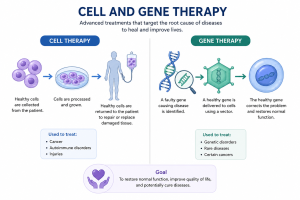
Cell and Gene Therapy Market Overview
The global cell and gene therapy market is experiencing rapid expansion due to rising demand for personalized and regenerative medicine solutions. Healthcare providers and researchers are increasingly adopting advanced therapeutic approaches that can potentially provide long-term or even curative outcomes for previously untreatable diseases.
Strong support from regulatory agencies, increasing research funding, and strategic collaborations between pharmaceutical companies and contract manufacturing organizations are further accelerating market growth. As production technologies become more efficient and scalable, the accessibility and affordability of these therapies are expected to improve significantly over the coming years.
Get Sample: https://www.precedenceresearch.com/sample/2445
Key Cell and Gene Therapy Market Growth Drivers
- Rising Number of Regulatory Approvals: Regulatory bodies around the world are approving an increasing number of cell and gene therapy products. These approvals validate the effectiveness of advanced therapies and encourage further investment in research and commercialization efforts.
- Expanding Clinical Pipeline: Thousands of clinical trials are currently evaluating new cell and gene therapies for a broad range of diseases. The growing pipeline demonstrates the industry’s confidence in these technologies and highlights their future growth potential.
- Increasing Investment in Research and Development: Biopharmaceutical companies are investing heavily in innovative technologies, manufacturing facilities, and product development. This continuous investment is accelerating therapeutic breakthroughs and expanding treatment options.
- Growing Demand for Personalized Medicine; Patients and healthcare providers are increasingly seeking personalized treatments tailored to individual genetic profiles. Cell and gene therapies align perfectly with this trend, driving greater adoption across multiple medical specialties.
Emerging Cell and Gene Therapy Market Trends
- Adoption of Advanced Gene Editing Technologies: Technologies such as CRISPR, TALENs, and zinc finger nucleases are transforming gene therapy development. These tools enable precise genetic modifications, improving treatment effectiveness while minimizing unwanted side effects.
- Expansion of Allogeneic Cell Therapies: Researchers are developing off-the-shelf allogeneic therapies that can be manufactured in advance and used for multiple patients. These products have the potential to reduce costs and improve treatment accessibility.
- Integration of Artificial Intelligence: Artificial intelligence is playing a growing role in cell and gene therapy manufacturing. AI helps optimize production processes, predict equipment maintenance needs, improve quality control, and accelerate product development timelines.
- Growth of Contract Manufacturing Services: Many biotechnology companies are partnering with Contract Development and Manufacturing Organizations (CDMOs) to overcome infrastructure limitations and accelerate commercialization efforts.
Key Applications of Cell and Gene Therapy
Cell and gene therapies are revolutionizing treatment approaches across numerous medical specialties. In oncology, CAR-T cell therapies are providing new hope for patients with difficult-to-treat cancers. In rare genetic disorders, gene replacement and gene-editing therapies offer the possibility of long-term disease correction. Regenerative medicine applications are helping repair damaged tissues and organs, while emerging neurological and cardiovascular therapies are targeting conditions previously considered untreatable. These expanding applications continue to drive investment and innovation throughout the industry.
Case Study Gene Therapy Advancing Rare Disease Treatment
A significant milestone in the industry occurred when the U.S. FDA approved a cell-based gene therapy for treating recessive dystrophic epidermolysis bullosa (RDEB), a rare genetic skin disorder. The therapy works by introducing healthy copies of a defective gene into the patient’s cells before transplantation. Clinical studies demonstrated substantial improvements in wound healing and symptom management, showcasing the transformative potential of gene therapies in addressing previously untreatable diseases.
Read More: Chemical API CDMO Market
Regional Analysis
North America remans the largest market due to strong research infrastructure, substantial healthcare spending, favorable regulatory support, and the presence of leading biotechnology companies. The United States continues to dominate innovation and commercialization activities.
Europe is witnessing significant growth driven by increasing clinical trials, supportive government initiatives, and expanding manufacturing capabilities. Countries such as Germany and the United Kingdom are emerging as major hubs for advanced therapy development.
The Asia-Pacific region is expected to experience the fastest growth over the forecast period. Rising healthcare investments, expanding biotechnology sectors, and increasing awareness of advanced therapies are driving regional market expansion.
These regions are gradually adopting cell and gene therapies as healthcare infrastructure improves and access to innovative treatments increases. Growing partnerships with global pharmaceutical companies are expected to support future growth.
Future Outlook
The future of the cell and gene therapy market appears highly promising as scientific innovation continues to unlock new treatment possibilities. Advancements in gene editing, stem cell technologies, artificial intelligence, and manufacturing automation will likely improve therapy accessibility and affordability. The transition from personalized autologous therapies toward scalable allogeneic solutions is expected to further accelerate market expansion.
As regulatory frameworks mature and production capabilities improve, cell and gene therapies are poised to become a cornerstone of modern medicine, offering transformative treatment options for millions of patients worldwide.
𝐘𝐨𝐮 𝐜𝐚𝐧 𝐩𝐥𝐚𝐜𝐞 𝐚𝐧 𝐨𝐫𝐝𝐞𝐫 𝐨𝐫 𝐚𝐬𝐤 𝐚𝐧𝐲 𝐪𝐮𝐞𝐬𝐭𝐢𝐨𝐧𝐬, 𝐩𝐥𝐞𝐚𝐬𝐞 𝐟𝐞𝐞𝐥 𝐟𝐫𝐞𝐞 𝐭𝐨 𝐜𝐨𝐧𝐭𝐚𝐜𝐭 𝐮𝐬 𝐚𝐭 𝐬𝐚𝐥𝐞𝐬@𝐩𝐫𝐞𝐜𝐞𝐝𝐞𝐧𝐜𝐞𝐫𝐞𝐬𝐞𝐚𝐫𝐜𝐡.𝐜𝐨𝐦
