 by
by Genetic research is moving rapidly from laboratory discovery toward precision medicine, cancer research, rare-disease diagnosis, gene editing, and personalized treatment. Companies developing sequencing platforms, genomic analytics, molecular diagnostics, and gene-editing technologies are becoming increasingly important to healthcare.
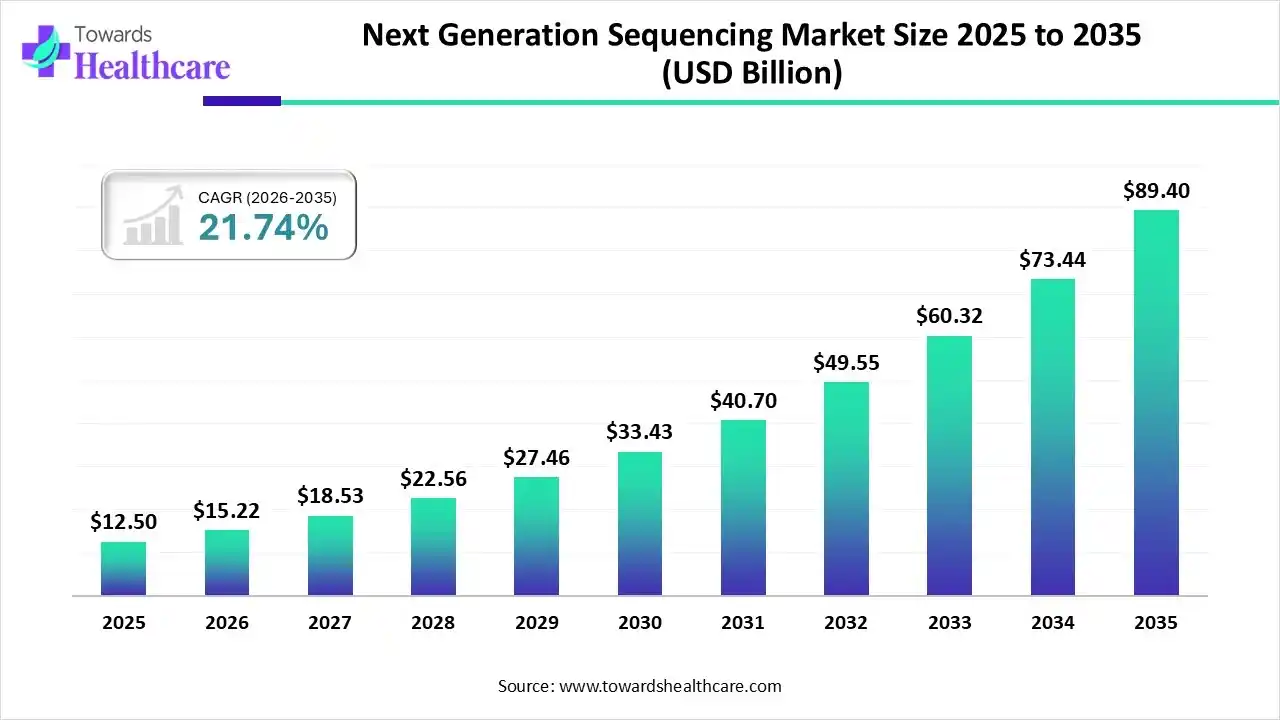
According to Towards Healthcare, the next-generation sequencing (NGS) sector is projected to grow from USD 15.22 billion in 2026 to USD 89.4 billion by 2035, representing a 21.74% CAGR. The report identifies Illumina, BGI, QIAGEN, Thermo Fisher Scientific, Roche, Oxford Nanopore Technologies, and Bio-Rad Laboratories among the major companies shaping the field.
Explore the Full Research Scope: https://www.towardshealthcare.com/download-sample/5344
Why Genetic Research Is Becoming So Important
Genetic information is increasingly being used to understand why diseases develop and why patients respond differently to treatments.
The CDC notes that genetic disorders can result from changes in a single gene, chromosome abnormalities, or combinations of genetic and environmental factors. Examples include BRCA-related hereditary cancers, Lynch syndrome, and familial hypercholesterolemia.
This is creating demand for technologies that can identify genetic variants more accurately and turn genomic data into actionable medical information.
1. Illumina: A Major Force in DNA Sequencing
Illumina is one of the most influential companies in modern genetic research, particularly through its next-generation sequencing platforms.
Towards Healthcare identifies Illumina as a Tier 1 company in NGS, describing it as a global leader in high-throughput sequencing platforms and consumables. Its portfolio includes platforms such as NovaSeq X, NextSeq, and MiSeq.
Its importance goes beyond sequencing instruments. Researchers use sequencing technologies to study:
- Cancer mutations
- Rare diseases
- Population genetics
- Drug response
- Infectious diseases
- Human evolution
- Precision medicine
The continued decline in sequencing costs has been one of the biggest factors enabling this expansion.
2. Thermo Fisher Scientific: Connecting Genomics With Research
Thermo Fisher Scientific has built a broad genomics portfolio spanning sequencing, molecular biology, sample preparation, and research workflows.
Towards Healthcare lists Thermo Fisher among the leading NGS companies and highlights products such as Ion Torrent Genexus and Ion GeneStudio, along with sequencing reagents.
This broad ecosystem is valuable because genetic research requires much more than sequencing alone.
A typical workflow can involve:
Sample preparation → DNA/RNA extraction → Sequencing → Bioinformatics → Variant interpretation → Research or clinical application
Thermo Fisher participates across several of these stages.
3. Oxford Nanopore Technologies: Advancing Long-Read Sequencing
Oxford Nanopore Technologies is helping push genetic research toward portable and long-read sequencing.
Its technology is particularly relevant when researchers need to examine complex genomic regions that can be difficult to resolve using shorter sequencing reads.
Towards Healthcare lists Oxford Nanopore among the major companies shaping the global NGS landscape.
The company’s approach is also interesting because its sequencing technology can be deployed in a variety of environments, potentially expanding access to genomic research beyond large centralized laboratories.
4. BGI: Expanding Large-Scale Genomics
BGI is another major player in genomic sequencing and population-scale genetic research.
Towards Healthcare includes BGI among the leading NGS companies and identifies it as an important participant in the global sequencing ecosystem.
Large-scale genomic research requires enormous amounts of sequencing capacity and computational infrastructure, making companies such as BGI important to population genomics and biomedical research.
5. QIAGEN: Turning Genetic Data Into Usable Insights
QIAGEN plays an important role across sample preparation, molecular diagnostics, bioinformatics, and genomic analysis.
Towards Healthcare identifies QIAGEN among the major NGS and genomics companies. Its broader genomics portfolio also includes QIAGEN Digital Insights, supporting genomic data interpretation and analysis.
This is becoming increasingly important because sequencing produces enormous quantities of data.
The challenge is no longer simply:
“Can we sequence DNA?”
It is increasingly:
“Can we interpret the data accurately and turn it into useful biological or clinical knowledge?”
Genetic Research Is Moving Into Clinical Genomics
Towards Healthcare estimates that the clinical genomics market was USD 1.25 billion in 2025 and is projected to reach USD 5.34 billion by 2034, growing at a 17.54% CAGR. North America led the market in 2024, while Asia Pacific is expected to be the fastest-growing region.
The report identifies companies including:
- Illumina
- Quest Diagnostics
- PerkinElmer
- Eurofins Scientific
- Foundation Medicine
- Natera
- Myriad Genetics
- MedGenome
- BGI
- Invitae
- NeoGenomics
as participants in the clinical genomics landscape.
This shows how genetic research is increasingly moving from academic laboratories into hospitals, diagnostic laboratories, and precision-medicine programs.
NIH Data Shows the Scale of Modern Genomic Research
One of the strongest examples comes from the U.S. National Institutes of Health (NIH).
In June 2026, NIH reported that its All of Us Research Program had data from more than 747,000 participants, including more than 535,000 whole-genome sequences linked to nearly 482,000 electronic health records. NIH described it as the world’s largest integrated genomic and EHR database.
This is significant because researchers can combine:
Genomic data + electronic health records + lifestyle information + clinical outcomes
to investigate how genetic variation relates to real-world health.
For companies working in genomic sequencing and analytics, datasets of this scale create opportunities for new discoveries in precision medicine.
Sequencing Costs Have Fallen Dramatically
Government data also show why genetic research has expanded so quickly.
The National Human Genome Research Institute (NHGRI) has tracked sequencing costs for decades.
NHGRI reports that in 2006, generating a high-quality draft human genome sequence was estimated at approximately $14 million. By late 2015, the estimated cost had fallen below $1,500.
That dramatic reduction changed the economics of genomics.
Lower sequencing costs make it increasingly practical to study:
- Larger patient populations
- Rare diseases
- Tumor genomes
- Population genetics
- Pharmacogenomics
- Longitudinal health data
In other words, genetic research is becoming more scalable.
Roche and Foundation Medicine: Linking Genomics With Cancer Care
Roche has become particularly important in genomic medicine through its work in molecular diagnostics and precision oncology.
Its Foundation Medicine business uses genomic profiling to help characterize cancer and identify potentially relevant treatment options.
Towards Healthcare includes Roche/Foundation Medicine among the leading companies in genomics data analysis.
This is an important evolution in genetic research:
Sequencing → Mutation identification → Biomarker analysis → Treatment decision support
Cancer is one of the areas where genomic information is already having a major impact on clinical decision-making.
CRISPR Is Opening Another Front in Genetic Research
Sequencing is only one side of genetic research.
Gene editing is another.
Companies such as Intellia Therapeutics are developing CRISPR-based therapies designed to modify disease-associated genes.
Towards Healthcare’s 2026 analysis highlights Intellia’s positive topline Phase 3 HAELO results in hereditary angioedema as an important recent development in the genetic-medicine landscape.
This illustrates the transition from:
Reading genetic information → Understanding genetic disease → Editing genetic material
The long-term potential is particularly significant for inherited diseases where a specific genetic change is directly linked to disease.
SOPHiA GENETICS: AI Meets Genomics
Another emerging direction is the combination of genomic data with artificial intelligence and advanced analytics.
Towards Healthcare highlights SOPHiA GENETICS as an important genomics-data company and reported its May 2026 partnership with Synnovis to support liquid-biopsy testing for lung and breast cancer patients in the U.K.
This illustrates a broader industry trend:
Genomics + AI + clinical data = faster and potentially more scalable genomic interpretation
As genomic datasets become larger, computational tools will become increasingly important.
Single-Cell Analysis Is Adding More Detail
Genetic research is also becoming increasingly granular.
Towards Healthcare estimates that the global single-cell analysis market will grow from USD 6.16 billion in 2025 to USD 34.33 billion by 2035, representing an 18.74% CAGR.
Major companies in this area include:
10x Genomics, Illumina, Thermo Fisher Scientific, and BD.
Single-cell technologies allow researchers to study biological differences between individual cells rather than treating an entire tissue sample as one uniform population.
That can be particularly valuable in:
- Cancer
- Immunology
- Drug discovery
- Developmental biology
- Cell therapy
- Biomarker research
Illumina vs. Oxford Nanopore: Different Approaches
The competition between sequencing technologies is not simply about which company has the biggest platform.
Illumina has built its leadership around high-throughput short-read sequencing and a large installed ecosystem.
Oxford Nanopore Technologies differentiates itself through nanopore-based sequencing and long-read capabilities.
For researchers, the right technology depends on the scientific question.
Illumina → High-throughput sequencing and established short-read workflows
Oxford Nanopore → Long-read sequencing, portability, and real-time analysis capabilities
Both approaches are contributing to the broader evolution of genetic research.
Insights by Payal Rabde – exploring the ideas, trends, and opportunities transforming healthcare.
What Are Genetic Research Buyers Looking For?
For pharmaceutical companies, biotech firms, hospitals, research institutes, and diagnostic laboratories, the most important requirements increasingly include:
Accuracy
Genomic research requires reliable sequencing and variant detection.
Scalability
Platforms need to support everything from individual samples to population-scale studies.
Data interpretation
Generating genomic data is only useful if researchers can interpret it.
Workflow integration
Sample preparation, sequencing, bioinformatics, and reporting need to work together.
Speed
Faster sequencing and analysis can accelerate research and clinical decision-making.
Cost efficiency
Lower sequencing costs allow organizations to analyze larger patient populations.
Data security
Genomic data is highly sensitive, making privacy and secure data management essential.
Towards Healthcare’s View
According to Towards Healthcare, the companies at the forefront of genetic research span several different layers of the ecosystem.
Illumina, Thermo Fisher Scientific, BGI, QIAGEN, Oxford Nanopore Technologies, Roche/Foundation Medicine, and Bio-Rad are prominent in sequencing, molecular biology, and genomic analysis, while companies such as Intellia Therapeutics are advancing gene-editing approaches.
Towards Healthcare’s NGS analysis estimates that Tier 1 companies account for approximately 68% of market influence, compared with 23% for Tier 2 and 9% for Tier 3.
The broader genomics data-analysis segment is also expanding rapidly, with Towards Healthcare projecting growth from USD 9.18 billion in 2026 to USD 33.51 billion by 2035, at a 15.45% CAGR.
This indicates that genetic research is becoming a connected ecosystem rather than a single technology category.
Explore the latest healthcare insights, all in one dashboard: https://www.towardshealthcare.com/access-dashboard
About Us
Pharma Geek is a part of Towards Healthcare Research & Consulting which is a global healthcare market research and consulting firm dedicated to helping businesses make informed decisions through reliable market intelligence and strategic insights. We serve pharmaceutical, biotechnology, medical device, AI in healthcare, cell and gene therapy, digital health, and life sciences organizations with in-depth market research, custom consulting, competitive analysis, and growth forecasts. Our team combines industry expertise with rigorous research to deliver clear, actionable insights that support market expansion, product strategy, investment decisions, and long-term business growth. From emerging innovations to established healthcare markets, we help organizations understand where the industry is today and where it’s headed tomorrow.
You can place an order or ask any questions, please feel free to contact us at [email protected]
Europe Region – +44 778 256 0738
North America Region – +1 8044 4193 44
APAC Region: +91 9356 9282 04
Visit Our Website: Towards Healthcare Research & Consulting – Expert Consulting Solutions & Research Reports
Find us on social platforms: LinkedIn | Twitter | Instagram | Medium
