by
by What is the S1P Receptor Modulator Drugs Market Size in 2026?
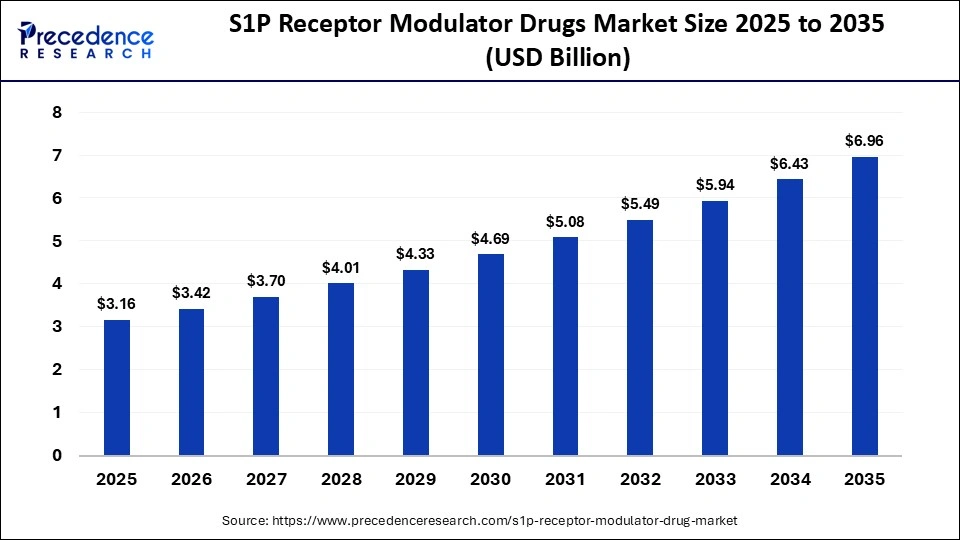
The global S1P receptor modulator drugs market size was valued at USD 3.16 billion in 2025 and is projected to grow from USD 3.42 billion in 2026 to approximately USD 6.96 billion by 2035, expanding at a CAGR of 8.22% during the forecast period.
The market is experiencing strong growth due to the rising incidence of autoimmune diseases such as multiple sclerosis and ulcerative colitis, increasing preference for oral therapies, and ongoing advancements in drug safety and efficacy.
Read Also: Onychomycosis Market
Key Takeaways
- North America dominated the market in 2025
- Asia Pacific is expected to grow at the fastest CAGR
- By application, multiple sclerosis held the largest share in 2025
- Cardiovascular diseases segment is expected to grow at the fastest rate
- By route of administration, oral drugs dominated the market
- Injectable segment is projected to grow rapidly
- By drug class, S1P receptor modulators led the market
- Immunomodulators are expected to expand significantly
- By patient type, adults dominated while geriatrics will grow fastest
Market Overview
The S1P receptor modulator drugs market focuses on a class of immunomodulatory drugs that regulate lymphocyte migration by targeting sphingosine-1-phosphate (S1P) receptors. These drugs are primarily used for treating autoimmune and inflammatory diseases, including multiple sclerosis (MS), ulcerative colitis, and other immune-mediated conditions.
With increasing demand for targeted therapies and oral treatment options, S1P receptor modulators are emerging as a transformative solution in modern pharmacotherapy. Their ability to provide effective disease control with improved patient compliance is a key factor driving adoption globally.
S1P Receptor Modulator Drugs: Driven by Robust Clinical Research
The market is expanding rapidly due to:
- Strong patient preference for oral small-molecule drugs over injectables
- Reduced immunogenicity compared to biologics
- Improved convenience and adherence
- Expansion into new therapeutic areas beyond multiple sclerosis
Pharmaceutical companies such as Bristol Myers Squibb, Novartis, and Pfizer are heavily investing in R&D to develop next-generation drugs with enhanced receptor selectivity and reduced side effects such as lymphopenia and bradycardia.
What is the Role of AI in the S1P Receptor Modulator Drugs Market?
Artificial Intelligence is playing a transformative role in accelerating drug development and improving patient outcomes:
- AI enables analysis of complex biological and chemical datasets
- Facilitates drug discovery and target identification
- Supports personalized medicine through patient stratification
- Predicts drug-target interactions and treatment responses
- Identifies biomarkers for improved clinical decision-making
These advancements are significantly reducing drug development timelines and enhancing precision therapy approaches.
Key Market Trends
1. Shift to Next-Generation Selective Drugs
The industry is moving toward second-generation S1P modulators with improved safety and receptor specificity, replacing earlier drugs with higher side-effect risks.
2. Expansion Beyond Multiple Sclerosis
S1P modulators are increasingly being used for conditions such as:
- Ulcerative colitis
- Crohn’s disease
- Atopic dermatitis
- Alopecia areata
3. Growing Preference for Oral Therapies
Patients and healthcare providers prefer oral medications due to convenience, lower costs, and better adherence compared to injectable biologics.
4. Increasing Regulatory Approvals
Regulatory bodies are approving new drugs such as etrasimod, accelerating market growth and expanding treatment options.
Market Scope
| Report Coverage | Details |
|---|---|
| Market Size in 2025 | USD 3.16 Billion |
| Market Size in 2026 | USD 3.42 Billion |
| Market Size by 2035 | USD 6.96 Billion |
| CAGR (2026–2035) | 8.22% |
| Dominating Region | North America |
| Fastest Growing Region | Asia Pacific |
| Base Year | 2025 |
| Forecast Period | 2026–2035 |
| Segments Covered | Application, Route, Drug Class, Patient Type, Region |
Segmental Analysis
Application Insights
Multiple Sclerosis Segment
The multiple sclerosis segment dominated the market in 2025 due to:
- FDA approvals of several S1P modulators
- Proven efficacy in managing immune-mediated diseases
- Ongoing clinical trials enhancing treatment outcomes
Cardiovascular Diseases Segment
Expected to grow at the fastest CAGR due to:
- Role of S1P in regulating cardiovascular functions
- Expanding clinical research in hypertension and arrhythmias
- Increased focus on integrated safety analysis
Route of Administration Insights
Oral Segment
The oral segment led the market due to:
- High patient compliance
- Ease of administration
- Lower manufacturing and distribution costs
- Reduced dependency on hospital-based care
Injectable Segment
The injectable segment is expected to grow rapidly due to:
- Use in patients intolerant to oral drugs
- Need for controlled dosing and monitoring
- Combination therapies in advanced cases
Drug Class Insights
S1P Receptor Modulators
This segment dominated in 2025 due to:
- Transition toward selective and safer drugs
- Dual indications for MS and ulcerative colitis
- Expanding therapeutic applications
Immunomodulators
Expected to grow significantly due to:
- Increased patient adherence
- Reduced hospitalization costs
- Expanding role in advanced autoimmune therapies
Patient Type Insights
Adult Segment
The adult segment dominated due to:
- High prevalence of autoimmune diseases
- Extensive clinical trials focused on adult populations
- Strong demand for advanced therapies
Geriatric Segment
Expected to grow fastest due to:
- Rising elderly population
- Preference for oral therapies
- Increased susceptibility to chronic diseases
Regional Insights
North America
North America dominated the market due to:
- High prevalence of autoimmune diseases
- Favorable reimbursement policies
- Strong regulatory support
- Advanced clinical research infrastructure
Government programs such as ARPA-H and pharmacare initiatives are supporting innovation and accessibility.
Asia Pacific
Asia Pacific is expected to grow at the fastest CAGR due to:
- Increasing healthcare expenditure
- Expanding clinical trials and drug approvals
- Rising awareness of autoimmune diseases
- Government initiatives supporting pharmaceutical innovation
Countries such as India, Japan, and China are key growth contributors.
Europe
Europe is witnessing steady growth due to:
- Strong regulatory frameworks
- Increased investment in R&D
- Expansion of targeted immune therapies
Programs such as the Pharmaceutical Strategy for Europe are supporting innovation and market expansion.
Competitive Landscape
Key players operating in the market include:
- Bristol Myers Squibb
- Novartis International AG
- Pfizer Inc.
- Johnson & Johnson
- Vanda Pharmaceuticals
- Teva Pharmaceutical Industries
- Viatris
- Dr. Reddy’s Laboratories
- Sun Pharmaceutical Industries
- Idorsia Pharmaceuticals
- Mitsubishi Tanabe Pharma
- Immunic AG
These companies are focusing on innovation, strategic collaborations, and geographic expansion to strengthen their market position.
Recent Developments
- Bristol Myers Squibb advanced its Phase 3 YELLOWSTONE trial for ozanimod in Crohn’s disease
- Pfizer received European Commission approval for Velsipity (etrasimod) for ulcerative colitis treatment
These developments highlight the rapid innovation and expanding therapeutic applications in the market.
Conclusion
The global S1P receptor modulator drugs market is poised for robust growth, driven by increasing autoimmune disease prevalence, strong demand for oral therapies, and continuous advancements in drug development. With AI integration, expanding indications, and growing healthcare investments, the market is expected to witness significant transformation over the next decade.
Get Sample Copy: https://www.precedenceresearch.com/sample/7919
For inquiries regarding discounts, bulk purchases, or customization requests, please contact us at [email protected]