
 by
by Veterinary Monoclonal Antibodies Market Size in 2026
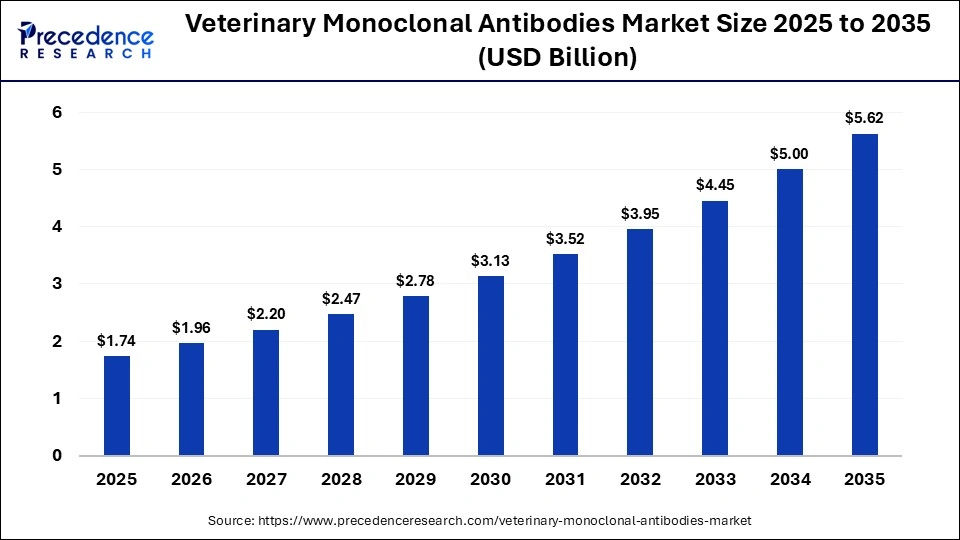
The global veterinary monoclonal antibodies market was valued at USD 1.74 billion in 2025 and is projected to reach USD 1.96 billion in 2026. The market is expected to expand significantly and reach approximately USD 5.62 billion by 2035, growing at a compound annual growth rate (CAGR) of 12.44% from 2026 to 2035.
The market is experiencing rapid growth due to the increasing demand for advanced biologic therapies for animals, rising pet care expenditure, and the growing prevalence of infectious and chronic diseases in companion animals. Veterinary monoclonal antibodies offer targeted treatment with fewer side effects compared with traditional medications, making them increasingly popular in modern veterinary medicine.
Read Also: In Vitro Diagnostics Quality Controls Market
Market Overview
The veterinary monoclonal antibodies market focuses on the development of lab-engineered antibodies designed to mimic the immune system’s natural defense mechanisms. These antibodies bind to specific antigens and help treat a wide range of diseases in animals, including dermatological conditions, osteoarthritis, infections, and cancers.
Compared with conventional veterinary drugs, monoclonal antibody (mAb) therapies provide:
-
Highly targeted treatment
-
Improved therapeutic efficacy
-
Reduced side effects
-
Longer treatment duration
Growing adoption of biotechnology and genetic engineering in veterinary medicine has accelerated the development of new monoclonal antibody therapies.
Companies such as Zoetis, Elanco Animal Health, and Virbac are investing heavily in research and development to introduce innovative biologic treatments for animals.
Veterinary Monoclonal Antibodies Market Trends
Strategic Collaborations in Veterinary Care
Veterinary healthcare organizations are increasingly collaborating with animal health companies to improve treatment solutions for aging pets.
For example, in February 2026, the Senior Dog Veterinary Society (SDVS) collaborated with Antinol Plus to support veterinary professionals in diagnosing and treating mobility issues in senior dogs.
Expansion of Manufacturing Facilities
Animal therapeutics companies are investing in new production facilities to increase their manufacturing capacity.
In November 2025, Zoetis announced an investment of USD 590 million to establish a new animal medicine production facility in Georgia, United States, expected to become operational by 2029.
Rising Investments in Veterinary Biotechnology
Pharmaceutical companies are increasingly investing in startups to accelerate the development of monoclonal antibody-based therapies.
In April 2025, Yuyu Pharma invested USD 834,174 in U.S.-based startups, including VETmAb Biosciences and DOG PPL, to support the development of monoclonal antibody therapies for cats and dogs.
Launch of Advanced Veterinary Therapeutics
Market players are continuously launching new veterinary therapeutics to strengthen their market position.
In February 2025, Zoetis launched Librela, an injectable monoclonal antibody therapy designed to treat osteoarthritis in dogs.
How Artificial Intelligence is Transforming the Veterinary Monoclonal Antibodies Industry
Artificial Intelligence (AI) is playing a crucial role in accelerating the development of veterinary monoclonal antibody therapies.
AI-powered platforms assist researchers in:
-
Identifying optimal antibody targets
-
Analyzing genetic datasets
-
Designing antibody sequences
-
Improving drug discovery speed
Machine learning algorithms also help optimize bioprocessing and manufacturing, ensuring higher yields and improved product quality.
In January 2025, Absci Corporation partnered with Invetx to launch an AI-based drug discovery platform focused on developing advanced therapeutics for animal health.
Segment Analysis
Animal Type Insights
Dogs Segment
The dogs segment dominated the veterinary monoclonal antibodies market in 2025, accounting for approximately 61% of the total market share.
The dominance of this segment is driven by:
-
Increasing global dog population
-
Rising incidence of canine diseases such as atopic dermatitis and osteoarthritis
-
Growing expenditure on pet healthcare
Dog owners are increasingly adopting advanced biologic therapies to improve the quality of life of companion animals.
Cats Segment
The cats segment is expected to grow at the highest CAGR during the forecast period.
The growth is largely attributed to the rising adoption of feline-specific monoclonal antibodies, such as Solensia, used for treating chronic osteoarthritis in cats.
Increasing research activities focused on feline biologics and the growing population of pet cats are further supporting segment expansion.
Product Type Insights
Anti-IL-31 Monoclonal Antibodies
The anti-IL-31 monoclonal antibodies segment held the largest market share of 34% in 2025.
These antibodies are widely used to treat allergic skin diseases in animals, particularly atopic dermatitis. IL-31 is responsible for triggering itch responses, making these therapies highly effective in controlling chronic skin conditions.
Benefits include:
-
Monthly dosing convenience
-
Long-lasting symptom relief
-
Minimal side effects
Anti-NGF Monoclonal Antibodies
The anti-NGF monoclonal antibodies segment is projected to grow at the fastest CAGR between 2026 and 2035.
These therapies provide targeted and long-lasting pain relief by blocking nerve growth factor (NGF) signaling pathways. They are increasingly used for managing chronic pain and osteoarthritis in companion animals.
Therapy Area Insights
Dermatology (Atopic Dermatitis)
The dermatology segment dominated the veterinary monoclonal antibodies market with a 42% share in 2025.
The rising prevalence of allergic skin diseases in pets is driving demand for targeted biologic therapies. Monoclonal antibodies targeting inflammatory pathways are becoming preferred treatments for long-term dermatological conditions.
Pain Management and Osteoarthritis
The pain management and osteoarthritis segment is expected to grow at the fastest rate during the forecast period.
Popular therapies such as Librela and Solensia provide long-lasting pain relief compared with conventional treatments such as NSAIDs.
Route of Administration Insights
Injectable Monoclonal Antibodies
The injectable monoclonal antibodies segment dominated the market in 2025 with around 78% share.
Injectable therapies are widely used because they provide:
-
Accurate dosing
-
Controlled drug delivery
-
Reliable therapeutic outcomes
Veterinarians prefer injectable mAbs for treating chronic conditions such as osteoarthritis and dermatological disorders.
Subcutaneous Formulations
The subcutaneous formulations segment is expected to grow at the highest CAGR during the forecast period.
Subcutaneous delivery offers:
-
Easy administration
-
Reduced stress in animals
-
Faster treatment procedures in clinics
End User Insights
Veterinary Hospitals
The veterinary hospitals segment dominated the market in 2025, capturing around 58% share.
Hospitals provide:
-
Advanced diagnostic equipment
-
Skilled veterinary specialists
-
Comprehensive treatment facilities
Pet owners often prefer hospitals for treating complex or chronic animal diseases.
Veterinary Clinics
The veterinary clinics segment is expected to grow at the fastest CAGR during the forecast period.
Growth is driven by:
-
An increasing number of veterinary clinics worldwide
-
Rising pet ownership
-
Growing availability of advanced therapies in primary veterinary care settings
Regional Insights
North America
North America dominated the veterinary monoclonal antibodies market in 2025 with around 43% share.
Key factors driving growth include:
-
High pet ownership rates
-
Advanced veterinary healthcare infrastructure
-
Strong presence of major animal health companies
Companies such as Zoetis and Merck Animal Health are major contributors to market development in the region.
In January 2026, the University of California, Davis (UC Davis) received a USD 120 million donation to support the construction of a new veterinary hospital in the United States.
Asia-Pacific
The Asia-Pacific region is expected to grow at the highest CAGR during the forecast period.
Growth drivers include:
-
Rising pet adoption in countries such as Japan and Australia
-
Increasing investment in veterinary biotechnology
-
Growing prevalence of animal diseases
According to World Animal Foundation, approximately 32% of households in Asia-Pacific own a dog, while 26% own a cat, significantly boosting the demand for veterinary healthcare solutions.
China Market
China is a key contributor to the Asia-Pacific veterinary monoclonal antibodies market due to:
-
Rapid growth of veterinary biotechnology startups
-
Increasing livestock healthcare demand
-
Expansion of the biotechnology sector
Competitive Landscape
Leading companies operating in the veterinary monoclonal antibodies market include:
-
Zoetis
-
Boehringer Ingelheim
-
Merck Animal Health
-
Elanco Animal Health
-
Virbac
-
Ceva Santé Animale
-
Merial
-
Abaxis
These companies are focusing on new biologic therapies, research collaborations, and production capacity expansion to strengthen their market position.

