
 by
by Intra-Articular Injections Market Size in 2026
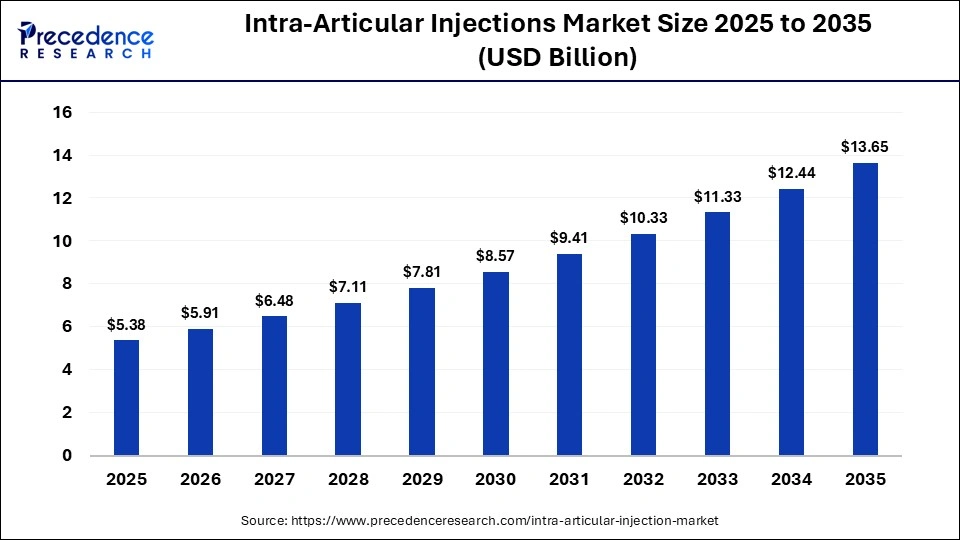
The global intra-articular injections market is projected to reach USD 5.91 billion in 2026, rising from USD 5.38 billion in 2025. The market is forecast to expand significantly and reach approximately USD 13.65 billion by 2035, growing at a compound annual growth rate (CAGR) of 9.76% from 2026 to 2035.
The growth of the market is mainly driven by the increasing demand for non-surgical treatments for joint disorders, particularly osteoarthritis and rheumatoid arthritis. As healthcare systems shift toward minimally invasive therapies, intra-articular injections are becoming a preferred treatment option for managing joint pain and inflammation.
Read Also: Lateral Flow Assay Components Market
Market Overview
The intra-articular injections market is witnessing steady growth due to the rising prevalence of joint-related disorders worldwide. Aging populations, sedentary lifestyles, and increasing obesity rates are contributing to a higher incidence of degenerative joint diseases.
Intra-articular injections are medical treatments in which therapeutic substances are injected directly into the joint space to relieve pain, reduce inflammation, and improve mobility. Compared with oral medications, these injections provide localized treatment with fewer systemic side effects.
Common substances used in these injections include:
-
Hyaluronic acid
-
Corticosteroids
-
Platelet-rich plasma (PRP)
-
Emerging biologic and regenerative therapies
These treatments are widely used to manage conditions such as:
-
Osteoarthritis
-
Rheumatoid arthritis
-
Gout
-
Joint inflammation and sports injuries
As medical research advances, the market is moving beyond traditional pain relief toward long-acting injectables and regenerative therapies, strengthening long-term growth potential.
Key Market Trends
Rising Demand for Non-Surgical Treatments
Patients increasingly prefer non-invasive therapies that can delay or avoid joint replacement surgery. Intra-articular injections provide fast pain relief and improved joint function, making them a popular choice among both physicians and patients.
Advancements in Injection Techniques
Technological advancements in image-guided injection techniques are improving the accuracy and effectiveness of treatments. These innovations help physicians deliver drugs more precisely into the joint cavity, improving clinical outcomes.
Growth of Personalized Medicine
Healthcare is gradually moving toward personalized treatment approaches. Physicians now tailor injection therapies based on patient condition, severity of disease, and treatment response, improving treatment success rates.
Development of Regenerative Therapies
Biologic solutions such as platelet-rich plasma (PRP) and stem cell-based injections are gaining popularity. These therapies aim to repair damaged tissues rather than simply relieve pain, representing a new frontier in orthopedic treatment.
Impact of Artificial Intelligence on the Market
Artificial intelligence is transforming the intra-articular injections market by improving diagnostic accuracy and treatment planning.
AI-powered imaging technologies can analyze joint scans and help physicians:
-
Identify the exact location and severity of joint damage
-
Determine the optimal injection site
-
Predict treatment outcomes using data-driven algorithms
In addition, robot-assisted injection systems are improving procedural accuracy and reducing human error. These technologies enhance patient outcomes while enabling physicians to perform procedures with greater consistency and precision.
As AI continues to integrate into healthcare systems, the market is expected to benefit from predictive analytics, automated diagnostics, and improved decision-making tools.
Segmental Insights
Product Type Insights
Hyaluronic Acid Injections
The hyaluronic acid injections segment dominated the market in 2025. These injections help lubricate joints and restore cushioning, making them highly effective for patients with mild to moderate osteoarthritis.
Advancements such as cross-linked and high-molecular-weight formulations have increased treatment durability and reduced the frequency of repeat injections. These innovations have strengthened the segment’s dominance in the market.
Corticosteroids
The corticosteroids segment is expected to grow at the fastest rate during the forecast period. These injections provide strong anti-inflammatory effects, making them highly effective in treating inflammatory conditions like rheumatoid arthritis.
Their cost-effectiveness and widespread availability also contribute to increased adoption across healthcare systems worldwide.
Application Insights
Osteoarthritis
The osteoarthritis segment accounted for the largest share of the market in 2025. Osteoarthritis is one of the most common joint disorders globally, especially among elderly populations.
Intra-articular injections help manage symptoms by:
-
Reducing pain
-
Improving joint mobility
-
Delaying the need for surgical interventions
Increasing obesity rates and sedentary lifestyles are further contributing to the rising prevalence of osteoarthritis.
Rheumatoid Arthritis
The rheumatoid arthritis segment is expected to grow rapidly during the forecast period. This autoimmune disorder causes chronic inflammation in joints and requires effective management strategies.
Intra-articular injections help control inflammation and reduce pain, improving patient quality of life.
End-User Insights
Hospitals
The hospitals segment held the largest market share in 2025. Hospitals offer comprehensive orthopedic care, advanced imaging technologies, and specialized healthcare professionals capable of administering these injections safely.
Hospitals also manage patients with severe or advanced joint disorders, which contributes to higher treatment volumes.
Ambulatory Surgical Centers (ASCs)
The ambulatory surgical centers (ASCs) segment is expected to grow at the fastest rate during the forecast period. These centers provide cost-effective and convenient treatment options, with shorter waiting times and quicker recovery periods.
The increasing shift toward outpatient care is significantly driving the growth of this segment.
Regional Insights
North America
North America dominated the intra-articular injections market in 2025 and continues to maintain its leadership position in 2026. The region benefits from:
-
Advanced healthcare infrastructure
-
Strong reimbursement policies
-
High prevalence of joint disorders
-
Significant investments in research and development
The United States is the largest contributor to regional growth due to strong collaboration between pharmaceutical companies, biotechnology firms, and research institutions.
Asia-Pacific
The Asia-Pacific region is expected to grow at the fastest rate during the forecast period. Growth in the region is driven by:
-
Increasing healthcare expenditure
-
Rising aging population
-
Growing awareness of joint disease treatments
Countries such as China and Japan are investing heavily in healthcare infrastructure and orthopedic treatments, boosting regional market expansion.
Europe
Europe is also experiencing steady growth due to:
-
Rising incidence of joint disorders
-
Strong regulatory frameworks
-
Government support for healthcare innovation
Countries such as Germany, the United Kingdom, and France play key roles in advancing orthopedic treatments and research.
Competitive Landscape
-
Sanofi
-
Pfizer Inc.
-
Anika Therapeutics, Inc.
-
Seikagaku Corporation
-
Ferring Pharmaceuticals
-
Bioventus LLC
-
Zimmer Biomet Holdings, Inc.
-
Chugai Pharmaceutical Co., Ltd.
-
Flexion Therapeutics, Inc.
-
Smith & Nephew plc
-
Johnson & Johnson
-
Merck & Co., Inc.
-
AbbVie Inc.
-
Teva Pharmaceutical Industries Ltd.
For inquiries regarding discounts, bulk purchases, or customization requests, please contact us at sales@precedenceresearch.com

