
 by
by Transformational Skincare Market Size in 2026
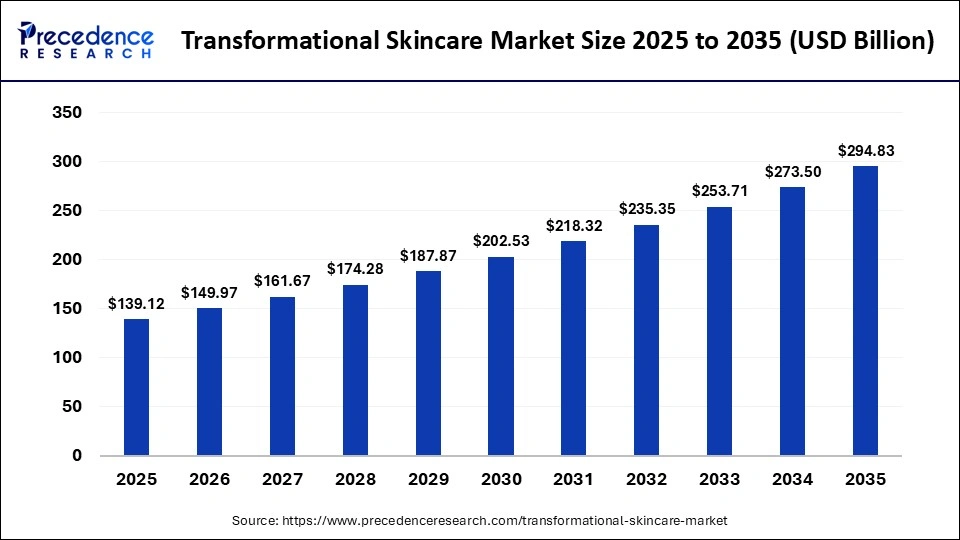
The global transformational skincare market size was valued at USD 139.12 billion in 2025 and is projected to grow from USD 149.97 billion in 2026 to approximately USD 294.83 billion by 2035, expanding at a compound annual growth rate (CAGR) of 7.80% from 2026 to 2035.
The market growth is largely driven by rising demand for medical-grade skincare products, increasing consumer awareness about skin health, and technological innovations that enable personalized skincare solutions.
Read Also: Dairy Herd Management Market
Key Takeaways
-
North America dominated the global market with 35% share in 2025.
-
Asia Pacific is expected to grow at the fastest CAGR during the forecast period.
-
By product type, face creams accounted for the largest share of 42% in 2025.
-
Serums are projected to grow at the fastest rate during the forecast period.
-
By end user, the female segment held the largest share of 35% in 2025.
-
The male segment is expected to witness the highest growth rate.
-
By distribution channel, the offline segment accounted for 68% of revenue share in 2025.
-
Online distribution channels are expected to grow at the fastest CAGR.
Market Overview
The transformational skincare market includes skincare products designed to repair and regenerate skin at deeper biological levels rather than only improving surface appearance.
Unlike traditional skincare products that focus on temporary improvements, transformational skincare solutions aim to:
-
Restore skin health at the cellular level
-
Improve collagen production
-
Repair skin barriers
-
Reduce hyperpigmentation and acne
-
Improve overall skin texture and elasticity
These products bridge the gap between cosmetic skincare and dermatological treatments, offering professional-grade solutions for long-term skin improvement.
Technological advancements and innovations in skincare ingredients are playing a crucial role in market expansion. Consumers are increasingly seeking products that provide visible and long-lasting results, which is encouraging companies to invest in advanced formulations and biotechnology-based ingredients.
Additionally, growing consumer interest in personalized skincare routines and premium beauty products is further fueling the market’s growth.
Role of Technology in the Growth of the Transformational Skincare Market
Technology is transforming the skincare industry by enabling personalized skincare solutions, smart skincare devices, and digital retail experiences.
Personalization and AI-Based Recommendations
Artificial intelligence is being widely used to analyze consumer skin data and recommend personalized skincare solutions.
AI algorithms evaluate:
-
Skin type
-
Previous skincare history
-
Environmental factors
-
Lifestyle habits
This helps recommend the most suitable skincare products for specific skin conditions.
Growth of Smart Skincare Devices
The adoption of non-invasive skincare devices is increasing rapidly. These devices help consumers achieve professional-grade skincare results at home.
Examples include:
-
LED light therapy masks
-
Microcurrent devices
-
Cryotherapy tools
These technologies enhance product absorption and improve skin health.
Technological Advancements in Retail Platforms
Digital retail platforms now offer advanced features such as:
-
Virtual try-on technology
-
Skin analysis tools
-
AI-powered product recommendations
-
Chatbots and virtual assistants
These features improve customer experience and reduce product return rates by helping consumers make informed purchasing decisions.
Transformational Skincare Market Trends
Biotechnology and Ingredient Innovation
The use of advanced biotechnology ingredients is one of the major trends in the skincare industry.
Ingredients such as:
-
Stem cells
-
Peptides
-
Probiotic skincare technologies
are increasingly used in skincare products to enhance skin regeneration and improve long-term results.
Growing Demand for Sustainable Skincare
Consumers are increasingly seeking environmentally friendly skincare products.
Brands are focusing on:
-
Clean-label formulations
-
Organic ingredients
-
Sustainable packaging
-
Transparent supply chains
This shift toward sustainability is becoming a key driver of market growth.
Rising Interest in Holistic Wellness
Consumers are increasingly viewing skincare as part of a broader wellness routine.
Products that combine skincare benefits with stress reduction, skin healing, and natural ingredients are gaining popularity. Holistic skincare approaches are therefore becoming an important trend in the market.
Segment Insights
Product Type Insights
Face Creams
The face creams segment dominated the transformational skincare market with 42% share in 2025.
Face creams are essential skincare products that provide:
-
Deep hydration
-
Skin barrier protection
-
Improved elasticity
-
Enhanced absorption of active ingredients
Ingredients commonly used in advanced face creams include:
-
Ceramides
-
Hyaluronic acid
-
Peptide complexes
Consumers are increasingly demanding clean-label, cruelty-free, and plant-based skincare products, which further supports the growth of this segment.
Advanced formulations such as gel-cream hybrids, lightweight emulsions, and SPF-infused creams are also gaining popularity.
Serums
The serums segment is expected to grow at the fastest CAGR during the forecast period.
Serums provide targeted skincare treatments due to their high concentration of active ingredients.
Advanced formulations such as:
-
Encapsulated retinol systems
-
Microbiome-supporting ingredients
-
Exosomes and polynucleotides
are gaining popularity for delivering precise and effective skin treatments.
Consumers are increasingly incorporating serums into daily skincare routines due to their ability to provide visible results in a shorter time.
End-User Insights
Female Segment
The female segment dominated the transformational skincare market in 2025.
Women are traditionally the primary consumers of skincare products and are more likely to experiment with new skincare solutions.
Factors driving growth include:
-
Rising awareness of self-care
-
Demand for premium skincare products
-
Popularity of Korean skincare routines
-
Preference for organic and clean-label products
Male Segment
The male segment is expected to grow at the fastest CAGR during the forecast period.
Increasing awareness about male grooming and skincare is encouraging men to adopt skincare routines.
Men typically experience issues such as:
-
Excess oil production
-
Thicker skin layers
-
Post-shave irritation
As a result, brands are developing specialized skincare products designed specifically for men.
Distribution Channel Insights
Offline Segment
The offline distribution channel dominated the market in 2025 with 68% share.
Physical retail stores allow customers to:
-
Test product textures
-
Experience fragrances
-
Receive professional consultations
These factors significantly influence purchasing decisions.
Additionally, premium product displays and personalized consultations help differentiate high-end skincare brands from local alternatives.
Online Segment
The online segment is expected to grow at the fastest rate during the forecast period.
Online platforms provide consumers with:
-
A wide range of product options
-
Detailed product descriptions
-
Customer reviews and ratings
-
Promotional offers and discounts
The increasing popularity of quick delivery services and e-commerce platforms is further accelerating the growth of online skincare sales.
Regional Insights
North America
North America dominated the global transformational skincare market with 35% share in 2025.
The region has strong demand for science-backed and clinically validated skincare products.
Consumers in the region increasingly prefer products that address:
-
Anti-aging
-
Hyperpigmentation
-
Skin barrier repair
-
Collagen regeneration
The region also benefits from strong research and development activities in the skincare industry.
United States
The U.S. transformational skincare market was valued at USD 36.52 billion in 2025 and is expected to reach USD 79.02 billion by 2035, growing at a CAGR of 8.02%.
High consumer spending on premium skincare products and the availability of innovative skincare technologies are key growth drivers.
Asia Pacific
Asia Pacific is expected to experience the fastest growth in the global market.
Factors driving regional growth include:
-
Rising disposable incomes
-
Rapid urbanization
-
Increasing awareness about skincare
-
Growing demand for premium beauty products
China
China plays a significant role in the growth of the regional market.
Consumers in the country increasingly demand:
-
Organic skincare products
-
Clean-label beauty products
-
Personalized skincare solutions
There is also growing demand for skincare products that deliver salon-like results at home.
Europe
Europe represents an important market for transformational skincare due to strong consumer demand for premium beauty products and sustainable skincare solutions.
Countries such as France, Germany, and the United Kingdom are major contributors to regional market growth.
Middle East and Africa
The Middle East and Africa region is gradually adopting advanced skincare products as consumer awareness about skincare and beauty increases.
Growing demand for luxury beauty products and expanding retail networks are expected to support market growth.
Transformational Skincare Market Companies
Key companies operating in the global transformational skincare market include:
-
L’Oréal S.A.
-
Estée Lauder Companies Inc.
-
Unilever PLC
-
Procter & Gamble Co.
-
Shiseido Company Limited
-
AMOREPACIFIC Corporation
-
Johnson & Johnson
-
Kao Corporation
-
Beiersdorf AG
-
Coty Inc.
-
Avon Products Inc.
Emerging skincare brands such as The Ordinary, Drunk Elephant, Cosrx, and Medicube are also gaining strong traction due to their focus on science-based formulations and targeted skincare solutions.
Conclusion
The transformational skincare market is poised for strong growth as consumers increasingly prioritize skin health, personalized skincare routines, and clinically proven ingredients.
Advancements in biotechnology, AI-driven skincare personalization, smart skincare devices, and sustainable product innovation are reshaping the industry.
As demand for medical-grade skincare products and targeted skin treatments continues to rise globally, the transformational skincare market is expected to become one of the fastest-evolving segments in the global beauty and personal care industry over the coming decade.
Get Sample PDF: https://www.precedenceresearch.com/checkout/7989
For inquiries regarding discounts, bulk purchases, or customization requests, please contact us at sales@precedenceresearch.com

- Dental Acrylic Materials Market Size to Surge USD 3.29 Billion by 2035 - March 16, 2026
- Transformational Skincare Market Size to Hit USD 294.83 Billion by 2035 - March 16, 2026
- Dairy Herd Management Market Size to Reach USD 12.75 Billion by 2035 - March 16, 2026
