
 by
by 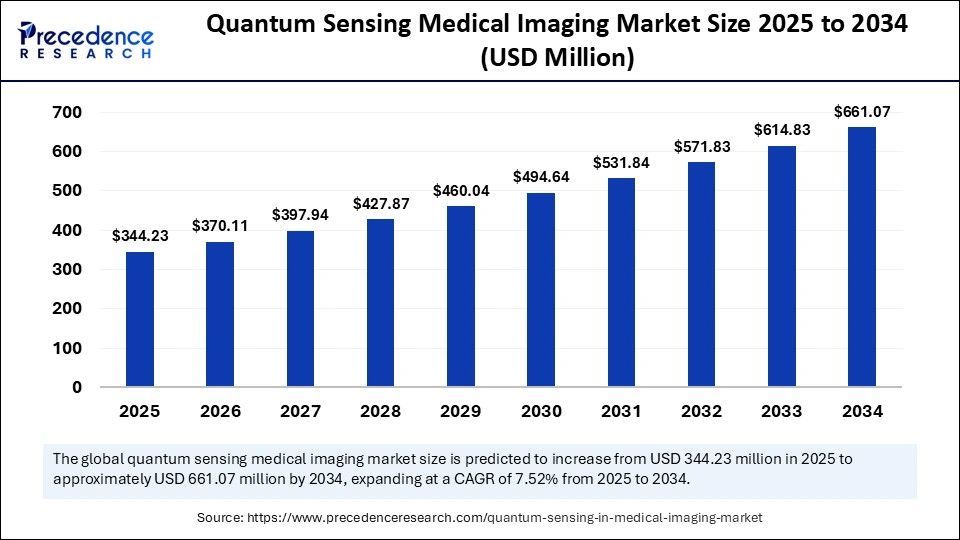
Market Key Takeaways
- By region, North America dominated the market, holding the largest market share of 39% in 2024.
- By region, Asia Pacific is expected to grow at a 9.2% CAGR in market share.
- By technology/sensing platform, the superconducting sensors segment held the largest share of the quantum sensing medical imaging market at 40.5% in 2024.
- By technology/sensing platform, the software as a service segment is growing at a notable CAGR of 8.6% during the forecast period.
- By product/offering, the standalone imaging systems segment held the largest market share of 34.5% in 2024.
- By product/offering, the services/installation/maintenance segment is expected to grow at the fastest CAGR of 9% during the forecast period.
- By imaging modality/application, the quantum-enhanced MRI segment held the largest market share of 36.5% in 2024.
- By imaging modality/application, the quantum optical imaging & microscopy segment is growing at a notable CAGR of 8.8% from 2025 to 2034.
- By end-user, the hospitals & medical centers segment held the largest share at 38.8% in 2024.
- By end-user, the diagnostics and imaging centers segment is expected to grow at the fastest CAGR of 8.4% during the forecast period.
- By component/subsystem, the sensor/detector segment held the largest market share of 32.8% in 2024.
Market Overview
The Quantum Sensing Medical Imaging Market is undergoing a period of transformative growth as advances in quantum technology begin to redefine the landscape of medical diagnostics. Quantum sensing leverages the principles of quantum mechanics such as superposition and entanglement to detect extremely subtle physiological changes with unprecedented precision. These technologies enable medical imaging systems to capture high-resolution, real-time data at the molecular and cellular levels without relying on ionizing radiation or chemical dyes, thereby improving patient safety and diagnostic accuracy.
Recent breakthroughs, such as quantum light-based imaging and quantum magnetic field sensors, are revolutionizing areas like cardiac imaging and neuroimaging. For instance, in August 2025, GDQ Labs Pct Ltd demonstrated a novel technology capable of detecting ultra-weak magnetic fields generated by the human heart, providing a radiation-free and dye-free alternative to traditional ECG and MRI methods. This innovation allowed for 3D heart mapping, potentially replacing multiple conventional diagnostic procedures. As research progresses and commercialization accelerates, quantum sensing is set to unlock a new era of non-invasive, high-fidelity imaging, making medical diagnostics faster, safer, and more precise.
Market Restraint
High Initial Investment
One of the primary restraints in the quantum sensing medical imaging market is the high capital investment required for system setup, maintenance, and calibration. Quantum imaging technologies rely on advanced materials such as quantum dots, nitrogen-vacancy (NV) centers in diamonds, and superconducting sensors—all of which demand highly specialized manufacturing and operational environments. Consequently, many small and mid-sized hospitals find it difficult to justify the significant upfront costs, limiting adoption primarily to large academic hospitals and research institutes. This financial barrier delays broader clinical deployment and slows the pace of market penetration. For instance, in January 2024, QDI Systems secured $5 million in funding to scale its quantum dot technology for use in medical X-ray and mammography imaging, underscoring the high resource intensity required for commercialization and expansion.
Market Opportunity
Personalized Healthcare
Quantum imaging presents a major opportunity in the realm of personalized and precision medicine. The ultra-high sensitivity and resolution of quantum imaging systems allow clinicians to capture patient-specific physiological and molecular changes in real time, enabling the design of individualized treatment regimens. By visualizing biological processes at an unprecedented scale, quantum sensors can guide targeted therapies, monitor treatment efficacy, and minimize unnecessary interventions. This capability is particularly valuable in oncology, cardiology, and neurology, where subtle molecular differences influence treatment outcomes. As healthcare shifts toward data-driven, patient-tailored care, quantum imaging stands poised to become a cornerstone technology that bridges diagnostics and precision therapy planning.
Regional Insights
North America: The Innovation Leader
North America currently dominates the quantum sensing medical imaging market, driven by strong R&D infrastructure, early technology adoption, and robust funding for quantum technology commercialization.
The United States leads with major investments from both private and government sectors—such as the National Quantum Initiative Act—fostering the development of advanced quantum sensors for diagnostic imaging. Leading research universities, hospitals, and startups are collaborating to accelerate the translation of quantum prototypes into clinically validated devices. Additionally, the region’s high healthcare spending and growing adoption of AI-integrated imaging platforms support early market growth.
Europe: Rapid Academic and Clinical Expansion
Europe follows closely, with countries such as Germany, the UK, and the Netherlands pioneering research in quantum magnetometry and quantum-enhanced MRI. Strong public funding, including the EU Quantum Flagship Program, and cross-border collaborations between academia and medical device manufacturers are propelling technological progress. European hospitals are increasingly adopting quantum light-based imaging for non-invasive diagnostics and radiation-free cardiac and neural imaging studies.
Asia-Pacific: Fastest-Growing Frontier
The Asia-Pacific region is emerging as the fastest-growing market, driven by rising healthcare investments, expanding research capabilities, and national quantum technology initiatives in China, Japan, South Korea, and India.
Governments in these countries are prioritizing local innovation and manufacturing to strengthen their biomedical sectors. The growing burden of chronic diseases and cancer, coupled with the demand for cost-effective advanced diagnostics, is pushing adoption in both public and private healthcare systems. Academic–industry partnerships and rapid clinical validation of quantum-enabled imaging prototypes are expected to accelerate commercialization in the coming years.
Recent Developments
- In June 2025, a Boston-based medical device company announced exploring quantum sensing technologies to revolutionize medical imaging with unprecedented precision and insights into human biology at the molecular level.
- In July 2024, the University of Birmingham established a new hub concentrating on quantum sensing, imaging, and timing. It is a part of a 160 million investment to advance quantum technologies with applications in medical imaging, aiming to enhance diagnostic precision and treatment outcomes.
Get Sample Link: https://www.precedenceresearch.com/sample/7002

- Personalized Testing and Supplements Market Size to Surpass USD 7.74 Billion by 2034 - November 13, 2025
- Microinsurance Market Size to Surpass USD 161.54 Billion by 2034 - November 13, 2025
- Liver Cancer Drug Market Size to Surpass USD 19.65 Billion by 2034 - November 13, 2025
