
 by
by What is the Psychological Distress Market Size in 2026?
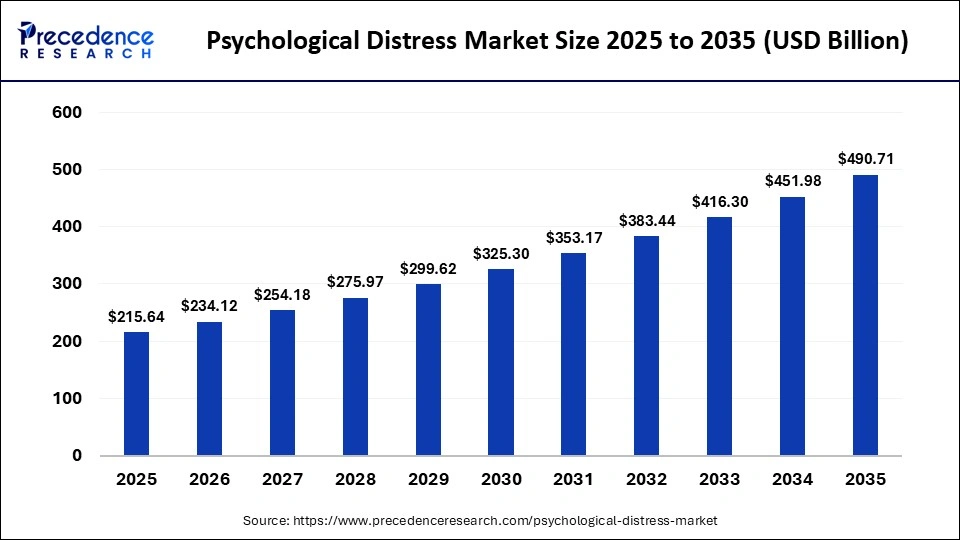
The global psychological distress market is witnessing substantial growth as mental health becomes a central focus of global healthcare systems. The market size was valued at USD 215.64 billion in 2025 and is expected to increase from USD 234.12 billion in 2026 to approximately USD 490.71 billion by 2035, expanding at a CAGR of 8.57% during the forecast period (2026–2035).
This growth reflects the rising global burden of anxiety, depression, and stress-related conditions, along with increasing investments in digital mental health solutions, workplace wellness programs, and AI-powered diagnostic tools.
Read Also: Biologics and Biosimilars Market
Key Takeaways
- North America dominated the market in 2025
- Asia-Pacific is projected to grow at the fastest CAGR
- Anxiety disorders accounted for a significant market share
- Stress-related disorders are expected to grow rapidly
- Pharmacological treatments led the market in 2025
- Digital mental health solutions will witness the fastest growth
- Cognitive Behavioral Therapy (CBT) remained the leading therapy type
Market Overview
The psychological distress market represents a broad and evolving ecosystem that addresses mental health challenges such as anxiety, depression, trauma, burnout, and emotional disorders.
It includes:
- Traditional psychiatry and clinical psychology services
- Counseling centers and therapy clinics
- Digital mental health platforms and teletherapy solutions
- AI-based screening and monitoring tools
- Corporate wellness and employee assistance programs
Global trends such as urbanization, economic uncertainty, social isolation, and digital overload are significantly contributing to rising psychological distress levels. As a result, mental health is no longer considered secondary—it is becoming a core component of healthcare strategies and public policy frameworks worldwide.
Impact of AI on the Psychological Distress Market
Artificial intelligence is transforming mental healthcare by improving early detection, accessibility, and treatment efficiency.
Key AI Contributions:
- Early Diagnosis: AI algorithms detect patterns linked to anxiety and depression
- Digital Triage: Patients are guided to appropriate care pathways
- Continuous Monitoring: Wearables and apps track mood and behavioral changes
- Predictive Analytics: Identifies individuals at risk before severe symptoms occur
AI-powered chatbots and virtual therapy assistants are expanding access to care, especially in underserved regions. However, concerns regarding data privacy, emotional complexity, and clinical accuracy remain critical considerations for stakeholders.
Market Trends
1. Rise of Digital-First Mental Healthcare
Mental healthcare is rapidly shifting toward teletherapy, mobile apps, and subscription-based platforms, offering convenience, affordability, and privacy—especially appealing to younger populations.
2. Workplace Mental Health Integration
Organizations are increasingly investing in:
- Employee assistance programs (EAPs)
- Burnout monitoring tools
- AI-driven stress assessments
- Resilience and mindfulness training
Mental health is now viewed as a productivity driver rather than an optional benefit.
3. Focus on Youth and Adolescent Mental Health
Growing mental health concerns among young individuals are leading to:
- School-based mental health programs
- University counseling services
- Youth-focused digital therapy platforms
Early intervention is becoming a key priority for policymakers and healthcare providers.
Segmental Insights
Disorder Type Insights
Anxiety Disorders Dominated the Market
Anxiety disorders held a leading share in 2025 due to:
- High global prevalence
- Early onset and recurring symptoms
- Strong integration into primary care screening
Workplace initiatives and digital tools are further supporting anxiety management.
Stress-Related Disorders to Grow Fastest
Stress-related disorders are expected to expand rapidly due to:
- Increasing workplace pressure
- Economic instability
- Digital and social media overload
These conditions are highly responsive to early intervention through apps and wellness programs.
Treatment Type Insights
Pharmacological Treatment Led the Market
Pharmacological treatments—including antidepressants and anxiolytics—remain the cornerstone for moderate to severe cases. Their dominance is driven by:
- Clinical effectiveness
- Established reimbursement systems
- Widespread physician adoption
Digital Mental Health Solutions to Surge
Digital mental health platforms are expected to witness the fastest growth due to:
- Accessibility and affordability
- Reduced stigma
- Mobile-first healthcare adoption
These include:
- Telepsychiatry platforms
- AI-driven therapy tools
- App-based CBT programs
Therapy Type Insights
Cognitive Behavioral Therapy (CBT) Dominated
Cognitive Behavioral Therapy (CBT) held the largest market share due to:
- Structured and evidence-based approach
- Effectiveness in treating anxiety and depression
- Compatibility with digital platforms
Regional Insights
North America
North America dominated the psychological distress market due to:
- Advanced healthcare infrastructure
- High awareness of mental health issues
- Strong insurance coverage
- Early adoption of digital mental health solutions
The U.S. leads the region with significant investments in:
- Teletherapy platforms
- AI-based mental health tools
- Pharmaceutical treatments
Asia-Pacific
Asia-Pacific is expected to grow at the fastest rate due to:
- Rising awareness of mental health
- Increasing smartphone and internet penetration
- Expansion of telehealth services
Countries like India and China are witnessing strong demand driven by:
- Urban stress
- Changing lifestyles
- Growing acceptance of mental healthcare
Competitive Landscape
Key companies operating in the psychological distress market include:
- Acadia Healthcare
- Universal Health Services Inc.
- The Cigna Group
- CareTech Holdings PLC
- Pyramid Healthcare
- Vita Health Group
These companies are focusing on:
- Digital transformation
- AI integration
- Expansion of telehealth services
- Strategic partnerships and funding
Recent Developments
- 2026: Talkiatry secured $210 million funding for AI-powered telepsychiatry solutions
- 2025: Infosys and NIMHANS launched a mental health training initiative
- 2025: Sri Lanka introduced nationwide mental health programs for students
These developments reflect increasing global investment in accessible and scalable mental healthcare solutions.
Conclusion
The psychological distress market is undergoing a major transformation, driven by digital innovation, AI integration, and rising mental health awareness. With a market size of USD 234.12 billion in 2026, the industry is poised for sustained growth.
As stigma continues to decline and healthcare systems prioritize mental well-being, the market is expected to nearly double by 2035. The future of mental healthcare lies in accessible, personalized, and technology-driven solutions that can address global mental health challenges effectively.
Get Sample Link: https://www.precedenceresearch.com/sample/8088
For inquiries regarding discounts, bulk purchases, or customization requests, please contact us at sales@precedenceresearch.com

- Oxygen Therapy Equipment Market Size to Hit USD 11.92 Billion by 2035 - March 30, 2026
- Psychological Distress Market Size to Hit USD 490.71 Billion by 2035 - March 30, 2026
- Biologics and Biosimilars Market Size to Hit USD 2,426.85 Billion by 2035 - March 30, 2026
