
 by
by Oxygen Therapy Equipment Market Size in 2026
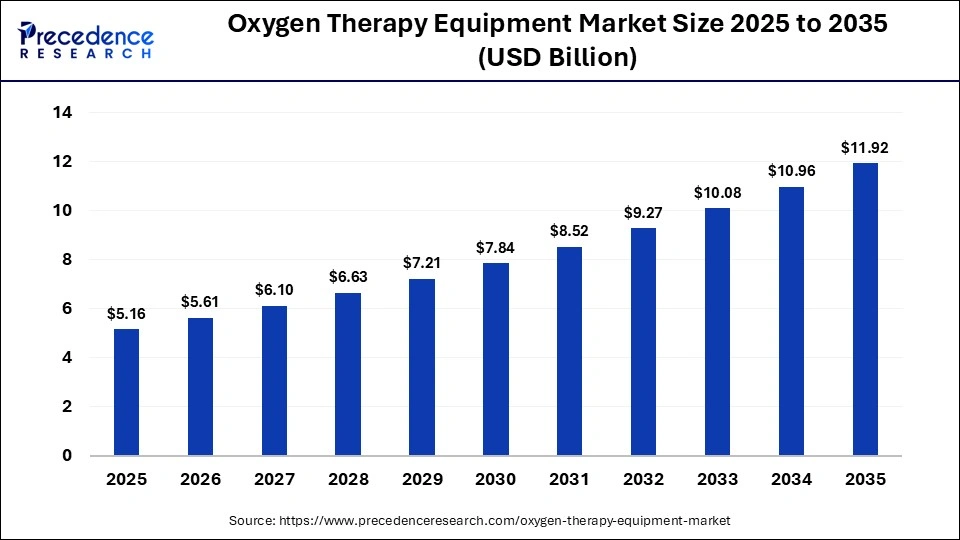
The global oxygen therapy equipment market size in 2026 is valued at USD 5.61 billion, rising from USD 5.16 billion in 2025. The market is forecasted to reach approximately USD 11.92 billion by 2035, expanding at a CAGR of 8.74% from 2026 to 2035.
Read Also: Psychological Distress Market
Oxygen Therapy Equipment Market: Deep-Dive Analysis (2026–2035)
Comprehensive Market Overview
The oxygen therapy equipment market represents a critical pillar within the broader respiratory care industry, encompassing a wide range of devices designed to deliver supplemental oxygen to patients suffering from hypoxemia (low blood oxygen levels). These devices are used across hospitals, homecare settings, ambulatory centers, and emergency environments.
The market is evolving from basic oxygen delivery systems toward smart, connected, and patient-centric solutions. This transformation is being driven by:
- Increasing global disease burden
- Rising healthcare awareness
- Digitization of healthcare systems
- Growing preference for decentralized care models
Oxygen therapy has transitioned from being a supportive treatment to a long-term disease management solution, especially for chronic respiratory conditions.
Expanded Market Dynamics
Market Drivers
1. Escalating Burden of Respiratory Diseases
The global rise in respiratory disorders is the strongest growth catalyst. Diseases such as:
- Chronic Obstructive Pulmonary Disease (COPD)
- Asthma
- Pulmonary fibrosis
- Pneumonia
are increasing due to environmental and lifestyle factors.
According to global health trends, COPD alone remains one of the leading causes of death worldwide, significantly boosting long-term oxygen therapy demand.
2. Shift Toward Home-Based and Remote Healthcare
Healthcare systems globally are moving toward cost-efficient and patient-friendly care delivery models. Oxygen therapy is increasingly administered at home due to:
- Reduced hospital burden
- Lower treatment costs
- Improved patient comfort
- Enhanced therapy adherence
Homecare oxygen systems are now designed to be compact, portable, and digitally connected, making them accessible to a wider patient base.
3. Technological Innovations in Oxygen Delivery
Modern oxygen therapy equipment is undergoing rapid innovation:
- Miniaturized portable oxygen concentrators
- Silent operation devices
- Battery-powered mobility solutions
- Integration with mobile apps and cloud monitoring
These innovations are enabling continuous therapy without lifestyle disruption, especially for active patients.
4. Rising Geriatric Population
The global aging population is highly vulnerable to respiratory diseases. Elderly individuals often require:
- Long-term oxygen therapy
- Continuous monitoring
- Frequent medical support
This demographic shift is creating sustained demand for both stationary and portable oxygen equipment.
5. Environmental and Lifestyle Factors
Rapid urbanization and industrialization have led to:
- Increased air pollution
- Exposure to toxic gases
- Higher smoking rates
These factors are directly contributing to the surge in respiratory illnesses, particularly in emerging economies.
Market Restraints
Despite strong growth, the market faces certain challenges:
- High cost of advanced oxygen devices, limiting affordability in low-income regions
- Dependence on electricity and battery systems for concentrators
- Logistics challenges in oxygen supply chains (especially in rural areas)
- Limited awareness in underdeveloped regions
Opportunities
1. Expansion in Emerging Markets
Countries such as India, China, Brazil, and Southeast Asian nations present massive growth opportunities due to:
- Improving healthcare infrastructure
- Increasing disposable incomes
- Government healthcare initiatives
2. Integration of Digital Health and Telemedicine
The convergence of oxygen therapy with telehealth platforms is creating new possibilities:
- Remote patient monitoring
- Virtual consultations
- AI-based therapy adjustments
3. Post-Pandemic Healthcare Preparedness
The COVID-19 pandemic highlighted the importance of oxygen availability, leading to:
- Government investments in oxygen infrastructure
- Increased stockpiling of oxygen devices
- Greater awareness about respiratory care
Impact of Artificial Intelligence (AI)
AI is revolutionizing oxygen therapy by enabling precision medicine and automation:
- Real-time oxygen flow adjustment based on patient vitals
- Predictive analytics to anticipate respiratory deterioration
- Remote monitoring dashboards for clinicians
- Automated alerts for device malfunction or patient risk
AI-enabled devices are transforming oxygen therapy from reactive care to proactive management.
Detailed Segment Analysis
Product Type Analysis
Oxygen Concentrators (Dominant Segment)
- Widely used for continuous oxygen supply
- Cost-effective and low maintenance
- Suitable for both hospitals and homecare
High-Flow Nasal Cannula (Fastest Growing)
- Delivers heated and humidified oxygen
- Improves patient comfort
- Reduces need for invasive ventilation
Portability Analysis
Stationary Equipment (Largest Share)
- Ideal for long-term therapy
- Affordable and reliable
- Common in homecare and hospitals
Portable Equipment (Fastest Growth)
- Enables mobility and independence
- Lightweight and travel-friendly
- Increasingly preferred by active patients
Oxygen Generation Technology
Pressure Swing Adsorption (PSA)
- Most widely used technology
- Efficient and cost-effective
- Common in oxygen concentrators
Vacuum Swing Adsorption (VSA)
- Higher efficiency and scalability
- Ideal for hospitals and large facilities
End-User Analysis
Homecare Settings (Dominant)
- Over 55% market share
- Driven by cost savings and convenience
- Supported by telehealth integration
Hospitals
- Critical for emergency and ICU care
- High demand for advanced oxygen systems
Clinical Application Analysis
COPD (Leading Segment)
- Requires long-term oxygen therapy
- High global prevalence
Obstructive Sleep Apnea (Fastest Growing)
- Increasing due to obesity and lifestyle changes
- Growing awareness and diagnosis rates
Regional Market Insights
Asia Pacific – Market Leader
- Largest market share globally
- Driven by pollution and population density
- Rapidly improving healthcare systems
North America – Fastest Growing
- Advanced healthcare infrastructure
- Strong reimbursement policies
- High adoption of innovative technologies
Europe
- Increasing elderly population
- Strong regulatory frameworks
- Focus on home healthcare
Competitive Landscape
Leading companies are focusing on:
- Product innovation
- Strategic partnerships
- Expansion into emerging markets
- Integration of smart technologies
Key Players:
- Philips Respironics
- ResMed
- Inogen
- CAIRE
- Invacare
- Air Liquide Healthcare
These companies are investing heavily in R&D and digital transformation to maintain competitive advantage.
Future Outlook (2026–2035)
The oxygen therapy equipment market is expected to witness transformational growth over the next decade due to:
- Rising chronic disease burden
- Technological advancements
- Expansion of home healthcare
- Increased healthcare spending globally
The future will likely see:
- Fully automated oxygen delivery systems
- AI-integrated respiratory care platforms
- Greater accessibility in emerging economies
Conclusion
The oxygen therapy equipment market in 2026 marks a critical phase of growth and innovation. As healthcare systems evolve toward patient-centric and technology-driven models, oxygen therapy devices will become more intelligent, accessible, and essential.
With strong demand fundamentals and expanding global reach, the market is set to play a vital role in the future of respiratory care and chronic disease management.
Get Sample Link: https://www.precedenceresearch.com/sample/8073
For inquiries regarding discounts, bulk purchases, or customization requests, please contact us at sales@precedenceresearch.com

