
 by
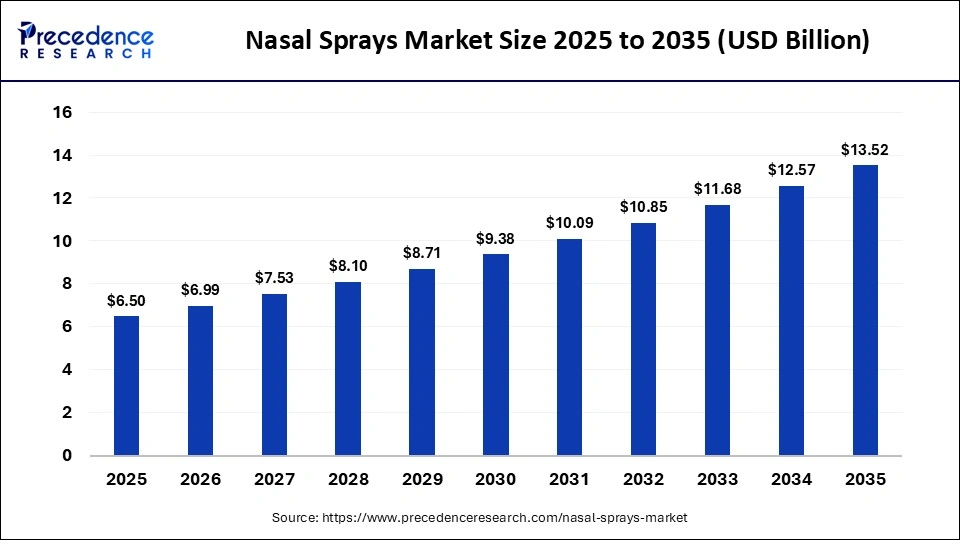
by The global nasal sprays market is experiencing significant growth, fueled by the rising prevalence of respiratory disorders, increasing awareness regarding non-invasive drug delivery methods, and the growing adoption of self-medication practices. According to market estimates, the industry is projected to expand at a steady CAGR through 2035, reaching approximately USD 38.45 billion by 2035, up from a substantial valuation in 2025.
Read Also: Affinity Chromatography Market
The market is gaining traction due to the effectiveness of nasal sprays in delivering rapid relief for conditions such as allergic rhinitis, nasal congestion, sinus infections, and even neurological disorders. Furthermore, advancements in formulation technologies and increasing demand for over-the-counter (OTC) nasal products are playing a crucial role in shaping market expansion.
Quick Insights: What are the Key Highlights of the Market?
The nasal sprays market is projected to witness strong growth, reaching USD 38.45 billion by 2035. North America continues to dominate the global landscape due to advanced healthcare infrastructure and high adoption of innovative drug delivery systems. Meanwhile, Asia-Pacific is expected to grow at the fastest pace, driven by increasing healthcare investments and rising patient awareness. Corticosteroid nasal sprays represent the dominant segment owing to their widespread use in treating allergies, while saline sprays are gaining popularity for daily use and preventive care. Hospitals and retail pharmacies remain key distribution channels, supported by the rising demand for OTC medications.
What are Nasal Sprays and Why are They Important in Modern Healthcare?
Nasal sprays are pharmaceutical formulations designed to deliver medication directly into the nasal cavity. This route allows for rapid absorption into the bloodstream, bypassing the digestive system and ensuring faster therapeutic effects. These sprays are widely used to treat conditions such as nasal congestion, allergies, sinusitis, and even migraine and hormonal disorders.
In recent years, nasal drug delivery systems have evolved significantly, offering targeted treatment, improved bioavailability, and reduced systemic side effects. This has made them a preferred choice among both patients and healthcare providers, especially for chronic conditions requiring long-term management.
How is AI Transforming the Nasal Sprays Market?
Artificial intelligence is playing an emerging role in the nasal sprays market by optimizing drug formulation and improving delivery mechanisms. AI-powered analytics are helping pharmaceutical companies design more effective nasal spray formulations by predicting patient responses and enhancing drug absorption rates.
Additionally, AI is contributing to personalized medicine by enabling tailored treatment approaches based on individual patient profiles. This is particularly beneficial in managing chronic respiratory conditions, where precision and consistency in drug delivery are critical. AI is also streamlining clinical trials, reducing development timelines, and accelerating the launch of innovative nasal spray products.
Market Dynamics: What is Driving and Restraining Growth?
Key Drivers
The rising incidence of respiratory diseases such as asthma, allergic rhinitis, and sinusitis is a major driver of market growth. Increasing pollution levels and changing lifestyles have contributed to a surge in these conditions globally. Additionally, the growing preference for non-invasive and self-administered drug delivery methods has significantly boosted demand.
Restraints
Despite strong growth, the market faces challenges such as potential side effects associated with prolonged use of certain nasal sprays, including irritation and dependency. Regulatory hurdles and strict approval processes also pose barriers to market entry for new products.
Opportunities
The market presents significant opportunities in the development of advanced drug delivery technologies, including metered-dose sprays and preservative-free formulations. Expanding healthcare access in emerging economies and increasing focus on preventive healthcare are also expected to drive future growth.
Trends & Opportunities: What’s Shaping the Future of the Market?
How are OTC nasal sprays influencing market expansion?
The increasing availability of OTC nasal sprays is empowering consumers to manage minor respiratory conditions without prescriptions, significantly boosting market demand.
Why is there growing demand for preservative-free formulations?
Consumers are becoming more health-conscious and prefer safer, long-term solutions, leading to increased demand for preservative-free nasal sprays.
How is innovation improving nasal drug delivery systems?
Technological advancements such as multi-dose systems and precision spray mechanisms are enhancing drug efficacy and patient compliance.
Segmental Analysis: Where is the Market Heading?
By Product Type
Corticosteroid nasal sprays dominate the market due to their effectiveness in treating inflammation and allergies. Antihistamine sprays are also widely used for quick relief from allergic reactions, while saline sprays are gaining traction as a natural and preventive solution for daily nasal care.
By Application
Allergic rhinitis remains the leading application segment, driven by the increasing prevalence of allergies worldwide. Sinusitis and nasal congestion are also significant contributors, while emerging applications in neurological and hormonal treatments are opening new avenues for growth.
By Distribution Channel
Retail pharmacies hold a major share due to easy accessibility and consumer preference for OTC products. Hospital pharmacies continue to play a crucial role in prescription-based treatments, while online pharmacies are witnessing rapid growth due to convenience and expanding digital healthcare platforms.
Regional Analysis: Which Regions are Leading the Market?
North America
North America dominates the nasal sprays market, supported by advanced healthcare systems, high awareness levels, and strong presence of key pharmaceutical companies. The U.S. leads the region due to high healthcare spending and widespread adoption of innovative drug delivery solutions.
Asia-Pacific
Asia-Pacific is the fastest-growing region, driven by increasing population, rising pollution levels, and growing healthcare infrastructure. Countries like China and India are witnessing a surge in respiratory disorders, boosting demand for nasal sprays.
Europe
Europe holds a significant market share, supported by favorable healthcare policies, increasing research activities, and strong regulatory frameworks that ensure product safety and efficacy.
Segments Covered in the Report
By Product Type
- Prescription Nasal Sprays
- Corticosteroid Nasal Sprays
- Antihistamine Nasal Sprays
- Decongestant Nasal Sprays
- Others (e.g., Combination Nasal Sprays)
- Over-the-Counter (OTC) Nasal Sprays
- Saline Nasal Sprays
- Nasal Decongestants
- Others (e.g., Moisturizing Nasal Sprays)
By Application
- Allergic Rhinitis
- Seasonal Allergic Rhinitis
- Perennial Allergic Rhinitis
- Common Cold
- Symptomatic Relief
- Sinusitis
- Chronic Sinusitis
- Acute Sinusitis
- Others
- Nasal Congestion
- Nasal Infections
By Distribution Channel
- Retail Pharmacies
- Chain Pharmacies
- Independent Pharmacies
- Online Pharmacies
- Hospitals & Clinics
By End User
- Adults
- Pediatric
- Geriatric
By Region
- North America
- Latin America
- Europe
- Asia-pacific
- Middle and East Africa
Competitive Landscape: Who are the Key Players?
The nasal sprays market is highly competitive, with leading pharmaceutical companies focusing on innovation, product expansion, and strategic collaborations.
Key players include:
- GlaxoSmithKline plc
- Johnson & Johnson
- Pfizer Inc.
- Bayer AG
- Sanofi
- AstraZeneca
- Novartis AG
These companies are investing heavily in research and development to introduce advanced nasal spray formulations and expand their global footprint.
Recent Developments: What’s New in the Market?
Recent innovations include the development of combination nasal sprays that target multiple symptoms simultaneously, as well as the introduction of preservative-free and eco-friendly packaging solutions. Companies are also exploring nasal delivery systems for vaccines and biologics, opening new growth avenues.
Challenges & Cost Pressures: What Could Impact Growth?
The market faces challenges such as pricing pressures, regulatory complexities, and the risk of side effects associated with long-term use. Additionally, the high cost of research and development for advanced formulations can limit market entry for smaller players.
Case Study: How Nasal Sprays are Transforming Allergy Treatment
A leading pharmaceutical company recently introduced a next-generation corticosteroid nasal spray that significantly improved symptom relief in patients with chronic allergic rhinitis. Clinical trials demonstrated faster onset of action and improved patient compliance, highlighting the potential of advanced nasal delivery systems in transforming respiratory care.
Get Sample Copy: https://www.precedenceresearch.com/sample/8279
For inquiries regarding discounts, bulk purchases, or customization requests, please contact us at sales@precedenceresearch.com

- Japan’s Pharmaceutical Distribution Market Size to Reach USD 14.66 Billion by 2035 - April 13, 2026
- Ocular Hypertension Market Size to Reach USD 9.37 Billion by 2035 - April 13, 2026
- Green Hospitals Market Size to Reach USD 140.12 Billion by 2035 - April 10, 2026
