
 by
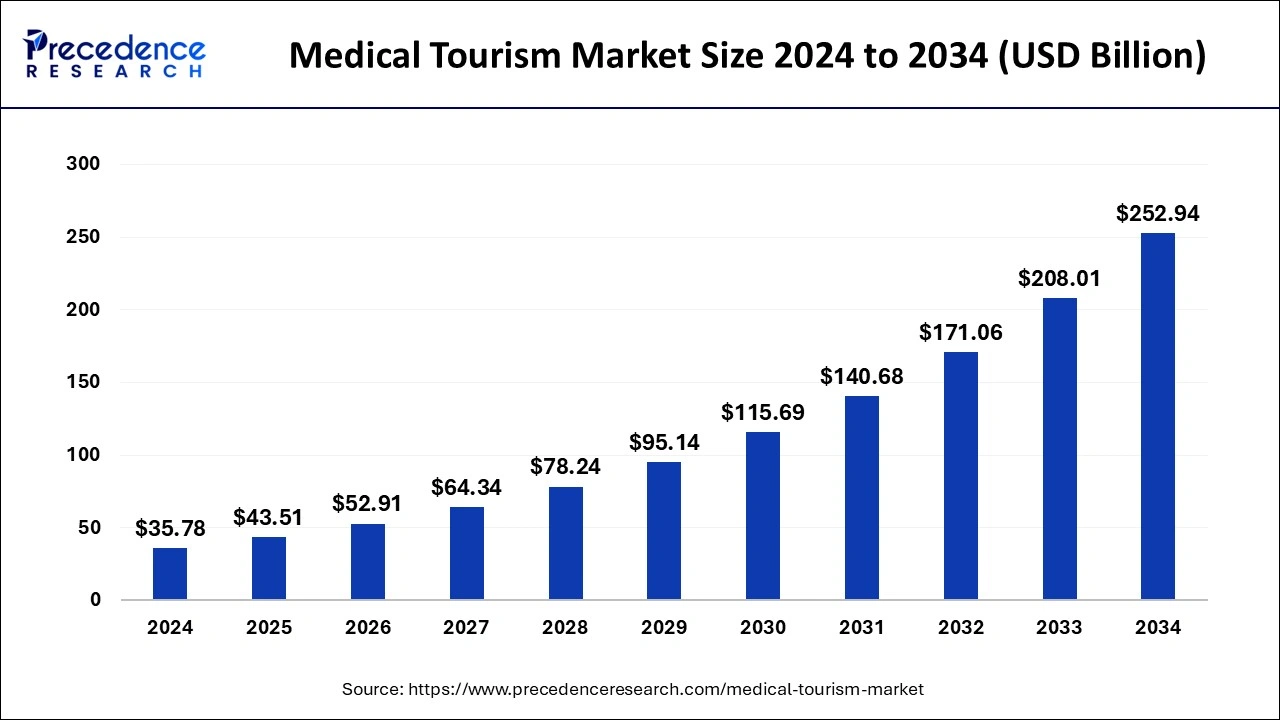
by The global medical tourism market size was valued at USD 35.78 billion in 2024 and is projected to reach around USD 252.94 billion by 2034, registering a robust CAGR of 21.60% from 2025 to 2034. The rising burden of chronic diseases, the globalization of healthcare, and the increasing affordability of advanced medical treatments are driving rapid market growth worldwide.
Read Also: Lysine Market
Quick Insights
-
Market Size (2024): USD 35.78 Billion
-
Forecast (2034): USD 252.94 Billion
-
CAGR (2025–2034): 21.60%
-
Leading Region (2024): North America (26% share)
-
Fastest-Growing Region: Asia-Pacific
-
Top Segment: Cancer Treatment (by revenue)
-
Notable Companies: Apollo Hospitals, Fortis Healthcare, Seoul National University Hospital, KPJ Healthcare Berhad
Overview: The Future of Global Health Travel
Medical tourism has evolved from a niche option to a mainstream global healthcare phenomenon. Patients now travel across borders to access cost-effective, high-quality treatments unavailable or unaffordable in their home countries.
Growing government initiatives, enhanced healthcare infrastructure, and medical insurance coverage are contributing significantly to market expansion.
As per the World Tourism Organization, international health travel faced a 73% dip during the COVID-19 pandemic, but post-pandemic recovery has reignited the global demand for affordable and specialized care, especially in regions such as Asia-Pacific and the Middle East.
Growth Factors Driving the Medical Tourism Market
1. Rising Cost of Domestic Healthcare
Escalating medical expenses in developed economies such as the U.S. and the U.K. are prompting patients to seek treatment abroad, where costs are substantially lower without compromising quality.
2. Improved Healthcare Infrastructure
Emerging nations including India, Thailand, Singapore, and Malaysia have made significant investments in state-of-the-art hospitals and healthcare technology, strengthening their position as global healthcare destinations.
3. Government Support and Policy Initiatives
Initiatives such as India’s Heal in India campaign, Iran’s Medical Tourism Management System, and Thailand’s Health & Wellness Tourism Program are accelerating the expansion of the sector.
4. Health Insurance & Financial Accessibility
The availability of medical travel insurance and flexible financing from both private and government entities is facilitating cross-border healthcare access.
5. Growing Awareness & Connectivity
Rising awareness about affordable healthcare abroad, combined with better flight connectivity and online access to hospital information, is encouraging more patients to travel for treatment.
Regional Insights
North America – The Largest Market (26% Share in 2024)
North America leads due to the growing influx of tourists seeking advanced treatments for orthopedic, cardiological, and cosmetic procedures.
In the U.S., the market reached USD 6.54 billion in 2024 and is projected to hit USD 47.11 billion by 2034, expanding at a CAGR of 21.80%.
Europe – A Mature Healthcare Hub
Countries like France, the U.K., and Spain are witnessing a surge in medical tourism due to strong healthcare infrastructure and government-backed travel initiatives. Despite temporary declines during COVID-19, the region remains a prime destination for elective surgeries and specialized treatments.
Asia-Pacific – Fastest Growing Region
Asia-Pacific is the fastest-growing medical tourism hub globally. India, Thailand, and Singapore dominate this space with their high-quality, low-cost medical services.
For instance, a bypass surgery in India costs around USD 10,000, compared to USD 113,000 in the U.S., making the region extremely attractive to international patients.
Treatment Type Insights
-
Cardiovascular Treatment: Largest market share (21.40% in 2024) — driven by affordability and high-quality cardiac care.
-
Oncology (Cancer Treatment): Fastest-growing segment (CAGR 13.80%) — owing to advanced precision therapies and cost-efficient cancer treatment options.
-
Cosmetic & Orthopedic Treatments: Rising global demand for aesthetic procedures and joint replacements is fueling medical travel from developed to developing nations.
Service Providers Insights
-
Private Providers (74.10% share): Dominating due to their specialized marketing, advanced technology, and luxury aftercare experiences.
-
Public Providers: Expected to grow at a CAGR of 11.50%, supported by government funding and infrastructure development.
Age Group & Tourist Type Insights
-
30–45 Age Group: Largest share (35.70% in 2024), driven by the search for specialized treatments and wellness experiences.
-
Above 60 Age Group: Growing fastest, benefiting from age-based discounts, quick service, and improved accessibility.
-
International Tourists: Account for 64.30% share — reflecting rising global patient mobility.
-
Domestic Tourists: Growing due to improved regional healthcare facilities and increasing confidence in local providers.
Insurance Coverage Insights
-
Self-Paying Patients: Largest segment (38.60%) — opting for faster and customized treatments abroad.
-
Government-Sponsored Programs: Expected to grow at 12.20% CAGR, with initiatives supporting affordable international healthcare access.
Market Challenges
-
Pandemic-Driven Travel Disruptions: COVID-19 caused a 73% drop in international travel, exposing the sector’s dependence on cross-border mobility.
-
Lack of Follow-Up Care: Post-treatment continuity remains a key concern for patients returning home.
-
Regulatory Variability: Differing international standards for healthcare quality and insurance coverage can limit patient confidence.
Key Players
-
Apollo Hospitals Enterprise
-
Fortis Healthcare Limited
-
Aditya Birla Memorial Hospital
-
Seoul National University Hospital
-
Samitivej PCL
-
Prince Court Medical Centre
-
KPJ Healthcare Berhad
-
Barbados Fertility Center
For inquiries regarding discounts, bulk purchases, or customization requests, please contact us at sales@precedenceresearch.com

