
 by
by The Japan’s pharmaceutical distribution market is experiencing rapid expansion, fueled by the country’s aging population, increasing demand for prescription medications, and advancements in supply chain logistics. The market was valued at USD 5.40 billion in 2025 and is expected to grow from USD 5.97 billion in 2026 to approximately USD 14.66 billion by 2035, registering a robust CAGR of 10.50% during the forecast period.
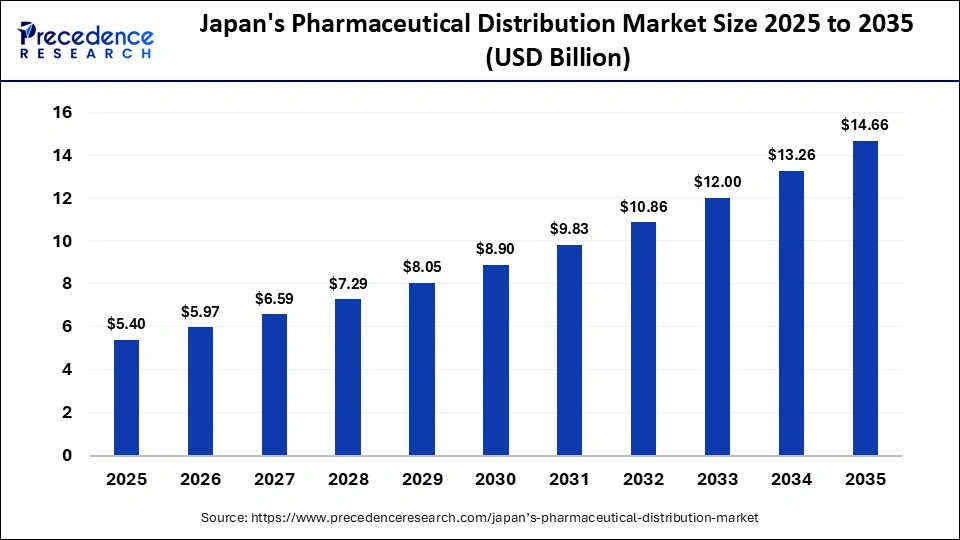
Pharmaceutical distribution in Japan encompasses transportation, storage, inventory management, and delivery of drugs from manufacturers to hospitals, pharmacies, and clinics. The system plays a crucial role in ensuring timely access to life-saving medicines, including biologics, vaccines, and specialty drugs.
Read Also: Ocular Hypertension Market
Key Market Highlights
- Market size reached USD 5.97 billion in 2026
- Expected to hit USD 14.66 billion by 2035
- Growing at a CAGR of 10.50% (2026–2035)
- Transportation & logistics segment led with 28% share in 2025
- Full-line wholesaling dominated distribution models with 34% share
- Prescription drugs accounted for 70% of the market
- Hospitals were the leading end-user segment with 45% share
Market Trends
1. Expansion of Cold Chain Logistics
The increasing use of biologics, vaccines, and temperature-sensitive drugs is driving demand for advanced cold chain logistics systems. These solutions ensure safe storage and transportation under controlled temperatures.
2. Rising Demand from Aging Population
Japan’s rapidly aging population is significantly increasing the demand for prescription drugs and healthcare services, making efficient pharmaceutical distribution critical.
3. Supply Chain Digitalization
The adoption of AI, IoT, and automated warehouse systems is enhancing inventory tracking, route optimization, and delivery efficiency across the pharmaceutical supply chain.
4. Growth of Specialty and Personalized Drugs
The shift toward specialty medicines and personalized treatments is creating new distribution challenges, particularly in handling sensitive and high-value drugs.
5. Direct-to-Pharmacy and Last-Mile Delivery Expansion
Manufacturers are increasingly adopting direct distribution models to pharmacies and hospitals, improving delivery speed and reducing intermediaries.
Impact of Artificial Intelligence on the Market
Artificial intelligence is revolutionizing pharmaceutical distribution in Japan by improving efficiency and accuracy across logistics operations. AI-powered systems analyze real-time data to optimize inventory management, route planning, and warehouse operations.
Additionally, AI supports regulatory compliance, quality control, and predictive analytics, enabling distributors to ensure timely delivery and reduce drug shortages. These advancements are enhancing the reliability and responsiveness of Japan’s pharmaceutical supply chain.
Market Dynamics
Driver: Aging Population and Rising Drug Demand
Japan’s aging demographic is a primary growth driver, leading to increased consumption of prescription drugs. The rising prevalence of chronic diseases further boosts demand for efficient distribution systems.
Restraint: Strict Regulations and Pricing Pressure
Government regulations, including strict drug pricing policies under the national healthcare system, limit profit margins for distributors. High operational costs associated with cold chain logistics also pose challenges.
Opportunity: Digital Supply Chain and Cold Chain Investments
Opportunities lie in the expansion of cold chain infrastructure, adoption of automated logistics systems, and growth of last-mile delivery services. Increasing demand for biologics and personalized medicines is also creating new growth avenues.
Segment Insights
By Service Type
The transportation & logistics segment dominated the market in 2025 with a 28% share, driven by the continuous movement of pharmaceutical products across hospitals, clinics, and pharmacies. Efficient logistics networks are essential for maintaining uninterrupted drug supply.
The cold chain management segment is expected to grow at the fastest rate due to rising demand for biologics and temperature-sensitive medications. Meanwhile, storage & warehousing and inventory management segments play crucial roles in ensuring consistent drug availability and minimizing stockouts.
By Distribution Model
Full-line wholesaling led the market with a 34% share, supported by its ability to provide a wide range of pharmaceutical products through a single distribution channel. These wholesalers offer bulk purchasing, storage, and nationwide delivery services.
Third-party logistics (3PL) is emerging as the fastest-growing segment, as pharmaceutical companies increasingly outsource logistics operations to improve efficiency and reduce costs.
Direct-to-pharmacy and direct-to-hospital models are also gaining traction, enabling faster delivery and improved supply chain transparency.
By Product Type
Prescription drugs dominated the market with a 70% share in 2025, driven by high demand from the aging population and increasing chronic disease burden.
Over-the-counter (OTC) drugs accounted for the remaining share, supported by growing self-medication trends and expanding retail pharmacy networks.
By End User
Hospitals held the largest market share of 45% in 2025, owing to high drug consumption for inpatient and outpatient treatments. Hospitals require a continuous supply of essential and specialty medications.
Retail pharmacies are the second-largest segment and are expected to grow significantly due to increasing consumer reliance on pharmacies for quick access to medicines.
Clinics also play an important role as primary healthcare providers, driving consistent demand for pharmaceutical distribution services.
Government Support and Regulatory Landscape
The Japanese government actively supports the pharmaceutical distribution sector through initiatives aimed at improving supply chain efficiency and ensuring stable medicine availability. Policies from the Ministry of Health, Labour and Welfare focus on digitalization, cold chain expansion, and inventory management improvements.
Additionally, regulatory bodies ensure compliance and coordination across the supply chain, while pricing regulations maintain affordability under the national healthcare system.
Competitive Landscape
The Japan pharmaceutical distribution market is highly competitive, with key players focusing on strengthening logistics networks, expanding cold chain capabilities, and adopting digital technologies. Major companies include:
- Medipal Holdings
- Alfresa Holdings Corporation
- Suzuken Co., Ltd.
- Toho Holdings Co., Ltd.
- Nippon Express Holdings
- DHL Supply Chain
- UPS Healthcare
- Kuehne + Nagel
- Cardinal Health
- McKesson Corporation
These companies are investing heavily in automation, last-mile delivery solutions, and advanced logistics systems to maintain a competitive edge.
Recent Developments
- In February 2026, Mitsubishi Logistics, Takeda Pharmaceutical, and JR Freight introduced temperature-controlled rail containers to enhance pharmaceutical transportation efficiency.
- In January 2026, Otsuka Pharmaceutical partnered with Towa Pharmaceutical to ensure stable drug supply through collaborative manufacturing systems.
- Companies are increasingly adopting IoT-enabled tracking systems for real-time monitoring of temperature-sensitive shipments.
Conclusion
The Japan pharmaceutical distribution market is poised for strong growth, driven by demographic trends, technological advancements, and increasing demand for specialty drugs. The integration of AI, expansion of cold chain logistics, and adoption of digital supply chain systems are transforming the industry.
As healthcare demand continues to rise, efficient pharmaceutical distribution will play a critical role in ensuring timely access to medications, positioning the market for sustained long-term growth.
Get Sample Link: https://www.pharma-geek.com/ocular-hypertension-market/8284
For inquiries regarding discounts, bulk purchases, or customization requests, please contact us at sales@precedenceresearch.com

- Japan’s Pharmaceutical Distribution Market Size to Reach USD 14.66 Billion by 2035 - April 13, 2026
- Ocular Hypertension Market Size to Reach USD 9.37 Billion by 2035 - April 13, 2026
- Green Hospitals Market Size to Reach USD 140.12 Billion by 2035 - April 10, 2026
