
 by
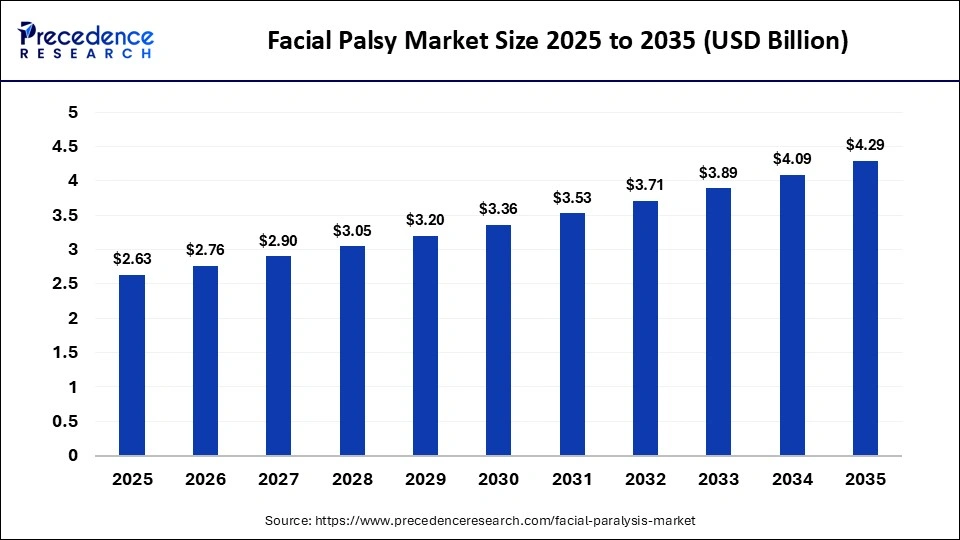
by The global facial palsy market size reached USD 2.76 billion in 2026, up from USD 2.63 billion in 2025, and is projected to grow significantly to USD 4.29 billion by 2035, expanding at a CAGR of 5.02% from 2026 to 2035. The market is steadily growing due to the increasing prevalence of neurological disorders, viral infections, and trauma-related injuries affecting facial nerves, along with advancements in treatment technologies and AI-powered rehabilitation.
Read Also: Veterinary Eye Care Market
Table of Contents
ToggleMarket Overview
The facial palsy market focuses on the diagnosis, treatment, and management of facial nerve paralysis, primarily associated with dysfunction of the seventh cranial nerve. This condition results in:
- Facial drooping
- Inability to close the eye
- Drooling
- Loss of facial symmetry
- Pain around the ear
Facial palsy can arise due to:
- Viral infections (e.g., Bell’s palsy)
- Stroke
- Trauma or injury
- Tumors
- Surgical complications
The market includes revenues generated from:
- Diagnostic tools (MRI, EMG, imaging systems)
- Therapeutics (antivirals, corticosteroids, botulinum toxin)
- Rehabilitation services
- Surgical procedures and medical devices
Role of AI and Advanced Technologies
Technological advancements, especially Artificial Intelligence (AI), are transforming facial palsy treatment and recovery.
Key Innovations:
- AI-Based Facial Analysis Tools
Platforms like facial symmetry analysis software help track recovery progress with high precision. - Smart Wearables & Biofeedback Systems
Devices such as sensor-enabled glasses provide real-time monitoring of facial movements. - Remote Rehabilitation Platforms
Mobile apps and telehealth solutions allow patients to perform guided exercises at home. - Advanced Imaging Technologies
High-resolution MRI and ultrasound imaging enable accurate nerve mapping before surgery. - Electrical Stimulation Devices
Miniaturized implants deliver targeted stimulation to improve nerve function.
These technologies improve diagnostic accuracy, treatment outcomes, and patient convenience, driving market growth.
Key Market Trends
1. Increasing Demand for Minimally Invasive Treatments
Procedures like botulinum toxin injections and nerve transfer surgeries are gaining popularity due to:
- Faster recovery
- Reduced complications
- Improved patient comfort
2. Growth in Rehabilitation Therapies
Non-invasive therapies such as:
- Neuromuscular retraining
- Electrotherapy
- Biofeedback
are becoming primary treatment approaches.
3. Improved Diagnostic Capabilities
Technologies like electromyography (EMG) and advanced imaging enable early and accurate diagnosis.
4. Rise in Home-Based Care
Telemedicine and digital platforms are enabling continuous monitoring and therapy at home.
Segmental Insights
By Application
Rehabilitation (Dominant Segment)
The rehabilitation segment held the largest share in 2025 due to:
- High demand for non-invasive therapies
- Long-term treatment requirements
- Increased awareness of physical therapy benefits
Common approaches include:
- Facial muscle retraining
- Electrical stimulation
- Biofeedback therapy
Surgical Intervention (Fastest Growing)
This segment is expected to expand rapidly due to:
- Rising cases of severe nerve damage
- Advancements in microsurgery
Key procedures:
- Nerve grafting and transfer
- Muscle transfer (e.g., gracilis muscle)
- Temporalis tendon transfer
By End Use
Hospitals (Leading Segment)
Hospitals dominate due to:
- Availability of multidisciplinary teams
- Advanced diagnostic and surgical infrastructure
- Capability to handle complex cases
Clinics (Fastest Growing)
Specialized clinics are growing rapidly because of:
- Focus on long-term rehabilitation
- Personalized treatment approaches
- Increasing patient preference for outpatient care
By Type of Facial Palsy
Bell’s Palsy (Dominant Segment)
The most common form, driven by:
- Viral infections
- High diagnosis rates
- Strong demand for non-invasive treatments
Treatment includes:
- Corticosteroids
- Antivirals
- Physical therapy
Trauma-Induced Paralysis (Fastest Growing)
Growth is driven by:
- Accidents and injuries
- Surgical complications
Requires:
- Advanced imaging
- Surgical reconstruction
- Intensive rehabilitation
Regional Analysis
North America (Market Leader)
- Held 50% market share in 2025
- Strong healthcare infrastructure
- High adoption of advanced therapies
- Increasing use of botulinum toxin treatments
The U.S. leads due to:
- High prevalence of neurological disorders
- Advanced neurodiagnostic capabilities
- Strong presence of key market players
Asia Pacific (Fastest Growing Region)
Growth drivers include:
- Rising healthcare investments
- Increasing awareness of facial rehabilitation
- Expanding hospital and clinic infrastructure
Countries like China and India are key contributors due to:
- Growing disposable income
- Demand for cost-effective treatments
- Adoption of both modern and traditional therapies
Europe (Steady Growth)
- Strong regulatory frameworks
- Increasing adoption of advanced therapies
- Growing focus on patient quality of life
Competitive Landscape
Major companies operating in the facial palsy market include:
- AbbVie
- Allergan
- Ipsen
- Galderma
- Novartis AG
- Pfizer Inc.
- Revance Therapeutics
- Medytox
These companies focus on:
- Product innovation
- Strategic collaborations
- Expanding therapeutic portfolios
Recent Developments
- 2025: Launch of AI-based digital rehabilitation platform for facial palsy patients
- 2025: Increased awareness campaigns to improve patient care and diagnosis rates
- Growing adoption of AR-based rehabilitation tools and remote monitoring systems
Future Outlook
The facial palsy market is expected to grow steadily due to:
- Expansion of AI-driven rehabilitation technologies
- Rising demand for minimally invasive treatments
- Increasing prevalence of neurological and viral disorders
- Growth in telemedicine and home-based care
- Advancements in microsurgical techniques
Overall, the market will continue evolving toward personalized, technology-driven, and patient-centric care, improving recovery outcomes and quality of life for patients worldwide.
Get Sample Link: https://www.precedenceresearch.com/sample/8126
📩 For inquiries regarding discounts, bulk purchases, or customization requests, please contact us at sales@precedenceresearch.com

- Oxygen Therapy Equipment Market Size to Hit USD 11.92 Billion by 2035 - March 30, 2026
- Psychological Distress Market Size to Hit USD 490.71 Billion by 2035 - March 30, 2026
- Biologics and Biosimilars Market Size to Hit USD 2,426.85 Billion by 2035 - March 30, 2026
