
 by
by Market Overview
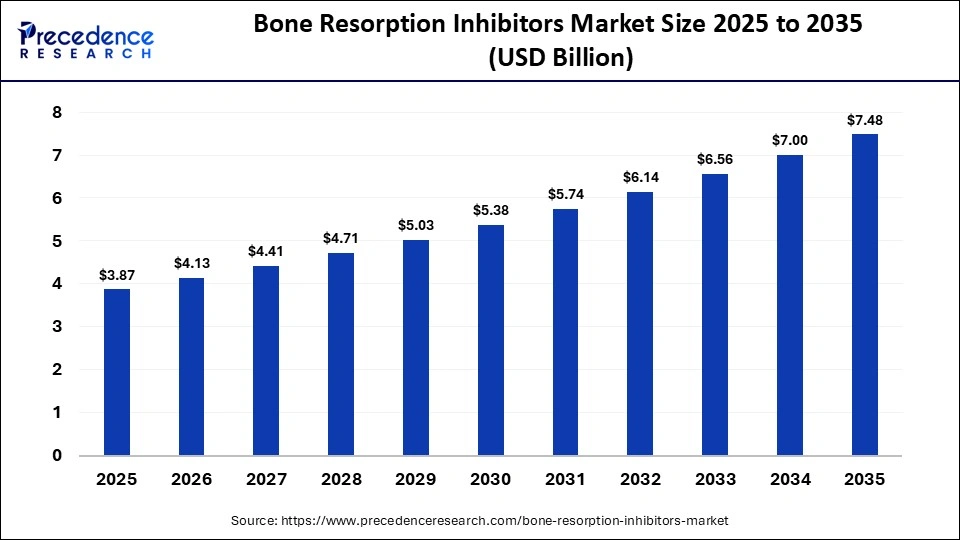
The global bone resorption inhibitors market is experiencing steady growth, supported by strong clinical demand and continuous pharmaceutical innovation.
- Market Size 2025: USD 3.87 Billion
- Market Size 2026: USD 4.13 Billion
- Projected Market Size 2035: USD 7.48 Billion
- CAGR (2026–2035): 6.82%
This consistent growth trajectory reflects the increasing burden of osteoporosis and other metabolic bone diseases worldwide.
Read Also: Iris Recognition Market
Key Market Highlights
- North America dominated the global market in 2025
- Asia Pacific is projected to be the fastest-growing region
- Osteoporosis segment accounted for the largest share by indication
- Parenteral route is expected to grow at the fastest rate
- Hospitals emerged as the leading end-user segment
- Online pharmacies are witnessing rapid expansion
Market Growth Factors
Rising Prevalence of Bone Disorders
One of the primary drivers of the market is the increasing number of patients suffering from osteoporosis, Paget’s disease, and malignant hypercalcemia. The growing geriatric population and postmenopausal women are particularly vulnerable to bone density loss, significantly boosting demand for treatment solutions.
Growing Demand for Advanced Therapeutics
The rising adoption of bisphosphonates and denosumab is accelerating market growth. These drugs are widely used to:
- Reduce fracture risk
- Improve bone mineral density
- Slow down bone resorption processes
Additionally, the availability of both branded and generic drugs is making treatment more accessible globally.
Increased Health Awareness Post-Pandemic
The COVID-19 pandemic has led to a surge in health awareness, encouraging individuals to adopt preventive healthcare practices. This has contributed to early diagnosis and treatment of bone-related conditions, further driving market demand.
Role of Technology in Market Expansion
Technological advancements are playing a pivotal role in enhancing treatment outcomes and patient adherence.
Key Innovations Include:
- Development of targeted anti-resorptive therapies
- Introduction of long-acting injectable formulations
- Improved drug delivery systems (oral and parenteral)
- Integration of digital monitoring tools and wearables
These advancements not only improve treatment effectiveness but also enhance patient convenience and compliance.
Emerging Market Trends
Increased Adoption of Denosumab
Denosumab is gaining popularity due to its effectiveness in reducing fracture risks and treating severe osteoporosis cases. Its targeted mechanism of action makes it a preferred choice among healthcare providers.
Growing Osteoporosis Cases
The rising aging population and increasing number of postmenopausal women are significantly contributing to the surge in osteoporosis cases globally.
Advancements in Drug Formulations
Pharmaceutical companies are focusing on developing formulations with:
- Fewer side effects
- Improved patient adherence
- Enhanced therapeutic outcomes
Segmental Analysis
By Indication
Osteoporosis Segment – Market Leader
The osteoporosis segment dominated the market in 2025 due to:
- High demand for cost-effective bisphosphonates
- Increasing prevalence among elderly populations
- Growing use of RANK ligand inhibitors like denosumab
Other Indications – Fastest Growth
The “others” segment is expected to grow rapidly, driven by:
- Rising adoption of advanced inhibitors
- Increased treatment of severe bone conditions
- Innovation in bone formation therapies
By Route of Administration
Oral Segment – Dominant in 2025
Oral medications remain the preferred choice due to:
- Ease of administration
- Cost-effectiveness
- Non-invasive nature
They are widely used for long-term management of osteoporosis and other metabolic bone diseases.
Parenteral Segment – Fastest Growing
Parenteral administration (IV and subcutaneous injections) is gaining traction due to:
- Better patient compliance
- Suitability for severe cases
- Use in patients intolerant to oral medications
By End User
Hospitals – Leading Segment
Hospitals dominate the market due to:
- Availability of advanced treatment options
- Administration of injectable therapies
- Management of severe and complex cases
Homecare Settings – Rapid Growth
Homecare is emerging as a key segment, supported by:
- Rise in patient-centric care models
- Use of self-administered injections
- Adoption of remote monitoring technologies
By Distribution Channel
Retail Pharmacies – Market Leader
Retail pharmacies lead due to:
- Easy accessibility
- Wide availability of medications
- Growing prescription volumes
Online Pharmacies – Fastest Growing
Online platforms are expanding rapidly, driven by:
- Convenience and accessibility
- Growing digital adoption
- Availability of detailed drug information
Regional Insights
North America – Market Leader
North America dominated the market in 2025 due to:
- Advanced healthcare infrastructure
- High awareness of bone health
- Strong presence of leading pharmaceutical companies
- Increased adoption of preventive screening programs
U.S. Market Trends
The United States plays a crucial role in market growth, supported by:
- Rising aging population
- High prevalence of osteoporosis
- Strong availability of advanced medications
Asia Pacific – Fastest Growing Region
Asia Pacific is expected to witness the fastest growth due to:
- Rapidly aging population
- Increasing healthcare investments
- Rising awareness of bone-related diseases
China Market Trends
China is emerging as a key market due to:
- Growth in domestic pharmaceutical manufacturing
- Increasing adoption of biosimilars
- Expanding treatment accessibility
Competitive Landscape
The global bone resorption inhibitors market is highly competitive, with major players focusing on innovation, partnerships, and geographic expansion.
Key Companies Include:
- Pfizer Inc.
- Novartis AG
- Bayer AG
- AstraZeneca
- Teva Pharmaceutical Industries Ltd.
- GlaxoSmithKline plc
- Bristol-Myers Squibb Company
These companies are actively investing in R&D and biosimilars to strengthen their market presence.
Get Sample Copy: https://www.precedenceresearch.com/sample/7660
For inquiries regarding discounts, bulk purchases, or customization requests, please contact us at sales@precedenceresearch.com

- Bone Resorption Inhibitors Market Size to Reach USD 7.48 Billion by 2035 - April 1, 2026
- Iris Recognition Market Size to Hit USD 63.34 Billion by 2035 - April 1, 2026
- Medical Cyclotron Market Size to Hit USD 905.79 Million by 2035 - March 31, 2026
