by
by What is the Blood Ketone Meter Market Size in 2026?
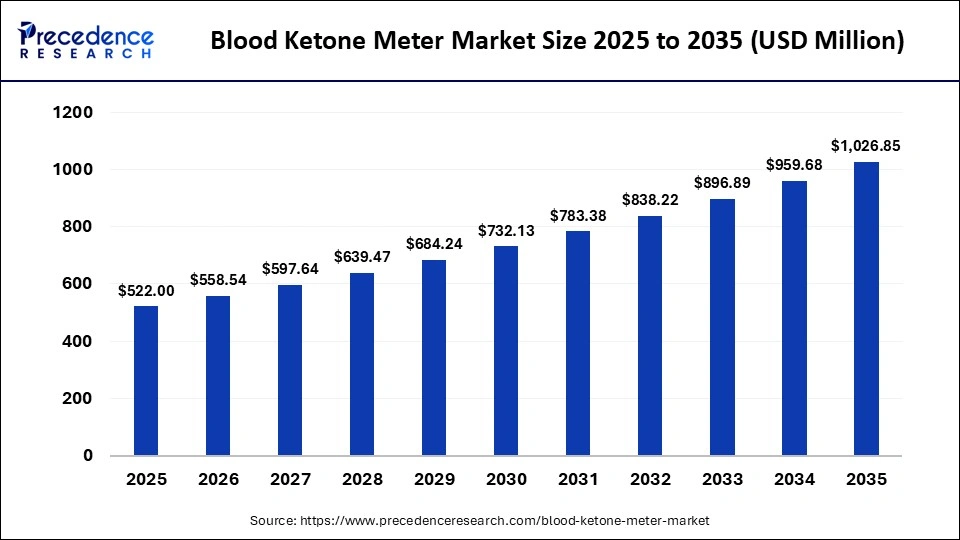
The global blood ketone meter market size was valued at USD 522.00 million in 2025 and is projected to grow from USD 558.54 million in 2026 to approximately USD 1,026.85 million by 2035, expanding at a CAGR of 7.00% from 2026 to 2035.
The market is growing steadily due to the increasing prevalence of diabetes worldwide and the rising demand for accurate metabolic monitoring tools. Blood ketone meters help individuals track ketone levels to prevent complications such as Diabetic Ketoacidosis, while also supporting lifestyle trends such as Ketogenic Diet adoption, weight management, and sports performance monitoring.
Read Also: Ligase Enzymes Market
Blood Ketone Meter Market Overview
Blood ketone meters are portable diagnostic devices designed to measure the concentration of ketones in capillary blood samples. These handheld devices provide fast and reliable metabolic information, allowing users to monitor their energy metabolism and detect early signs of metabolic imbalance.
The devices are widely used by individuals managing Diabetes, as ketone monitoring helps prevent serious complications and improve glycemic control. In addition to clinical use, blood ketone meters are also gaining popularity among people following ketogenic diets and athletes seeking optimized metabolic performance.
Technological advancements have significantly improved the functionality of these devices. Modern blood ketone meters now feature:
-
Wireless connectivity
-
Smartphone integration
-
Cloud-based health tracking
-
Improved sensor accuracy
These innovations enhance user experience while enabling better long-term metabolic monitoring and data analysis.
Key Takeaways
-
North America dominated the market with a 36% share in 2025.
-
Asia-Pacific is expected to grow at the fastest CAGR during the forecast period.
-
By product, the blood glucose and ketone monitoring segment dominated the market in 2025.
-
The blood ketone monitoring segment is projected to grow at the fastest rate between 2026 and 2035.
-
By application, the human segment accounted for the largest revenue share in 2025.
-
The veterinary segment is expected to grow at the highest CAGR during the forecast period.
-
By end-use, the hospital segment held the largest share in 2025.
-
The home care settings segment is expected to expand rapidly in the coming years.
Impact of Artificial Intelligence on the Blood Ketone Meter Market
Artificial intelligence is increasingly being integrated into digital health ecosystems to improve metabolic monitoring and disease management.
AI-based systems can analyze data from ketone meters and detect trends in:
-
Ketone fluctuations
-
Glucose levels
-
Dietary habits
-
Physical activity patterns
Machine learning algorithms can identify early warning signals of metabolic imbalance, allowing healthcare providers to intervene before complications develop.
Companies such as Abbott Laboratories and Medtronic are exploring AI-driven diabetes management systems that combine glucose and ketone monitoring to provide predictive alerts and personalized treatment recommendations.
As digital health technology advances, AI-powered ketone monitoring solutions are expected to enhance personalized diabetes management and lifestyle monitoring.
Blood Ketone Meter Market Trends
Expanding Adoption in Diabetes Self-Management
Blood ketone meters are becoming essential tools for individuals managing Type 1 Diabetes and Type 2 Diabetes. Regular ketone monitoring helps reduce the risk of metabolic emergencies and supports informed treatment decisions.
Growth of Ketogenic Lifestyle Management
The rising popularity of low-carbohydrate diets, particularly the Ketogenic Diet, is driving consumer demand for ketone monitoring devices. Individuals following these diets use ketone meters to confirm whether their bodies are in a ketosis state.
Integration with Wearables and Health Platforms
Modern ketone meters are increasingly integrated with:
-
Mobile health applications
-
Fitness trackers
-
Remote patient monitoring platforms
These integrations enable continuous health tracking and improved data visibility for users and healthcare providers.
Miniaturization and Portable Device Design
Manufacturers are focusing on compact, lightweight designs that allow users to perform tests easily at home or while traveling. Portable devices improve accessibility and support the growing demand for point-of-care diagnostics.
Expanding Adoption in Emerging Markets
Regions such as Asia-Pacific and Latin America are witnessing increasing demand for blood ketone monitoring solutions due to:
-
Rising healthcare awareness
-
Increasing prevalence of metabolic disorders
-
Expanding access to diagnostic technologies
Blood Ketone Meter Market Segment Insights
Product Insights
Blood Glucose and Ketone Monitoring
The blood glucose and ketone monitoring segment dominated the market in 2025. These hybrid devices allow users to track both glucose and ketone levels simultaneously, providing comprehensive metabolic monitoring.
Such devices are particularly valuable for individuals managing Diabetes, as they help prevent complications such as Diabetic Ketoacidosis.
Key benefits include:
-
Dual metabolic monitoring
-
Faster diagnostic results
-
Improved disease management
Blood Ketone Monitoring
The blood ketone monitoring segment is expected to grow at the fastest CAGR during the forecast period.
Growing consumer interest in metabolic health, weight management, and athletic performance is increasing demand for ketone-specific monitoring devices.
Technological advancements in sensor accuracy, portability, and affordability are further driving the adoption of these devices.
Application Insights
Human Segment
The human segment dominated the market in 2025, driven by the growing need for effective diabetes management.
Patients with Diabetes rely on ketone testing to detect early signs of metabolic imbalance and prevent severe complications.
Healthcare providers often recommend regular ketone monitoring for high-risk individuals, supporting steady demand in this segment.
Veterinary Segment
The veterinary segment is expected to grow at the fastest rate during the forecast period.
Blood ketone meters are increasingly used to diagnose metabolic disorders in animals, including:
-
Ketosis in dairy cows
-
Diabetes in pets
The expansion of veterinary diagnostics and rising spending on animal healthcare are contributing to this segment’s growth.
End-Use Insights
Hospitals
The hospital segment held the largest market share in 2025.
Hospitals rely on ketone monitoring devices for emergency diagnostics and diabetes management programs. These devices provide rapid results that help clinicians make timely treatment decisions.
Integration with hospital information systems also enables efficient patient monitoring and data management.
Home Care Settings
The home care settings segment is expected to grow at the fastest rate during the forecast period.
Portable ketone meters enable patients to perform self-monitoring at home, reducing the need for frequent hospital visits.
The growing adoption of telemedicine and remote patient monitoring is further supporting the expansion of home-based ketone testing.
Regional Insights
North America
North America dominated the blood ketone meter market in 2025, primarily due to the high prevalence of Diabetes and strong awareness of metabolic health.
The region benefits from:
-
Advanced healthcare infrastructure
-
High adoption of point-of-care diagnostics
-
Favorable reimbursement policies
Countries such as the United States and Canada are leading markets due to widespread adoption of digital health technologies and patient monitoring devices.
United States Market
The United States accounts for the largest share in North America due to:
-
High healthcare spending
-
Strong presence of medical technology companies
-
Continuous innovation in diabetes monitoring technologies
Major companies such as Abbott Laboratories and Medtronic continue to invest heavily in advanced metabolic monitoring solutions.
Asia-Pacific
The Asia-Pacific region is expected to grow at the fastest rate during the forecast period.
Rapid urbanization, increasing healthcare awareness, and rising prevalence of metabolic diseases are driving demand for ketone monitoring devices in countries such as:
-
China
-
India
-
Japan
-
South Korea
Government health programs and increasing investment in healthcare infrastructure are also contributing to regional market expansion.
Europe
Europe is expected to experience steady growth due to increasing awareness of metabolic disorders and preventive healthcare.
Countries such as:
-
Germany
-
United Kingdom
-
France
-
Italy
are investing in digital health technologies and self-monitoring tools, which is boosting demand for blood ketone meters.
Blood Ketone Meter Market Value Chain Analysis
The value chain of the blood ketone meter market includes several stages:
Research and Development
Manufacturers focus on improving sensor accuracy, connectivity, and minimal blood sample requirements.
Key innovators include Abbott Laboratories, Roche, and Ascensia Diabetes Care.
Clinical Trials and Regulatory Approvals
Medical devices must undergo regulatory approval from organizations such as the U.S. Food and Drug Administration before entering the market.
Manufacturing and Formulation
Companies manufacture test strips, sensors, and electrochemical detection components required for ketone measurement.
Distribution Channels
Products are distributed through:
-
Retail pharmacies
-
Medical supply distributors
-
Online healthcare platforms
Major distributors include Walgreens Boots Alliance, CVS Health, and McKesson Corporation.
Key Companies in the Blood Ketone Meter Market
Major companies operating in the global market include:
-
Apex Biotechnology Corp.
-
TaiDoc Technology Corporation
-
EKF Diagnostics Holdings
-
Nova Biomedical
-
Keto-Mojo
-
ForaCare
-
Nipro Corporation
-
i-SENS Inc.
-
Tandem Diabetes Care
For inquiries regarding discounts, bulk purchases, or customization requests, please contact us at sales@precedenceresearch.com