
 by
by Anti-Snoring Devices Market Size in 2026
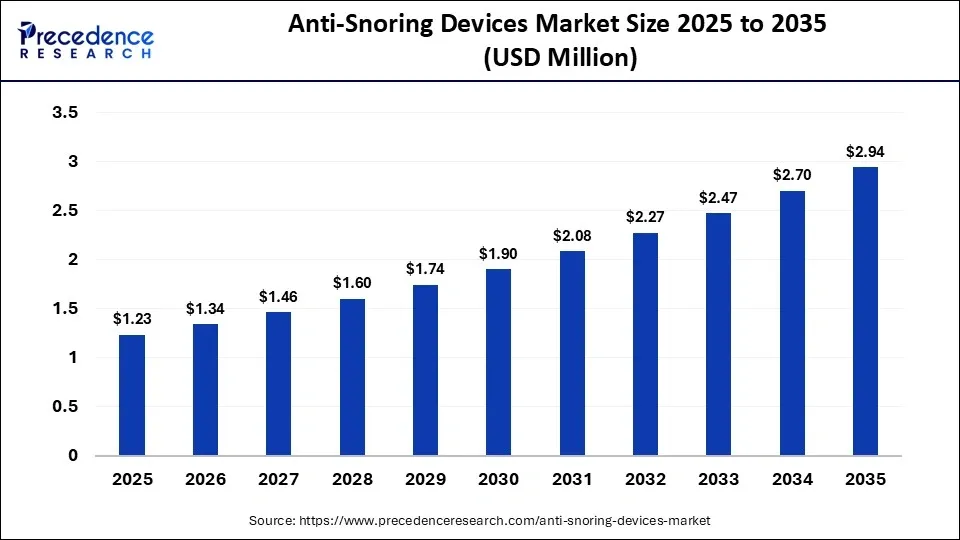
The global anti-snoring devices market size was valued at USD 1.23 billion in 2025 and is projected to grow from USD 1.34 billion in 2026 to approximately USD 2.94 billion by 2035, expanding at a CAGR of 9.12% from 2026 to 2035. Market growth is driven by lifestyle changes, increasing obesity rates, aging populations, and the rising prevalence of sleep apnea, along with growing awareness of sleep health.
Read Also: Theranostics Market
Key Takeaways
- North America dominated the market with a 39% share in 2025
- Asia Pacific is expected to grow at the fastest CAGR during the forecast period
- By product type, mandibular advancement devices (MADs) held 43% market share in 2025
- Tongue stabilizing devices (TSDs) are expected to grow at the fastest CAGR
- By material, thermoplastic led with 39% share in 2025
- Silicone is projected to grow at the fastest rate
- By distribution channel, specialty sleep clinics held 37% share in 2025
- Online stores are expected to expand rapidly
- By end-user, homecare settings accounted for 42% share in 2025
- Sleep laboratories are expected to grow at the fastest rate
Market Overview
Anti-snoring devices are non-invasive solutions designed to reduce or eliminate snoring by keeping airways open during sleep. These devices address airway obstruction and vibration of throat tissues, helping improve airflow and stabilize breathing.
The market is witnessing steady growth due to the increasing prevalence of sleep apnea and chronic snoring, often associated with obesity, aging, and sedentary lifestyles. Additionally, rising awareness about sleep health and the demand for convenient, home-based treatment solutions are driving adoption. Technological advancements in nasal devices and wearable sleep technologies are further enhancing comfort and customization.
Role of AI in the Anti-Snoring Devices Market
Artificial Intelligence (AI) is revolutionizing the anti-snoring devices market by enabling advanced monitoring, diagnosis, and personalized therapy.
AI-powered devices such as smart pillows, wearable sleep trackers, and intelligent mattresses can:
- Monitor breathing patterns and snoring intensity in real time
- Detect sleep stages and abnormalities
- Automatically adjust positioning or airflow to reduce snoring
Machine learning algorithms analyze individual sleep data to identify root causes and deliver customized therapy settings. These AI-enabled solutions improve patient comfort, increase adherence to treatment, and provide valuable insights for clinicians to optimize care.
Market Trends
Smart and Connected Devices
Modern anti-snoring devices are increasingly integrated with sensors, Bluetooth connectivity, and AI algorithms for real-time sleep monitoring and automatic adjustments.
Personalized Treatment Approaches
Data-driven insights allow customization of therapies based on individual snoring patterns, boosting treatment effectiveness.
Growing Awareness of Sleep Health
Rising awareness about the health risks of untreated sleep disorders is increasing demand for effective snoring solutions.
Expansion of E-commerce and Telemedicine
Online platforms and telehealth services are improving accessibility, allowing remote diagnosis, monitoring, and device purchases.
Diversified Product Offerings
The market is expanding beyond traditional mouthpieces to include smart wearables, positional therapy devices, and advanced nasal solutions.
Segment Insights
Product Type Insights
Mandibular Advancement Devices (MADs)
MADs dominated the market in 2025 due to their high clinical effectiveness and patient compliance. These devices reposition the lower jaw to maintain airway openness and are widely recommended by healthcare professionals. Custom-fit designs and adjustable mechanisms further enhance comfort and long-term adherence.
Tongue Stabilizing Devices (TSDs)
TSDs are expected to grow at the fastest CAGR. These devices hold the tongue in place without altering jaw position, making them suitable for users who cannot tolerate MADs. Their ease of use and minimal fitting requirements are driving adoption.
Material Insights
Thermoplastic
Thermoplastic materials dominated the market due to their affordability, ease of customization, and user-friendly design. These materials can be molded to fit individual users, making them highly suitable for homecare settings.
Silicone
Silicone is expected to witness the fastest growth due to its comfort, durability, and hypoallergenic properties. It is ideal for long-term use and supports repeated cleaning and sterilization.
Distribution Channel Insights
Specialty Sleep Clinics
Specialty sleep clinics led the market due to their expertise in diagnosing and managing sleep disorders. These facilities provide personalized device fitting and comprehensive care, ensuring optimal treatment outcomes.
Online Stores
Online stores are growing rapidly due to convenience, competitive pricing, and easy product comparison. The rise of e-commerce and direct-to-consumer models is significantly boosting this segment.
End-User Insights
Homecare Settings
Homecare settings dominated the market in 2025, driven by the increasing preference for convenient, self-managed treatment solutions. Portable and easy-to-use devices make homecare the most preferred option for long-term use.
Sleep Laboratories
Sleep laboratories are expected to grow at the fastest rate, as they play a critical role in accurate diagnosis and treatment planning through advanced sleep studies.
Regional Insights
North America
North America led the market in 2025 due to advanced healthcare infrastructure, high awareness of sleep disorders, and strong adoption of innovative technologies. The presence of major companies and high healthcare spending further supports market growth.
Asia Pacific
Asia Pacific is projected to grow at the fastest CAGR, driven by rapid urbanization, rising healthcare awareness, and increasing prevalence of sleep disorders. Expanding e-commerce platforms and affordable healthcare solutions are enhancing accessibility.
China
China is emerging as a key market due to increasing urbanization, rising healthcare expenditure, and growing awareness of sleep health. Local manufacturing and e-commerce expansion are improving product availability and affordability.
Key Companies in the Market
- ResMed Inc.
- Koninklijke Philips N.V.
- Fisher & Paykel Healthcare Limited
- SomnoMed Ltd.
- GlaxoSmithKline plc
- Apnea Sciences Corporation
- ZQuiet (Sleeping Well, LLC)
- Airway Management Inc.
- ProSomnus Sleep Technologies
- Zyppah
- Tomed GmbH
- Meditas Ltd.
- Rotech Healthcare Inc.
- Mitsui Chemicals, Inc.
- SnoreMeds Inc.
- PureSleep Company Inc.
- Glidewell Laboratories
- MPowrx Health and Wellness Products Inc.
- DeVilbiss Healthcare
- Smart Nora
Recent Developments
- In March 2025, Fisher & Paykel Healthcare launched the F&P Nova Nasal Mask for treating obstructive sleep apnea in Australia and New Zealand.
- In March 2025, Signifier Medical Technologies updated its eXciteOSA device to meet CMS reimbursement requirements.
Conclusion
The anti-snoring devices market is experiencing robust growth driven by increasing awareness of sleep health, rising prevalence of sleep disorders, and advancements in AI-enabled technologies. With the growing shift toward homecare solutions and personalized treatment, the market is expected to witness significant expansion over the forecast period.
Get Sample: https://www.precedenceresearch.com/sample/8037
For inquiries regarding discounts, bulk purchases, or customization requests, please contact us at sales@precedenceresearch.com

- Zanubrutinib Market Size to Hit USD 5.69 Billion by 2035 - March 23, 2026
- Anti-Snoring Devices Market Size to Hit USD 2.94 Billion by 2035 - March 23, 2026
- Arbovirus Testing Market Size to Hit USD 2.16 Billion by 2035 - March 23, 2026
