
 by
by Market Size Overview
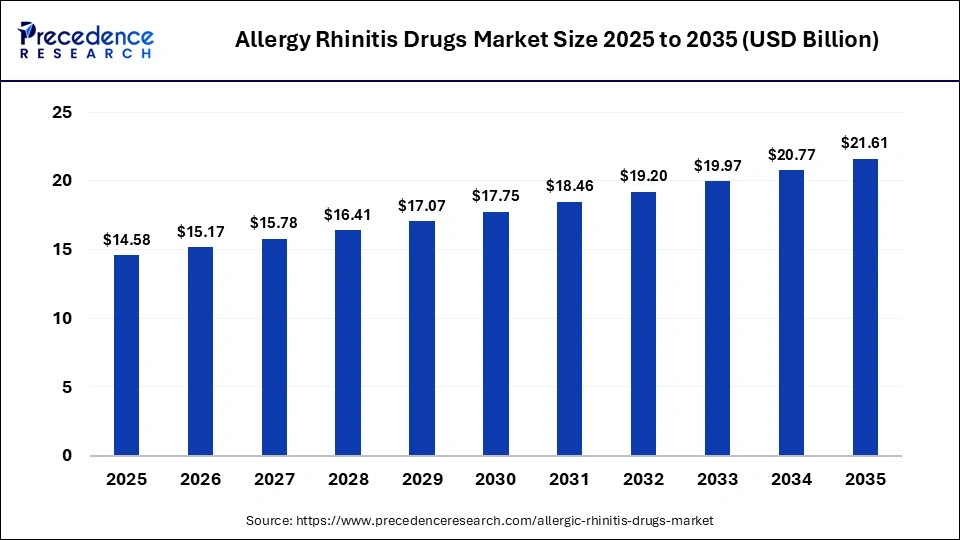
The global allergy rhinitis drugs market size was valued at USD 14.58 billion in 2025 and is projected to grow from USD 15.17 billion in 2026 to approximately USD 21.61 billion by 2035, expanding at a CAGR of 4.01% during the forecast period.
This steady growth is primarily driven by increasing exposure to environmental allergens, rising levels of urban air pollution, and growing awareness about respiratory health. The expanding portfolio of antihistamines, corticosteroids, and immunotherapy drugs—available in both branded and generic forms—continues to support market expansion.
Read Also: Diffractive Optical Element Market
What is the Allergy Rhinitis Drugs Market?
The allergy rhinitis drugs market encompasses medications used to treat allergic rhinitis, a condition characterized by inflammation of the nasal passages due to allergens such as:
- Pollen (seasonal allergies)
- Dust mites
- Mold spores
- Pet dander
Common symptoms include:
- Sneezing
- Nasal congestion
- Runny nose (rhinorrhea)
- Itching in the nose or throat
Types of Allergic Rhinitis
- Seasonal Allergic Rhinitis (Hay Fever): Occurs during specific seasons due to pollen exposure
- Perennial Allergic Rhinitis: Occurs year-round due to indoor allergens
- Occupational Allergic Rhinitis: Triggered by workplace exposure
Treatment Options
The market includes a wide range of therapies such as:
- Antihistamines (symptom relief)
- Corticosteroids (anti-inflammatory)
- Decongestants (temporary relief)
- Immunotherapy (long-term disease modification)
- Biologics (emerging targeted therapies)
Key Market Highlights
- North America dominated the market with a 37% share in 2025
- Asia-Pacific is the fastest-growing region
- Perennial allergic rhinitis led by disease type
- Seasonal allergic rhinitis is growing rapidly
- Antihistamines dominated treatment type
- Immunotherapy is the fastest-growing segment
- Prescription drugs held the largest share
- OTC drugs are expanding rapidly
- Oral administration dominated the market
- Intravenous therapies are gaining traction due to biologics
Market Drivers
1. Rising Environmental Allergens
Increasing exposure to pollen, dust, and pollution—especially in urban environments—is significantly increasing the global burden of allergic rhinitis.
2. Growing Awareness and Diagnosis Rates
Improved awareness campaigns and access to healthcare have led to higher diagnosis rates, boosting demand for effective treatments.
3. Expansion of OTC Drug Availability
The widespread availability of over-the-counter antihistamines and nasal sprays has made allergy treatment more accessible, encouraging self-medication.
4. Shift Toward Long-Term Therapies
Patients and healthcare providers are increasingly adopting immunotherapy and biologics for long-term relief rather than short-term symptom management.
Impact of Artificial Intelligence on the Market
Artificial Intelligence (AI) is playing a transformative role in the allergy rhinitis drugs market by improving drug discovery, diagnosis, and personalized treatment.
Key applications include:
- Identifying immune pathways in IgE-mediated allergies
- Accelerating drug development and clinical trials
- Predicting seasonal allergy outbreaks using environmental data
- Enabling personalized treatment plans based on patient data
AI-driven platforms are also integrating real-time pollen tracking and environmental monitoring, allowing proactive management of allergic conditions.
Key Market Trends
Increasing Adoption of Immunotherapy
Allergen-specific immunotherapy is gaining popularity as it:
- Targets the root cause of allergies
- Provides long-term relief
- Reduces dependency on symptomatic medications
Advancements in Drug Delivery Systems
Innovations such as:
- Intranasal sprays
- Fast-dissolving tablets
- Inhalation devices
are improving drug effectiveness and patient compliance.
Emergence of Biologics
Biologic therapies are revolutionizing treatment by:
- Targeting specific immune responses
- Offering solutions for treatment-resistant patients
- Providing personalized therapeutic approaches
Growth of Self-Care and OTC Medications
Consumers are increasingly opting for self-managed care, boosting demand for OTC antihistamines and combination drugs.
Segment Analysis
By Disease Type
Perennial Allergic Rhinitis (Dominant Segment)
This segment leads due to:
- Continuous exposure to indoor allergens
- Need for long-term medication
- Consistent prescription renewals
Seasonal Allergic Rhinitis (Fastest-Growing)
Growth is driven by:
- Climate change increasing pollen seasons
- Rising urban pollution
- Increased demand for quick-relief medications
By Treatment Type
Antihistamines (Market Leader)
Antihistamines dominate due to:
- Fast symptom relief
- Wide availability (OTC & prescription)
- Improved second-generation formulations with fewer side effects
Immunotherapy (Fastest-Growing)
This segment is expanding rapidly due to:
- Long-term effectiveness
- Growing physician adoption
- Availability of sublingual and injectable options
By Drug Type
Prescription Drugs (Dominant)
Prescription medications lead due to:
- Use in moderate-to-severe cases
- Requirement for medical supervision
- Advanced therapies such as corticosteroids and biologics
OTC Drugs (Fastest-Growing)
Growth factors include:
- Convenience and accessibility
- Increased consumer awareness
- Expansion of retail and online pharmacies
By Route of Administration
Oral (Dominant Segment)
Oral medications are preferred due to:
- Ease of use
- Convenience
- Cost-effectiveness
Intravenous (Fastest-Growing)
Growth is driven by:
- Increasing use of biologics
- Hospital-based treatments for severe allergies
- Advanced immune therapies
Regional Insights
North America (Market Leader)
North America dominates the market due to:
- High prevalence of allergic conditions
- Strong adoption of OTC medications
- Advanced healthcare infrastructure
- Favorable reimbursement policies
The U.S. remains the largest contributor, supported by:
- High healthcare spending
- Easy access to medications
- Strong pharmaceutical presence
Asia-Pacific (Fastest-Growing Region)
Asia-Pacific is witnessing rapid growth due to:
- Increasing urbanization and pollution
- Rising awareness of respiratory diseases
- Expansion of healthcare infrastructure
- Growth of pharmaceutical manufacturing
Countries like China and India are emerging as key markets due to:
- Large patient population
- Improving access to diagnosis and treatment
- Rising demand for affordable medications
Competitive Landscape
Key companies operating in the global allergy rhinitis drugs market include:
- ALK-Abelló
- AstraZeneca plc
- Bayer
- GlaxoSmithKline
- Johnson & Johnson
- Merck
- Novartis AG
- Pfizer Inc.
- Sanofi
- Teva Pharmaceutical Industries
- Viatris Inc.
- Regeneron Pharmaceuticals Inc.
- Glenmark Pharmaceuticals
- Dr. Reddy’s Laboratories
- Sun Pharmaceuticals
These players focus on product innovation, strategic collaborations, and geographic expansion to strengthen their market position.
Recent Developments
- February 2026: Regeneron and Sanofi received FDA approval for Dupixent (dupilumab) for allergic fungal rhinosinusitis, marking a major advancement in biologic therapies.
- November 2025: Glenmark Pharmaceuticals received approval in China for Ryaltris nasal spray, expanding its respiratory portfolio in Asia.
Future Outlook
The allergy rhinitis drugs market is expected to grow steadily due to:
- Increasing environmental and lifestyle-related allergies
- Expansion of biologics and immunotherapy
- Rising adoption of personalized medicine
- Growth of digital healthcare and AI-driven solutions
As the focus shifts from symptom management to long-term disease modification, the market will continue to evolve with innovative therapies and improved patient outcomes.
Conclusion
The global allergy rhinitis drugs market is poised for sustained growth, driven by rising allergy prevalence, improved awareness, and advancements in treatment options. With the increasing role of AI, biologics, and personalized medicine, the market is transitioning toward more effective and targeted therapies, ensuring better quality of life for patients worldwide.
Get Sample Copy: https://www.precedenceresearch.com/sample/8134
For inquiries regarding discounts, bulk purchases, or customization requests, please contact us at sales@precedenceresearch.com

