 by
by Concierge medicine is often associated with premium physician access, smaller patient panels, longer consultations, and highly personalized care. But behind a successful concierge practice is an equally important layer of technology, practice management, billing, patient engagement, marketing, and operational support.
This is where several companies deserve more attention.
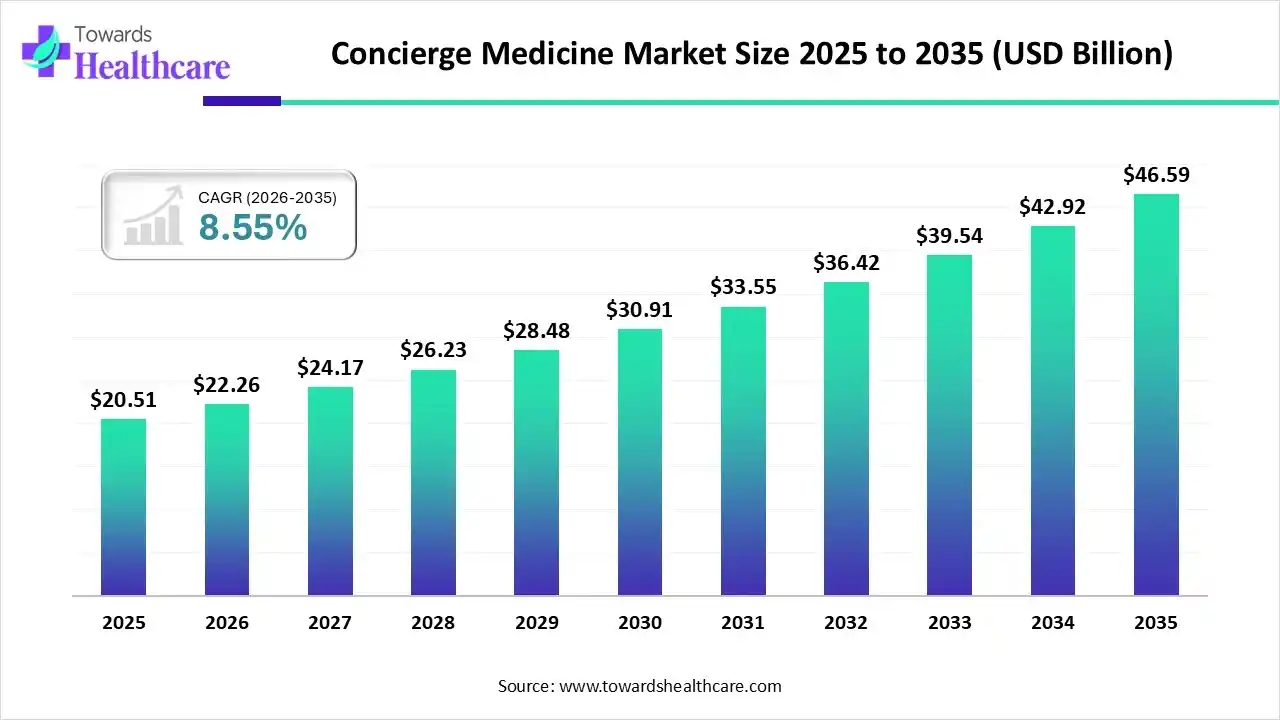
According to Towards Healthcare, the global concierge medicine market was valued at USD 20.51 billion in 2025 and is projected to reach USD 46.59 billion by 2035, growing at a CAGR of 8.55% from 2026 to 2035. North America accounted for approximately 38% of the global market in 2025, while primary care was the leading application segment.
Request a Sample Report: https://www.towardshealthcare.com/download-sample/5243
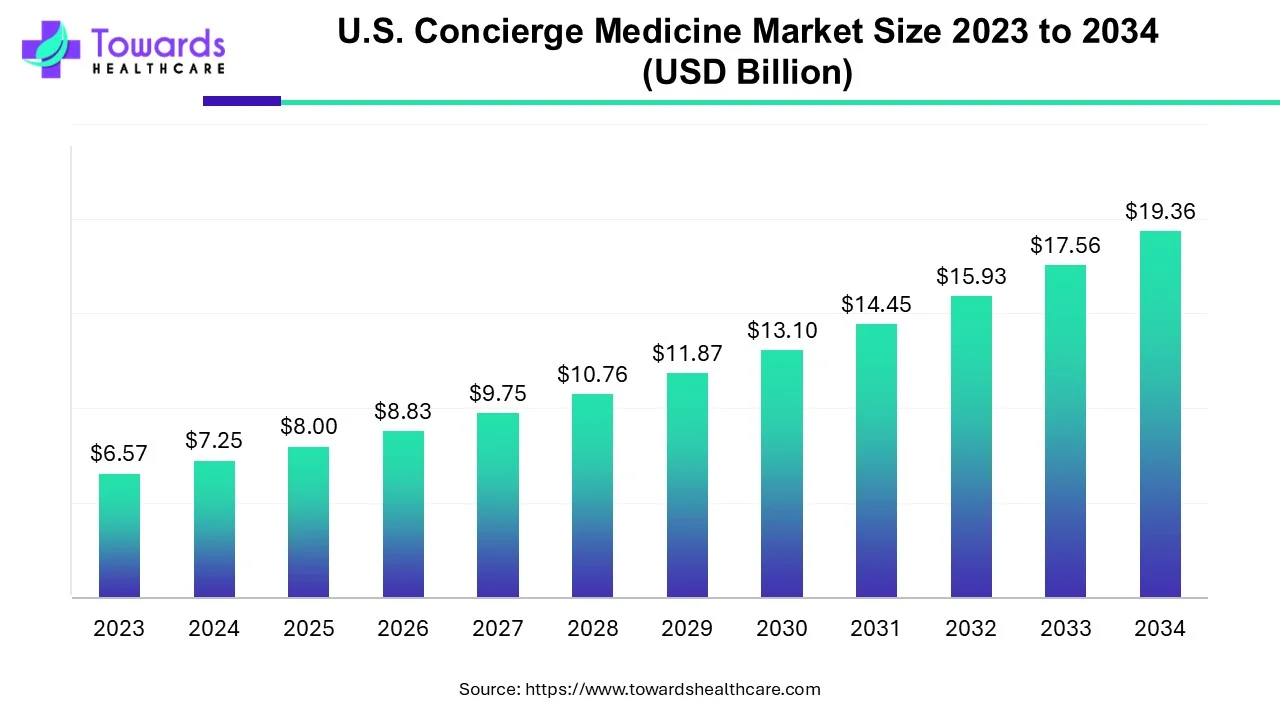
The U.S. opportunity is even more notable. Towards Healthcare estimates that the U.S. concierge medicine market grew from USD 7.25 billion in 2024 to USD 8 billion in 2025 and could reach USD 19.36 billion by 2034, representing a 10.36% CAGR.
Request a Sample Report: https://www.towardshealthcare.com/download-sample/5437
So, who is helping physicians actually build and operate these practices?
Why Concierge Medicine Startups Need More Than a Doctor and a Membership Model
Starting a concierge practice sounds simple: limit the patient panel, charge a membership fee, and provide more personalized care.
In reality, physicians have to manage:
- Patient acquisition
- Membership enrollment
- Scheduling
- Electronic health records
- Billing and payment collection
- Patient communication
- Telehealth
- Care coordination
- Marketing
- Compliance
- Staffing
- Financial reporting
- Technology integration
This creates an opportunity for companies that provide the infrastructure behind the physician-patient relationship.
Towards Healthcare notes that the group segment held the largest share of the concierge medicine market, partly because physicians can work with concierge-care businesses for areas such as legal compliance, advertising, patient communication, care coordination, wellness programs, and practice management.
1. Hint Health – An Underrated Infrastructure Partner
Hint Health is worth watching because it focuses on infrastructure for membership-based and direct primary care models rather than operating simply as another physician practice.
Its platform supports areas such as membership management, payments, eligibility, analytics, and operational workflows.
Why it matters for startups
A new concierge practice may have only a few hundred members initially. But as membership grows, manually managing recurring payments, patient enrollment, and reporting can become increasingly difficult.
Hint Health vs. a traditional billing platform: traditional RCM systems are generally designed around insurance claims, whereas membership-based practices need infrastructure built around recurring patient relationships and direct payments.
That distinction makes companies like Hint Health particularly interesting as concierge and direct-care models expand.
2. Tebra – More Than an EHR
Tebra is another company that can be overlooked when discussing concierge-practice infrastructure.
Its broader platform brings together EHR, practice management, billing, patient engagement, and digital marketing capabilities.
For a startup physician, that combination can be valuable because the early challenge isn’t necessarily choosing the most sophisticated individual software product.
It’s about avoiding a situation where:
EHR + website + scheduling + payments + marketing + billing
all operate independently.
Tebra vs. specialized concierge platforms
A specialized concierge platform may offer deeper membership-model functionality, while Tebra’s strength is its broader ambulatory practice ecosystem.
For a physician building a hybrid or evolving practice model, that flexibility can be attractive.
3. Hint + Tebra Highlight an Important Shift
These companies demonstrate a larger change taking place in healthcare.
Traditional medical practices were largely built around:
Appointment → Insurance claim → Reimbursement
Concierge practices can instead be structured around:
Membership → Direct relationship → Personalized care → Recurring payment
That means startups need technology designed for patient relationships, not just claims processing.
Towards Healthcare’s market research supports this shift, identifying demand for personalized care, longer consultations, preventive services, and direct physician access as major drivers of concierge medicine growth.
4. Spruce Health – The Patient Communication Layer
Another company that deserves more attention is Spruce Health.
Communication is central to concierge medicine. Patients often expect more convenient access to their physician through secure messaging, phone, video, and other digital channels.
For a small practice, building all of those capabilities internally can be expensive and time-consuming.
Why Spruce can be useful
Its communication infrastructure can help practices bring multiple patient communication channels into a more organized workflow.
Spruce vs. a traditional patient portal: the value proposition is broader communication functionality rather than simply giving patients access to medical records.
For concierge practices selling access and responsiveness, this distinction can be important.
5. Elation Health – Strong Fit for Primary Care
Elation Health is another company that deserves attention because of its focus on primary care.
Towards Healthcare identifies primary care as the dominant application segment in the global concierge medicine market.
Elation’s primary-care-oriented technology can therefore be relevant to physicians transitioning toward membership-based models.
Its positioning around clinical workflows, patient records, and primary care can help practices maintain the clinical side of a concierge model while other technology handles membership, payments, and communication.
Elation vs. broader EHR platforms
A general EHR may serve multiple specialties, whereas Elation’s primary-care orientation can be attractive to physicians whose business model is built around longitudinal primary care.
6. Hint, Tebra, Spruce and Elation Solve Different Problems
One important lesson for concierge startups is that there may not be one perfect vendor.
Instead, a startup could build an ecosystem in which:
Hint Health → Membership & payments
Elation Health → Clinical workflows
Spruce Health → Patient communication
Tebra → Practice management, billing & digital growth
The right combination depends on the practice’s size, payment model, specialty, technology preferences, and operational requirements.
Government Data Shows Why Primary-Care Infrastructure Matters
The growth opportunity is occurring against a challenging U.S. primary-care environment.
The Agency for Healthcare Research and Quality (AHRQ) reports that the U.S. continues to face a concerning shortage of primary-care physicians, along with an uneven distribution of primary-care clinicians. AHRQ says the primary-care physician workforce is projected to be insufficient to meet patient demand by 2035.
This is particularly relevant for concierge medicine.
A concierge model generally works by limiting the number of patients a physician serves so the doctor can provide more time and access per patient.
That means the model is not simply selling another appointment—it is attempting to restructure how physician time is allocated.
Physician Workforce Data Adds Another Layer
The U.S. Bureau of Labor Statistics projects physician and surgeon employment to grow from approximately 839,000 in 2024 to 863,200 in 2034, a 3% increase. BLS also projects approximately 23,600 physician and surgeon openings per year over the decade.
Meanwhile, physician assistants are projected to grow much faster.
BLS estimates that employment of physician assistants will increase from 162,700 in 2024 to 195,800 in 2034, representing 20% growth, with approximately 12,000 openings annually.
For concierge startups, this suggests that future models may increasingly depend on team-based care, where physicians work alongside PAs, NPs, care coordinators, health coaches, and digital tools.
Healthcare Management Is Becoming More Technology-Intensive
There is another important government statistic.
BLS projects employment of medical and health services managers to increase from 616,200 in 2024 to 759,100 in 2034, representing 23% growth.
This reflects the increasing complexity of healthcare operations.
For concierge practices, that complexity can include:
Membership management + patient engagement + staffing + compliance + technology + financial operations
This is exactly where technology and practice-management companies can become strategic partners rather than simply software vendors.
What Do Concierge Practice Startups Actually Need?
Based on the market outlook and healthcare workforce data, startup physicians should evaluate supporting companies around five practical areas.
1. Membership management
Can the platform manage recurring memberships, enrollment, cancellations, upgrades, and payments?
2. Patient communication
Can patients reach the practice easily through secure messaging, phone, video, or other digital channels?
3. Clinical workflow
Does the EHR support longitudinal primary care and efficient documentation?
4. Revenue visibility
Can the physician see membership revenue, collections, expenses, and practice performance?
5. Scalability
Will the technology still work when the practice moves from 100 members to 500, 1,000, or multiple locations?
The Most Underrated Companies May Not Be the Biggest Names
The concierge medicine conversation often focuses on physician groups and established concierge brands such as MDVIP, Specialdocs, SignatureMD, PartnerMD, and Crossover Health.
Towards Healthcare identifies these and other companies within the competitive concierge medicine landscape.
But startups should also look at the infrastructure companies operating behind the scenes.
Companies such as Hint Health, Tebra, Spruce Health, and Elation Health may not always receive the same attention as the largest concierge medical brands, but they can address critical operational requirements.
That makes them particularly interesting for physicians who want to build their own concierge practice rather than simply join an established network.
Why This Market Could Become Even More Competitive
Towards Healthcare forecasts the global concierge medicine market to expand from USD 20.51 billion in 2025 to USD 46.59 billion by 2035. That’s an increase of more than USD 26 billion over the forecast period.
The U.S. market alone is projected to reach USD 19.36 billion by 2034, growing at 10.36% annually.
Meanwhile, AHRQ’s projection of a primary-care physician shortage by 2035 creates additional pressure to rethink how primary care is delivered.
These trends could create opportunities for companies that help physicians:
Reduce administrative workload → Improve patient access → Automate payments → Coordinate care → Build recurring revenue
Explore the healthcare landscape with our dedicated Ecosystem Dashboard: https://www.towardshealthcare.com/access-dashboard
About Us
Pharma Geek is a part of Towards Healthcare Research & Consulting which is a global healthcare market research and consulting firm dedicated to helping businesses make informed decisions through reliable market intelligence and strategic insights. We serve pharmaceutical, biotechnology, medical device, AI in healthcare, cell and gene therapy, digital health, and life sciences organizations with in-depth market research, custom consulting, competitive analysis, and growth forecasts. Our team combines industry expertise with rigorous research to deliver clear, actionable insights that support market expansion, product strategy, investment decisions, and long-term business growth. From emerging innovations to established healthcare markets, we help organizations understand where the industry is today and where it’s headed tomorrow.
You can place an order or ask any questions, please feel free to contact us at [email protected]
Europe Region – +44 778 256 0738
North America Region – +1 8044 4193 44
APAC Region: +91 9356 9282 04
Visit Our Website: Towards Healthcare Research & Consulting – Expert Consulting Solutions & Research Reports
Find us on social platforms: LinkedIn | Twitter | Instagram | Medium
