
 by
by The global nootropics market was valued at USD 21.33 billion in 2025 and is expected to reach approximately USD 80.39 billion by 2035, registering a CAGR of 14.19% during the forecast period from 2026 to 2035. The market is experiencing strong growth due to the increasing demand for cognitive enhancement products, rising consumer awareness of brain health, and a growing focus on improving memory, concentration, and overall mental performance through dietary supplements and functional ingredients.
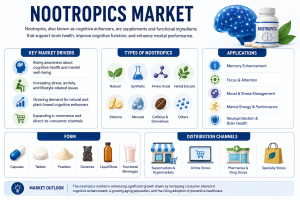
Understanding Nootropics
Nootropics, commonly known as smart drugs or cognitive enhancers, are substances designed to support various aspects of brain function, including memory, focus, learning ability, creativity, concentration, and mental clarity. They include natural herbs, vitamins, minerals, amino acids, adaptogens, functional mushrooms, omega-3 fatty acids, and synthetic compounds. Unlike prescription medications used to treat neurological disorders, most commercially available nootropics are dietary supplements intended to promote healthy cognitive function and long-term brain wellness.
Get Sample Link: https://www.precedenceresearch.com/sample/3231
Nootropics Market Overview
The increasing mental demands of modern lifestyles have created a strong demand for products that enhance cognitive performance. Professionals are expected to maintain high productivity levels, students face intense academic competition, and digital lifestyles require sustained concentration throughout the day. Consequently, consumers are increasingly adopting nootropic supplements to improve memory, maintain focus, reduce mental fatigue, and support overall cognitive performance. This shift has transformed nootropics into one of the fastest-growing segments within the global dietary supplements industry.
Rising Awareness of Brain Health
Growing public awareness regarding the importance of brain health has become one of the strongest drivers of the nootropics market. Consumers are becoming more proactive about maintaining cognitive function throughout their lives rather than waiting until age-related decline occurs. As awareness of conditions such as dementia, Alzheimer’s disease, and cognitive impairment increases, more individuals are incorporating brain-supporting supplements into their daily wellness routines. Preventive healthcare is becoming a key priority across all age groups.
Growing Mental Health Concerns
The increasing prevalence of stress, anxiety, burnout, depression, and sleep disorders has significantly influenced consumer interest in cognitive wellness products. Although nootropics are not intended to treat mental illnesses, many formulations containing adaptogens, amino acids, and herbal ingredients are marketed to support relaxation, stress management, and mental resilience. As conversations surrounding mental wellness continue to expand globally, demand for products that promote both cognitive performance and emotional well-being is expected to grow.
Increasing Demand from Working Professionals
Today’s workplace places greater cognitive demands on employees than ever before. Long working hours, remote work environments, multitasking, and constant digital communication require sustained mental focus and decision-making abilities. Professionals increasingly seek supplements that can help improve concentration, reduce mental fatigue, enhance memory, and support productivity throughout the workday. This growing need for sustained cognitive performance continues to drive market expansion.
Role of Artificial Intelligence in the Nootropics Industry
Artificial intelligence is transforming the nootropics market by helping companies develop personalized cognitive wellness solutions. AI-powered health platforms analyze consumer behavior, lifestyle patterns, dietary habits, and health goals to recommend customized supplement formulations.
Manufacturers are also using AI to accelerate ingredient research, predict consumer trends, optimize product formulations, and improve supply chain efficiency. As digital healthcare continues to evolve, AI is expected to become a key driver of innovation within the cognitive health industry.
Sustainability Trends in Nootropic Manufacturing
Environmental sustainability has become an important consideration for consumers purchasing health and wellness products. Companies are responding by sourcing ingredients responsibly, adopting environmentally friendly packaging materials, and improving manufacturing efficiency to reduce carbon emissions.
Many brands are also investing in organic farming, ethical ingredient sourcing, recyclable packaging, and clean-label formulations. Sustainability initiatives not only strengthen brand reputation but also appeal to environmentally conscious consumers seeking responsible purchasing options.
Impact of E-commerce on Market Expansion
Online retail has fundamentally transformed the nootropics industry by making cognitive health products accessible to consumers worldwide. E-commerce platforms allow buyers to compare ingredients, review scientific evidence, read customer feedback, and subscribe to recurring deliveries with ease.
Digital marketing strategies, influencer partnerships, educational blogs, and social media campaigns have further increased awareness of brain health supplements. Direct-to-consumer business models also enable manufacturers to build stronger customer relationships while gathering valuable consumer insights.
Read More: Non-Invasive Prenatal Testing Market
Regional Analysis
North America
North America continues to hold a significant share of the global nootropics market, supported by a well-established dietary supplements industry, advanced healthcare infrastructure, and high consumer awareness of cognitive wellness. Consumers in the United States and Canada are increasingly incorporating brain health supplements into their daily routines to enhance memory, focus, stress management, and overall mental performance. The growing prevalence of demanding work environments, digital lifestyles, and preventive healthcare practices has further accelerated product adoption.
The region also benefits from strong investments in neuroscience research, clinical studies, and product innovation. Manufacturers are introducing premium formulations featuring natural ingredients, adaptogens, medicinal mushrooms, and personalized nutrition solutions to meet evolving consumer preferences. The expansion of e-commerce platforms, subscription-based supplement services, and direct-to-consumer business models continues to strengthen market growth across North America.
Europe
Europe represents a mature and steadily growing market for nootropics, driven by increasing consumer preference for natural, organic, and scientifically validated dietary supplements. Consumers across the region are becoming more health-conscious and are actively seeking products that support cognitive wellness, emotional well-being, and healthy aging. The demand for clean-label products with transparent ingredient sourcing is also encouraging manufacturers to develop premium formulations.
Government initiatives promoting preventive healthcare and healthy aging, combined with rising awareness of neurological health, continue to support market expansion. Countries such as Germany, the United Kingdom, France, Italy, and Spain are witnessing growing demand for brain health supplements through pharmacies, specialty nutrition stores, and online retail channels. Continuous innovation in herbal formulations and functional foods is expected to further strengthen the European market.
Asia Pacific
Asia Pacific is expected to register the fastest growth in the global nootropics market during the forecast period. Rapid urbanization, increasing disposable incomes, expanding middle-class populations, and rising awareness of preventive healthcare are creating strong demand for cognitive enhancement products. Consumers across the region are increasingly investing in nutritional supplements that improve focus, memory, and productivity as academic competition and workplace demands continue to intensify.
Countries including China, India, Japan, South Korea, and Australia are leading regional growth through expanding healthcare infrastructure, rising health consciousness, and increasing adoption of functional foods. Traditional herbal medicine also plays an important role in consumer acceptance of natural nootropic ingredients such as ginseng, turmeric, and Ayurvedic herbs. Furthermore, rapid expansion of online retail platforms and digital health applications is making premium cognitive wellness products more accessible to consumers throughout the region.
Latin America
Latin America is emerging as a promising market for nootropics as awareness of preventive healthcare and nutritional wellness continues to increase. Rising disposable incomes, improving healthcare services, and growing interest in dietary supplements are encouraging consumers to explore products that support mental performance and cognitive health. Younger populations, professionals, and students are becoming key consumer groups driving regional demand.
Countries such as Brazil, Mexico, Argentina, and Chile are experiencing steady growth due to expanding retail distribution networks and greater availability of imported wellness products. The rapid growth of e-commerce platforms has improved consumer access to international brands while allowing local manufacturers to expand their market presence. Increasing investment in health education and nutritional awareness campaigns is expected to create additional growth opportunities over the coming years.
Middle East & Africa
The Middle East and Africa region is gradually establishing itself as an emerging market for cognitive health products. Rising healthcare investments, improving living standards, and growing consumer awareness regarding preventive nutrition are contributing to increasing demand for nootropic supplements. Urban populations are becoming more interested in products that support mental wellness, productivity, and healthy aging as lifestyles become increasingly demanding.
Countries such as the United Arab Emirates, Saudi Arabia, and South Africa are witnessing growing adoption of premium dietary supplements through pharmacies, specialty wellness retailers, and online platforms. Government efforts to strengthen healthcare infrastructure, along with expanding wellness industries and higher consumer spending on health products, are expected to support long-term market growth. As international brands continue expanding their presence and educational initiatives improve consumer understanding of cognitive health, the region is likely to offer attractive opportunities for market participants.
Competitive Landscape
The nootropics industry is highly competitive, with established dietary supplement companies competing alongside innovative startups. Companies are differentiating themselves through:
- Natural ingredient formulations
- Clinically supported products
- Sustainable sourcing
- Functional beverages
- Personalized nutrition solutions
- Digital health integration
- Premium branding
- Subscription-based business models
Strategic partnerships, product innovation, and global expansion remain key competitive strategies.
Future Outlook
The future of the nootropics market appears highly promising. Continued advances in neuroscience, nutrition science, and personalized healthcare are expected to reshape the industry over the coming decade. As consumers become increasingly proactive about maintaining cognitive performance, demand for safe, science-backed, and convenient brain health products is likely to accelerate.
The convergence of artificial intelligence, wearable health technology, functional nutrition, and preventive healthcare will further expand opportunities for manufacturers and investors. Companies that emphasize transparency, clinical validation, and consumer education are expected to strengthen their competitive position.
𝐘𝐨𝐮 𝐜𝐚𝐧 𝐩𝐥𝐚𝐜𝐞 𝐚𝐧 𝐨𝐫𝐝𝐞𝐫 𝐨𝐫 𝐚𝐬𝐤 𝐚𝐧𝐲 𝐪𝐮𝐞𝐬𝐭𝐢𝐨𝐧𝐬, 𝐩𝐥𝐞𝐚𝐬𝐞 𝐟𝐞𝐞𝐥 𝐟𝐫𝐞𝐞 𝐭𝐨 𝐜𝐨𝐧𝐭𝐚𝐜𝐭 𝐮𝐬 𝐚𝐭 𝐬𝐚𝐥𝐞𝐬@𝐩𝐫𝐞𝐜𝐞𝐝𝐞𝐧𝐜𝐞𝐫𝐞𝐬𝐞𝐚𝐫𝐜𝐡.𝐜𝐨𝐦
