
 by
by What Is the Pharmacy Market and Why Is It Important?
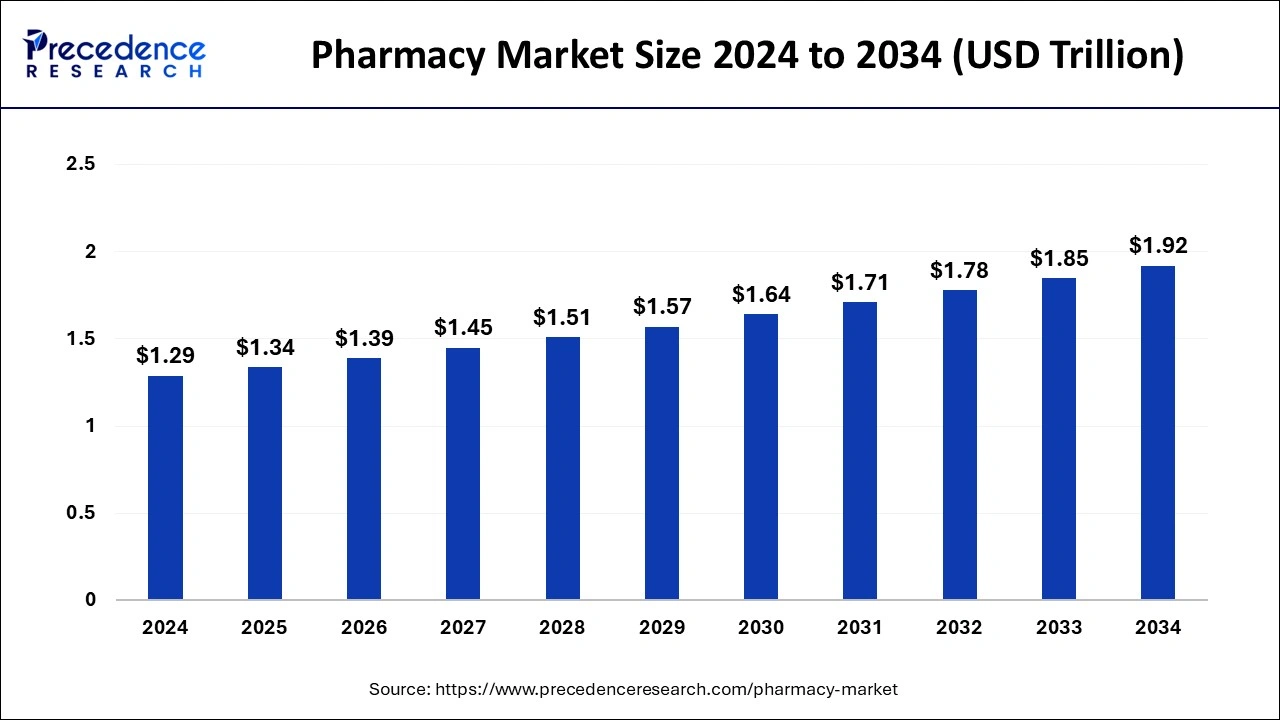
The global pharmacy market was valued at USD 1.34 trillion in 2025 and is projected to reach approximately USD 1.99 trillion by 2035, growing at a CAGR of 4.03% from 2026 to 2035.
Key Takeways
- North America dominated the pharmacy market with the largest market share of 53% in 2025.
- Asia Pacific is projected to grow at a notable CAGR during the forecast period.
- By product, the prescription segment held the biggest market share of 82% in 2025.
- By type, the retail pharmacy segment contributed the biggest market share of 56% in 2025.
Pharmacy Market Overview
The global pharmacy market encompasses the retail and distribution of prescription medications, over-the-counter (OTC) drugs, healthcare products, and pharmacy-related services through retail pharmacies, hospital pharmacies, online pharmacies, and other healthcare channels. As a vital component of the healthcare ecosystem, pharmacies improve access to medications, support disease prevention and management, and provide patient-centered services such as vaccinations, health screenings, medication counseling, and chronic care management.
The market is undergoing significant transformation as healthcare systems increasingly emphasize accessibility, preventive care, and patient-focused treatment models. Growth is being driven by rising prescription drug utilization, the increasing prevalence of chronic diseases, a rapidly aging population, and growing demand for specialty medications. In response to evolving healthcare needs, pharmacies are expanding beyond traditional medication dispensing to offer clinical services, immunization programs, chronic disease monitoring, and digital health solutions integrated with broader healthcare networks.
Role of Artificial Intelligence in Pharmacy Industry
The integration of artificial intelligence (AI) is transforming the healthcare industry and creating significant opportunities for the pharmacy sector to enhance efficiency, accuracy, and patient care. AI has emerged as a groundbreaking technology that is reshaping various aspects of pharmacy operations, enabling healthcare providers and pharmacists to make faster, more informed decisions.
AI applications in the pharmacy market span across drug discovery and development, research and development (R&D), precision medicine, medication management, and patient outcome optimization. By analyzing vast and complex healthcare datasets, AI-powered systems can identify patterns, predict treatment outcomes, and support evidence-based decision-making with greater speed and accuracy than traditional methods.
Additionally, AI is streamlining pharmacy workflows through automated prescription processing, inventory management, and personalized treatment recommendations. These capabilities help reduce operational inefficiencies, minimize medication errors, and improve patient safety. As AI technologies continue to advance, they are expected to play a crucial role in accelerating pharmaceutical innovation, enhancing healthcare delivery, and shaping the future of the global pharmacy market.
Market Regional Analysis: North America, Europe, Asia-Pacific
What is the U.S. Pharmacy Market Size?
The U.S. pharmacy market was valued at USD 650 billion in 2025 and is projected to reach approximately USD 986.66 billion by 2035, registering a CAGR of 4.26% from 2026 to 2035.
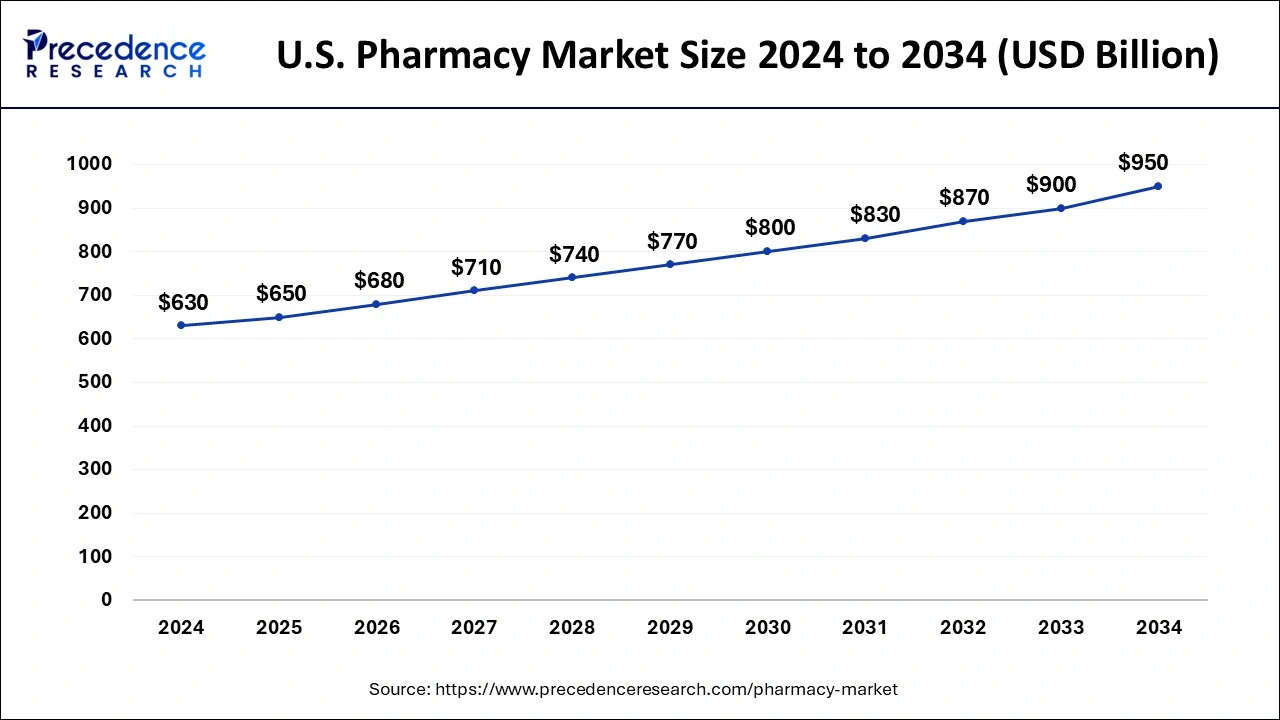
In the year 2025, North America accounted for the largest market share in the global pharmacy market. This is mainly because of the presence of large-scale international chains, such as CVS Health, Kroger, Boots Walgreens, UnitedHealth Group, Cigna, Walmart, and Rite Help Corp. These players are adopting various initiatives and software technologies to increase market share. For example, Rite Aid Corp. introduced its Wellbeing + rewards program, which offers considerable discounts and rewards to its customers. Moreover, the quickly growing aging populace is supporting market growth.
U.S. Market Trends
The demand for specialty drugs, biologics, and GLP-1 drugs for obesity and metabolic disorders is driving the U.S. leadership in the pharmaceutical industry. In addition, the policy-driven drug pricing reform, direct-to-consumer pharmacy models, and value-based healthcare programs are reshaping the drug access, affordability, and distribution landscape throughout the nation.
Market Report Coverage and Key Metrics
| Report Coverage | Details |
| Market Size in 2025 | USD 1.34 Trillion |
| Market Size in 2026 | USD 1.39 Trillion |
| Market Size in 2035 | USD 1.99 Trillion |
| Growth Rate | CAGR of 4.03% from 2026 to 2035 |
| Base Year | 2025 |
| Largest Market | North America |
| Fastest Growing Market | Asia Pacific |
| Forecast Period | 2026 to 2035 |
| Segments Covered | Product, Pharmacy, Application, and region |
Market Segmentation Analysis
By Product Type
Why Did the Prescription Segment Account for Over 82% of the Pharmacy Market in 2025?
The prescription segment accounted for the largest share of the pharmacy market, capturing 82.9% of total revenue in 2025. This dominance was primarily driven by the rising prevalence of chronic diseases, increasing physician consultations, and growing utilization of specialty medications.
Long-term treatment requirements for conditions such as cardiovascular diseases, diabetes, cancer, and respiratory disorders significantly contributed to higher prescription volumes across both retail and hospital pharmacies. Additionally, the expanding aging population, which often requires ongoing medication management and long-term therapeutic care, further strengthened demand for prescription drugs.
As healthcare providers continue to focus on chronic disease management and personalized treatment approaches, prescription medications remain the primary revenue-generating category within the pharmacy market, reinforcing the segment’s leading position throughout the forecast period.
By Type
What Made Retail Pharmacy the Leading Segment in the Market?
What Made Retail Pharmacy the Leading Segment in the Market?
The retail pharmacy segment led the pharmacy market in 2025, accounting for a major revenue share. This is mainly due to its widespread geographic reach, immediate availability of medications, and well-established connections with local communities. Consumers continued to depend on nearby pharmacies for fulfilling prescriptions, seeking healthcare advice, and making regular medical purchases. The ease of walk-in access, coupled with the ability to receive medications without delays, contributed to ongoing customer loyalty.
Companies such as CVS Health, Walgreens Boots Alliance, Boots, and Well Chemist are supporting market growth through extensive distribution networks, healthcare services, and technology adoption. Furthermore, the increasing implementation of automation technologies, including robotic dispensing systems, automated inventory management, and advanced packaging solutions, is improving pharmacy efficiency and supporting segment expansion.
Pharmacy Market Companies
CVS Health: CVS Health is one of the largest healthcare and pharmacy companies in the United States, operating retail pharmacies, pharmacy benefit management services, and healthcare clinics. The company focuses on improving healthcare accessibility through its extensive nationwide network.
Boots Walgreens: Boots Walgreens is a leading global pharmacy-led health and wellness company, serving millions of customers through retail pharmacies and healthcare services. It operates well-known pharmacy brands across the U.S., Europe, and other international markets.
Cigna: Cigna is a global health services company that provides health insurance, pharmacy benefits, and healthcare solutions to individuals and organizations. Its pharmacy services segment supports medication management and prescription drug access.
Walmart: Walmart operates one of the largest pharmacy networks in the United States, offering prescription medications, immunizations, and healthcare products at competitive prices. Its pharmacies are integrated into thousands of retail stores nationwide.
Kroger: Kroger is a major U.S. retail company that provides pharmacy services through its supermarket locations. The company offers prescription fulfillment, vaccinations, health screenings, and medication counseling services.
Rite Aid Corporation: Rite Aid Corporation is a prominent retail pharmacy chain providing prescription medications, wellness products, and healthcare services. The company focuses on community-based healthcare through its network of pharmacy locations across the United States.
Conclusion
The pharmacy market is entering a new era of transformation driven by digital healthcare, artificial intelligence, specialty medications, and patient-centered care. As chronic disease prevalence and healthcare spending continue to rise globally, pharmacies are evolving beyond traditional drug dispensing to become integrated healthcare hubs. With the market projected to reach USD 1.99 trillion by 2035, companies investing in technology, automation, and personalized healthcare solutions are expected to gain a competitive advantage.
Check this report to: ICU ECG Patient Market
Get this report to explore global market size, share, CAGR, and trends, featuring detailed segmental analysis and an insightful competitive landscape overview: https://www.precedenceresearch.com/sample/1568
📩You can place an order or ask any questions. Please feel free to contact us at [email protected] |+1 804 441 9344
