by
by What is the Clinical Alarm Management Market Size in 2026?
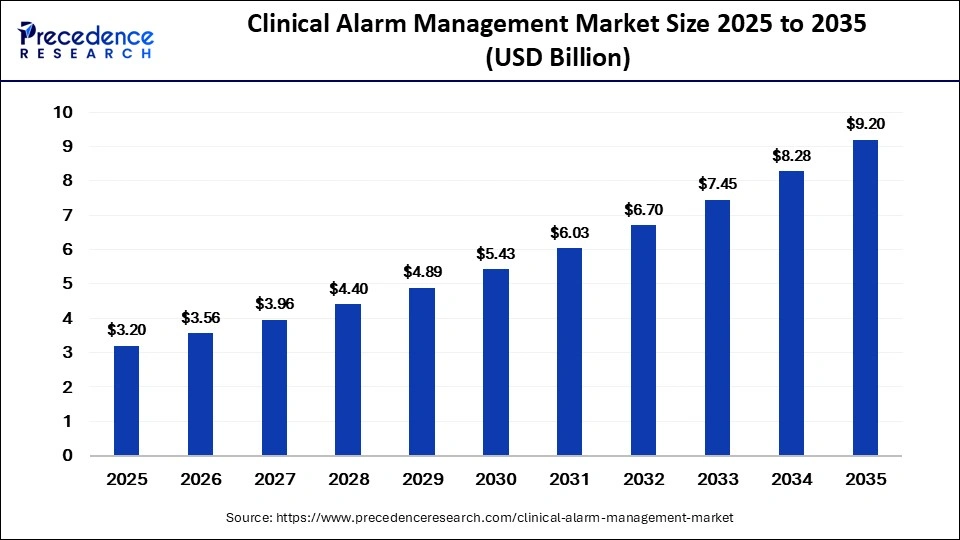
The global clinical alarm management market was valued at USD 3.20 billion in 2025 and is projected to grow from USD 3.56 billion in 2026 to nearly USD 9.20 billion by 2035, registering a strong CAGR of 11.20% during the forecast period from 2026 to 2035.The market growth is being driven by the increasing incidence of alarm fatigue among healthcare professionals, which has intensified the need for advanced alarm management solutions in hospitals and healthcare facilities. In addition, supportive government initiatives promoting healthcare IT adoption, along with the growing implementation of smart monitoring technologies, are accelerating market expansion globally.
Key Takeaways
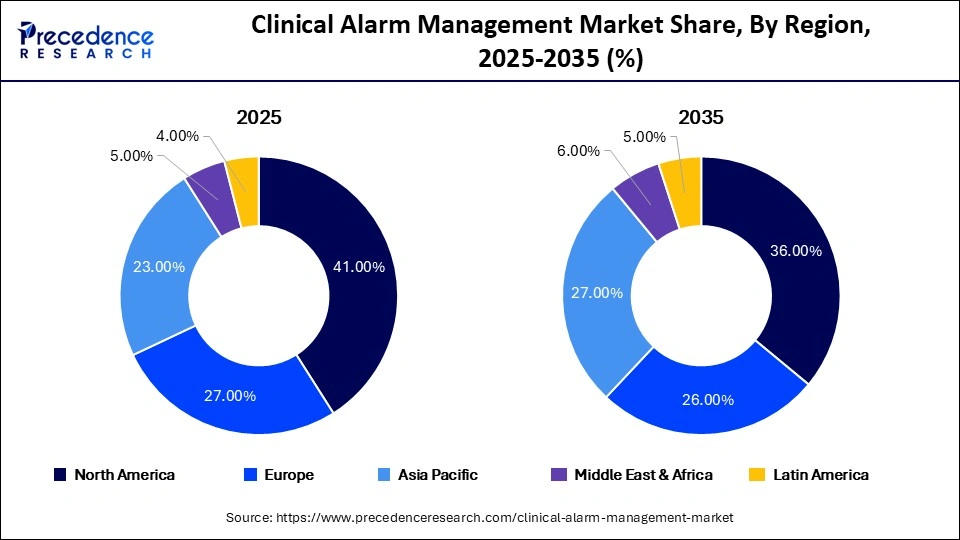
- North America dominated the clinical alarm management market with a 41.0% market share in 2025.
- Asia Pacific is expected to grow at the fastest CAGR in the market during the forecast period.
- By component, the solutions segment contributed the highest market share of 56.0% in 2025.
- By product, the nurse call systems segment held a major market share of 28.0% in 2025.
- By deployment mode, the on-premise segment captured the highest market share of 62.0% in 2025.
- By end-user, the hospitals and clinics segment generated the biggest market share of 70.0% in 2025.
- By type, the centralized alarm management systems segment accounted for the largest market share of 64.0% in 2025.
Market Overview
The clinical alarm management market is experiencing significant growth as healthcare providers increasingly focus on enhancing patient safety and minimizing alarm fatigue in critical care settings. Hospitals and healthcare facilities generate a large number of non-actionable alarms from medical devices, which can overwhelm healthcare professionals and increase the likelihood of missing critical alerts.To address these challenges, healthcare institutions are adopting advanced clinical alarm management systems capable of filtering, prioritizing, and reducing unnecessary alarms while ensuring timely responses to urgent situations. The integration of artificial intelligence (AI), machine learning, and remote patient monitoring technologies is further improving the efficiency and accuracy of these systems.
Additionally, the rising prevalence of chronic diseases, extended hospital stays, and growing government investments in healthcare IT infrastructure are driving the global demand for clinical alarm management solutions.
Role of AI in the Clinical Alarm Management Market
AI is playing a vital role in the market. It improves the accuracy and efficiency of patient monitoring systems. In hospitals, a large proportion of clinical alarms generated by medical devices are non-actionable, which causes alarm fatigue among healthcare professionals. To distinguish between true clinical alarms and false alarms, AI and machine learning algorithms analyze large volumes of patient data in real time, which helps reduce unnecessary alerts. AI-powered systems can prioritize alarms based on severity, patient condition, and clinical context, enabling faster and more effective and quick responses from medical staff.
AI enables personalized alarm settings by studying individual patient patterns, improving detection accuracy, and ensuring patient safety. The integration of AI enhances clinical workflow efficiency and supports better decision-making in modern healthcare settings.
Clinical Alarm Management Market Trends
- Healthcare settings are increasingly adopting AI and machine learning in alarm management systems to analyze alarm data and reduce false or non-actionable alerts. AI and machine learning integration help prioritize critical alarms, enabling faster clinical responses and improving patient safety.
- Growing adoption of integrated monitoring systems and centralized alarm notification platforms that connect multiple devices to streamline communication between devices and healthcare staff, improving clinical workflow efficiency.
- Advanced alarm management solutions help filter and prioritize alarms, which enables clinicians to focus on patient safety and reducing alarm fatigue caused by non-actionable alarms.
- Rising integration with Electronic Health Records (EHR) systems to ensure easy access to data and patient monitoring.
- Regulatory and compliance requirements strengthen the alarm management protocols by adopting advanced alarm management technologies to comply with safety standards and improve clinical workflow in healthcare settings.
Market Dynamics
Drivers
Rising Focus on Patient Safety and Alarm Fatigue Reduction
Restraint
High Implementation Cost and Integration Challenges
The clinical alarm management market faces challenges due to the high costs and complexities associated with implementing advanced alarm management systems. Expenses related to system integration with existing healthcare infrastructure, staff training, software upgrades, and ongoing maintenance can limit adoption across healthcare facilities.
In addition, interoperability issues between different medical devices and healthcare IT systems, along with limited technical expertise, particularly in smaller healthcare settings, continue to restrain market growth.
Opportunity
Growth of Remote Monitoring and AI Integration
The increasing adoption of remote patient monitoring, home healthcare, and telehealth creates significant opportunities. Advancements in AI and cloud-based technologies support smarter alarm prioritization and real-time decision-making, expanding the application of alarm management solutions beyond hospitals.
Segment Insights
Component Insights
Clinical Alarm Management Market Share, By Component, 2025-2035 (%)
The solutions segment dominated with a market share of 56.0% in 2025. This is mainly due to the widespread adoption of advanced healthcare IT systems that integrate and centralize alarm data. These solutions help reduce alarm fatigue by filtering and prioritizing clinically relevant alerts, thereby improving patient safety and clinical outcomes. Additionally, their ability to enhance workflow efficiency, support decision-making, and meet regulatory requirements further drives their dominance.
Product Insights
Clinical Alarm Management Market Share, By Product, 2025-2035 (%)
The nurse call systems segment dominated with a market share of 28.0% in 2025. This is due to its essential role in enabling immediate communication between patients and healthcare providers, ensuring a timely response to critical situations. These systems are widely adopted across hospitals and healthcare facilities because they enhance patient safety, improve workflow efficiency, and reduce response time. Additionally, continuous technological advancements, such as wireless systems and integration with other monitoring devices, further strengthen their dominance in the market.
Regional Insights
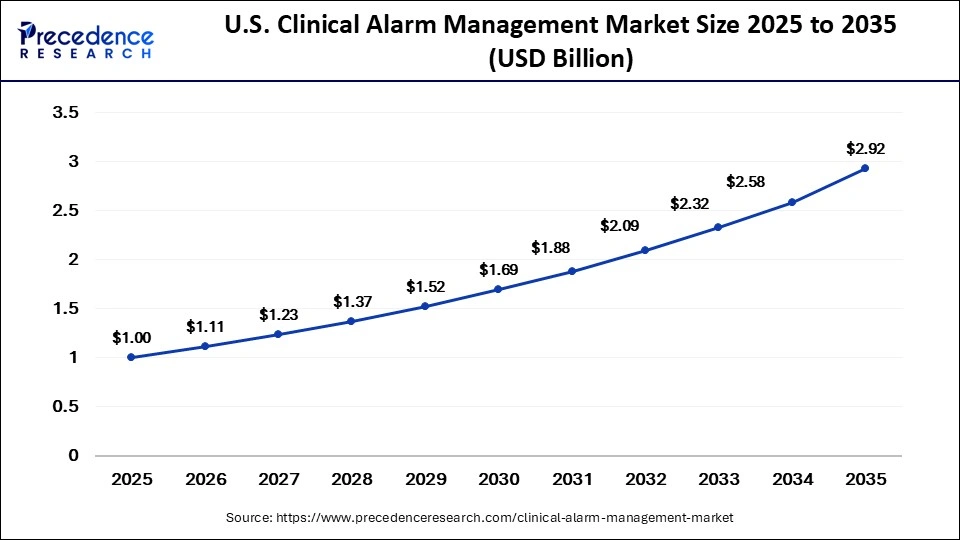
North America Clinical Alarm Management Market Size and Growth 2026 to 2035