 by
by What is the Medical Waste Containers Market Size in 2026?
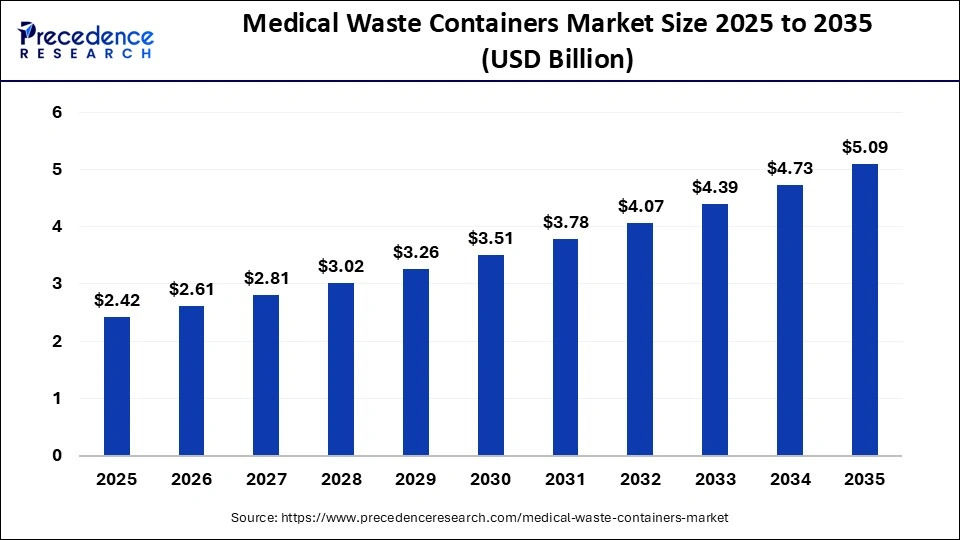
The global medical waste containers market is experiencing steady growth due to increasing healthcare waste generation and stricter regulatory requirements. The market size was valued at USD 2.42 billion in 2025 and is projected to grow from USD 2.61 billion in 2026 to approximately USD 5.09 billion by 2035, expanding at a CAGR of 7.72% from 2026 to 2035.
The market growth is primarily driven by rising healthcare expenditure, expanding hospital infrastructure, and increasing awareness regarding safe waste disposal practices across healthcare facilities.
Read Also: Malaria Diagnostic Market
Key Takeaways
- North America dominated the market with a 46% share in 2025
- Asia-Pacific is expected to grow at the fastest CAGR during the forecast period
- Chemotherapy containers segment led the market with 39% share in 2025
- RCRA containers segment is projected to grow at the fastest rate
- General medical waste segment accounted for 36% share in 2025
- Infectious waste segment is expected to grow rapidly
- Hospitals and private clinics held 38% market share in 2025
- Diagnostic laboratories are expected to witness the fastest growth
Medical Waste Containers Market Overview
Medical waste containers are specialized storage units designed to safely collect, transport, and dispose of healthcare waste. These containers play a critical role in ensuring safety for healthcare workers, waste handlers, and the environment.
Medical waste includes a wide range of materials such as:
- Infectious waste
- Sharps (needles, syringes)
- Pathological waste
- Chemical and pharmaceutical waste
Proper containment and segregation of these waste types are essential to prevent contamination, infections, and environmental hazards.
Color-coded containers are widely used to ensure compliance with regulatory standards and facilitate efficient waste segregation. Additionally, increasing training programs for healthcare staff on waste management practices are further boosting the adoption of standardized medical waste containers globally.
Impact of Artificial Intelligence on Medical Waste Containers Market
Artificial intelligence (AI) is revolutionizing medical waste management by improving safety, efficiency, and compliance.
AI-powered innovations include:
- Smart containers with sensors to monitor fill levels
- RFID tracking systems for real-time waste monitoring
- Automated alerts for overflow or contamination risks
- Data analytics for waste generation forecasting
A pilot study reported a 40% improvement in compliance rates after integrating AI and RFID technologies, highlighting the growing importance of smart waste management systems.
AI-driven solutions also help hospitals optimize waste collection schedules, reduce operational costs, and improve regulatory compliance, especially in high-volume healthcare facilities.
Market Trends
1. Smart Technology Integration
Medical waste containers are increasingly equipped with IoT sensors, GPS tracking, and RFID technology to enhance monitoring and compliance.
2. Transition to Next-Generation Containers
Advanced containers with AI-driven monitoring and automated tracking are redefining waste management standards.
3. Focus on Sustainability
Healthcare providers are adopting eco-friendly and reusable containers to reduce environmental impact.
4. Increased Regulatory Compliance
Strict government regulations are driving demand for certified and standardized waste containers.
Market Dynamics
Driver: Expansion of Healthcare Infrastructure
Rapid expansion of healthcare facilities and rising patient volumes are significantly increasing the generation of medical waste. This, in turn, is driving the demand for advanced medical waste containers.
Emerging economies in Asia, Latin America, and the Middle East are investing heavily in healthcare infrastructure, further accelerating market growth.
Restraint: Improper Waste Segregation
Improper segregation of medical waste remains a major challenge. Mixing hazardous and non-hazardous waste increases disposal costs and creates safety risks.
This issue is particularly prevalent in regions with limited training and awareness regarding waste management practices.
Opportunity: Growing Training and Awareness Programs
Increasing emphasis on training healthcare professionals in waste segregation and disposal practices presents a major opportunity for market expansion.
Structured training programs can improve compliance and boost the adoption of standardized containers.
Segment Insights
By Product
Chemotherapy Containers Dominated the Market in 2025
The chemotherapy containers segment accounted for the largest market share due to the rising global cancer burden. Increasing chemotherapy treatments are generating higher volumes of cytotoxic waste, requiring specialized containers for safe disposal.
According to global health estimates, cancer cases are expected to rise significantly, further driving demand for chemotherapy waste containers.
RCRA Containers to Grow Rapidly
The Resource Conservation and Recovery Act (RCRA) containers segment is expected to witness the fastest growth. These containers are designed to manage hazardous waste safely and ensure compliance with strict environmental regulations.
By Type of Waste
General Medical Waste Led the Market
General waste accounted for the largest share in 2025, as it constitutes approximately 75%–90% of total healthcare waste.
Infectious Waste to Grow Fastest
The infectious waste segment is expected to grow rapidly due to stricter infection control measures and increased awareness following global health crises.
By End Use
Hospitals and Private Clinics Dominated the Market
Hospitals generate the highest volume of medical waste due to:
- Large patient inflow
- Complex medical procedures
- Strict regulatory compliance
Diagnostic Laboratories to Expand Rapidly
Diagnostic labs are witnessing rapid growth due to increasing testing volumes and stricter regulations regarding waste disposal.
Regional Insights
North America
North America led the global market in 2025 due to:
- Strong regulatory framework
- Advanced healthcare infrastructure
- High adoption of smart waste management technologies
Regulatory bodies such as environmental and occupational safety agencies enforce strict guidelines for medical waste disposal, driving demand for compliant containers.
Asia-Pacific
Asia-Pacific is expected to grow at the fastest rate due to:
- Rapid healthcare infrastructure development
- Rising population and urbanization
- Increasing prevalence of infectious diseases
- Growing medical tourism industry
Countries such as China and India are investing heavily in healthcare systems, boosting demand for medical waste containers.
Competitive Landscape
Key companies operating in the medical waste containers market include:
- Stericycle
- Becton, Dickinson and Company
- Veolia Environnement
- Cardinal Health
- Clean Harbors
- Daniels Health
- Thermo Fisher Scientific
- Medtronic Plc.
These companies are focusing on innovation, sustainability, and strategic partnerships to strengthen their market presence.
Recent Developments
- November 2025: UK-based hospitals launched a recycling initiative to convert clinical waste into reusable tools, saving costs and reducing environmental impact
- September 2025: UNICEF and the World Bank introduced a healthcare waste management project in Afghanistan
- October 2025: Researchers developed a method to convert medical plastic waste into clean fuel using advanced technologies
Conclusion
The medical waste containers market is poised for consistent growth over the next decade, driven by increasing healthcare waste volumes, stringent regulatory frameworks, and advancements in smart waste management technologies.
The integration of AI, IoT, and sustainable solutions is transforming the market, enabling safer and more efficient waste handling practices. As healthcare systems continue to expand globally, the demand for compliant and innovative medical waste containers is expected to rise significantly.
Get Sample Copy: https://www.precedenceresearch.com/sample/8220
For inquiries regarding discounts, bulk purchases, or customization requests, please contact us at [email protected]
